
Experience furniture shopping like never before with online furniture stores. From AR/VR technologies to sustainability, explore the dynamic industry now.
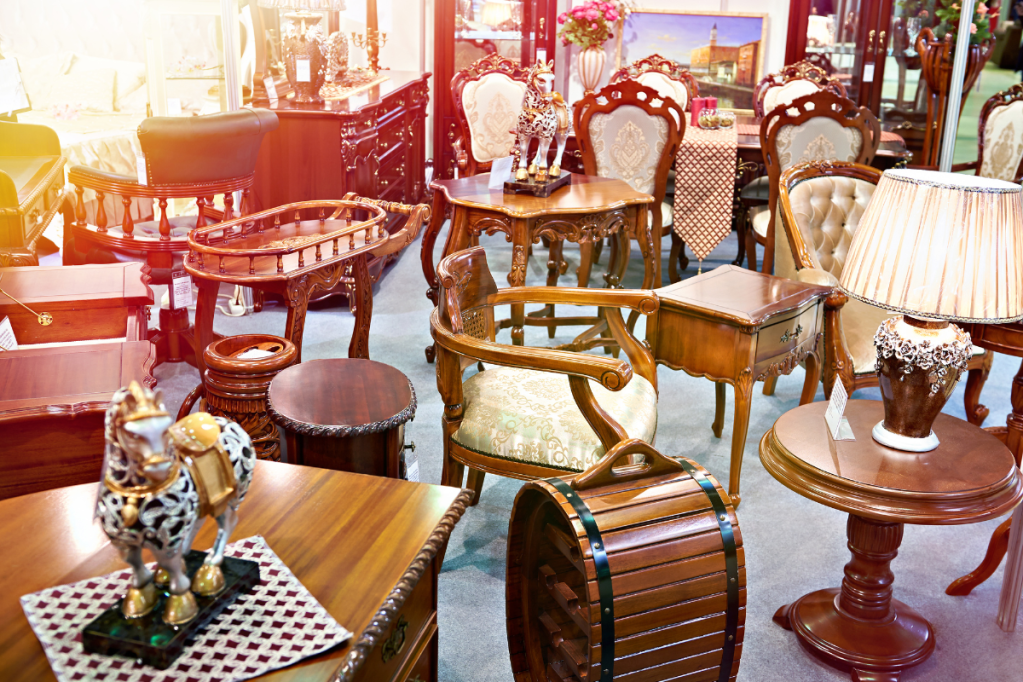
An Overview of the Online Furniture Industry: Market Share and Growth.
From 2021 to 2028, the online furniture sector grew 14.6% CAGR. Online shopping and the convenience and cost-effectiveness of buying furniture online are responsible for the enormous growth. Recent research predicts that the worldwide online furniture business would grow to $278 billion by 2024 from $102 billion in 2021.
Online furniture has also grown in market share. Asia-Pacific dominated the online furniture market in 2021, with over 42% of the market share. Consumers in China, India, and Japan are spending more and changing their lives, driving Asia-Pacific growth. However, due to e-commerce and technical advances, the European market is likely to increase rapidly.
Augmented reality (AR) and virtual reality (VR) technology have also become more popular in the online furniture sector. These advances allow customers to inspect furniture in their homes before buying, which improves customer happiness and reduces returns.
Key Players in the Online Furniture Market: Competitive Landscape Analysis.
Several major businesses dominate the online furniture sector. Amazon Inc., IKEA, Wayfair, and Alibaba Group Holding Ltd. are key players. These companies have captured a large market share by delivering a wide selection of furniture products, low rates, and great customer service.
In the online furniture industry, IKEA has the highest market share due to its strong brand reputation. The company’s cheap furniture goods are designed to appeal to a wide range of tastes. Wayfair, on the other hand, has differentiated itself by offering a large range of furniture products from different companies, making it a one-stop shop for consumers searching for a variety of options.
Alibaba Group Holding Ltd. and Amazon Inc. have also gained market share by utilizing their online platforms and offering a wide choice of products at affordable pricing. Alibaba has dominated the Chinese market, while Amazon has used its large client base to grow in the US and other nations.
Consumer Preferences in Online Furniture Shopping: Survey Results and Analysis.
Online furniture purchasing has been more popular in recent years due to its convenience and affordability. Online furniture purchase habits were surveyed recently. The poll found that buyers prioritized product quality, pricing, and customer reviews while buying furniture online.
Free shipping and quick returns were also chosen by consumers when buying furniture online. Consumers also favored online businesses with a wide selection of products and extensive product information, such as photos, dimensions, and materials. The survey also found that shoppers preferred user-friendly internet retailers.
The survey also found that shoppers were more willing to buy furniture online if the online store included a showroom. This shows that consumers are more likely to trust online retailers with a physical presence since it reassures them that they are dealing with a trustworthy organization. Consumers liked online retailers that offered financing and incentives, according to the report.
Factors Affecting the Success of Online Furniture Stores: Website Design and User Experience.
Website design and user experience affect the success of online furniture stores. Customer engagement and sales can increase with a well-designed website. The layout, color scheme, typography, and photography of online furniture retailers’ websites might affect their success.
A disorganized website layout can confuse and frustrate visitors, resulting in a high bounce rate. However, a well-organized and attractive website layout can improve user experience and boost revenues. Online furniture stores’ success depends on typography and color scheme. The website’s typography and color design should match the brand and be easy to read.
Online furniture stores‘ success depends on visuals as well. High-quality photos with a zoom-in feature can improve the consumer browsing experience and boost the possibility of a purchase. Consumers who wish to observe how the product functions in real life might also benefit from product demo videos.
Marketing Strategies for Online Furniture Stores: Social Media, SEO and PPC.
Any business, even online furniture companies, needs marketing. Social media, SEO, and PPC advertising are three successful marketing tactics for online furniture businesses to reach their target demographic and boost sales.
Online furniture shops can personalize their marketing with social media. Social media platforms like Facebook, Instagram, and Pinterest may be used to showcase items, advertise discounts and special deals, and interact with customers. Social media can also boost brand awareness and loyalty with continuous and compelling content.
SEO can help online furniture companies rank high in search engine results pages (SERPs) for relevant keywords. SEO improves a website’s relevance and authority in search engines by optimizing its content, structure, and meta tags. Online furniture companies may boost brand awareness and organic traffic by ranking high in SERPs.
PPC advertising can help online furniture retailers reach their target audience and boost sales. PPC advertising involves placing ads on search engines and social media sites and paying only when someone clicks on them. This tailored approach lets online furniture retailers contact consumers who are actively browsing for furniture and more inclined to buy.
Conclusion
The online furniture industry is set to continue its growth trajectory in the coming years, driven by the increasing trend of online shopping and the adoption of new technologies. The industry is highly competitive, with several key players dominating the market. Companies that can offer a vast range of furniture products, competitive prices, and excellent customer service are likely to capture a significant market share in the online furniture industry.
The success of online furniture stores depends on several factors, including website design and user experience. Consumers have specific preferences when it comes to shopping for furniture online, including product quality, price, customer reviews, and free shipping and returns. Companies that can offer a wide range of products, detailed product information, and a user-friendly interface are more likely to capture a significant market share in the online furniture industry.
Social media, SEO, and PPC advertising are three effective marketing strategies that online furniture stores can use to increase their brand visibility, attract more traffic, and drive sales. However, it’s essential to tailor each marketing strategy to the specific needs and preferences of the target audience. A comprehensive marketing plan that includes a combination of these strategies can help online furniture stores achieve their business goals and stay ahead of the competition.

