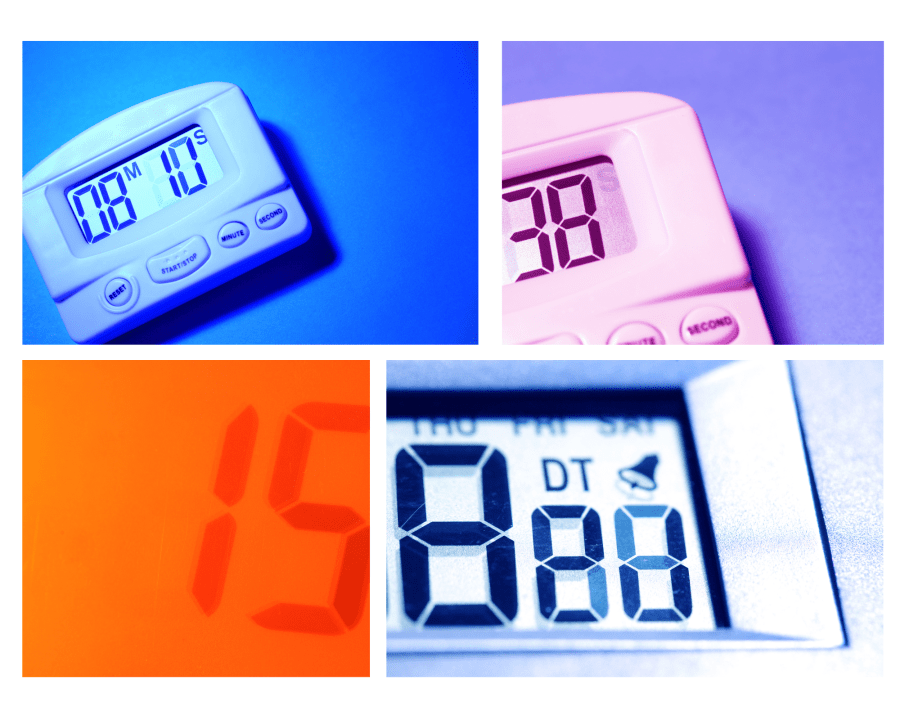
In our modern era, where time has become the most precious commodity, the invention of a digital timer has revolutionized the way we measure time. A digital timer is a device that precisely measures the elapsed time between two events. Unlike analog timers, digital timers use electronic circuits to measure and display time. The use of digital technology has made timers more accurate, reliable, and user-friendly. This article will delve into the fascinating world of digital timers, exploring their history, workings, and applications.
Origins and Evolution:
The first digital timers were developed in the 1950s and 1960s, as a result of the growing demand for precise timing in scientific research, military applications, and industrial processes. These early digital timers were rudimentary, using primitive electronic circuits to generate and count pulses. They were large, expensive, and required skilled operators to use them.
The advent of microelectronics in the 1970s revolutionized the design of digital timers. The introduction of microprocessors and integrated circuits made it possible to create small, inexpensive, and easy-to-use timers. The development of digital displays, such as LEDs and LCDs, enabled timers to provide clear and accurate readings of time.
Today, digital timers come in various shapes and sizes, ranging from small handheld devices to large industrial control panels. They are widely used in a multitude of applications, including sports, cooking, science, medicine, manufacturing, and transportation.
Working Principles:
The working principle of a digital timer is based on the use of electronic circuits to generate and count pulses. The pulse generator produces a series of electric pulses at a fixed frequency, which is typically in the range of megahertz. The pulses are then counted by a digital counter, which stores the number of pulses that have elapsed between two events.
The duration of time is determined by dividing the number of pulses by the frequency of the pulse generator. For example, if the pulse generator produces one million pulses per second, and the counter counts one million pulses, then one second has elapsed. This calculation is performed by a digital processor, which also controls the display of time.
The accuracy of a digital timer depends on the stability and precision of the pulse generator and counter. The frequency of the pulse generator must be stable and well-controlled, and the counter must be free from any errors or drift. Modern digital timers use quartz crystal oscillators to generate highly stable frequencies, and sophisticated digital signal processing algorithms to eliminate any noise or errors.
Applications:
Digital timers have a wide range of applications in various fields. In sports, digital timers are used to measure the elapsed time in races, games, and competitions. They are also used in cooking, where they provide accurate timing for recipes and baking. In science, digital timers are used to measure the duration of chemical reactions, radioactive decay, and biological processes.
In medicine, digital timers are used in surgeries and medical procedures, where precise timing is crucial. They are also used in monitoring vital signs, such as heart rate, blood pressure, and respiratory rate. In manufacturing, digital timers are used in production lines to synchronize and control the timing of machines and processes. They are also used in transportation, where they provide accurate timing for traffic lights, railway signals, and air traffic control.
Features and Advantages:
Digital timers come with a range of features and advantages that make them superior to analog timers in many ways. Some of the key features and advantages of digital timers include:
- Accuracy: Digital timers offer high accuracy and precision, with most models being able to measure time down to the millisecond level.
- Versatility: Digital timers are versatile, with many models offering multiple timing modes, including countdown, stopwatch, and alarm functions.
- User-Friendliness: Digital timers are easy to use, with clear and intuitive displays, simple controls, and audible alerts.
- Customization: Digital timers can be customized to suit individual preferences, with features such as backlighting, sound settings, and memory functions.
- Durability: Digital timers are durable and long-lasting, with many models being designed to withstand harsh environments and heavy use.
- Portability: Digital timers are lightweight and portable, with many models being small enough to fit in a pocket or attach to a keychain.
Applications in Various Fields:
Digital timers have countless applications in various fields. Here are some examples of how digital timers are used in different industries:
- Sports: Digital timers are used in sports to measure the elapsed time in races, games, and competitions. They are commonly used in track and field, swimming, cycling, and other sports that require precise timing.
- Cooking: Digital timers are used in cooking to provide accurate timing for recipes and baking. They are especially useful for recipes that require precise timing, such as soufflés and macarons.
- Science: Digital timers are used in science to measure the duration of chemical reactions, radioactive decay, and biological processes. They are also used in experiments that require precise timing, such as reaction kinetics and enzyme assays.
- Medicine: Digital timers are used in medicine to monitor vital signs, such as heart rate, blood pressure, and respiratory rate. They are also used in surgeries and medical procedures, where precise timing is crucial.
- Manufacturing: Digital timers are used in manufacturing to synchronize and control the timing of machines and processes. They are used in production lines to ensure that each process is completed in a timely and efficient manner.
- Transportation: Digital timers are used in transportation to provide accurate timing for traffic lights, railway signals, and air traffic control. They are also used in navigation systems to calculate time and distance.
Innovation and Future Developments:
The field of digital timers is constantly evolving, with new innovations and developments being made all the time. One area of innovation is in the development of wireless and internet-connected timers, which allow for remote monitoring and control. Another area of innovation is in the development of ultra-high-precision timers, which can measure time down to the nanosecond level.
Digital timers are also being integrated with other technologies, such as sensors and artificial intelligence, to create smart timers that can adapt to changing conditions and optimize performance. The use of digital timers in virtual reality and augmented reality applications is also being explored, with the potential for creating immersive and interactive experiences.
Challenges and Limitations:
Despite their many advantages, digital timers also have some challenges and limitations. Here are some of the main ones:
- Power Source: Digital timers require a power source, such as a battery or AC power. If the power source fails or is disrupted, the timer may lose accuracy or stop functioning altogether.
- Complexity: Digital timers can be more complex than analog timers, with more features, controls, and settings. This can make them more difficult to operate, especially for users who are not familiar with digital technology.
- Interference: Digital timers can be susceptible to interference from external factors, such as electromagnetic waves, temperature changes, and vibrations. This can affect the accuracy and stability of the timer.
- Cost: Digital timers can be more expensive than analog timers, especially for high-precision or specialized models. This can be a barrier to entry for some users.
- Maintenance: Digital timers may require periodic maintenance, such as battery replacement or calibration. This can add to the overall cost and complexity of using the timer.
Despite these challenges, digital timers continue to be widely used and trusted in a multitude of applications. Ongoing research and development are focused on addressing these challenges and improving the performance and functionality of digital timers.
Environmental Impact:
Digital timers, like all electronic devices, have an impact on the environment. The production and disposal of electronic devices can lead to the generation of hazardous waste and contribute to climate change. However, digital timers can also have a positive impact on the environment by promoting energy efficiency and reducing waste.
Digital timers that use energy-efficient components, such as LED displays and low-power microprocessors, can help to reduce energy consumption and lower carbon emissions. Digital timers that are designed to be durable and long-lasting can also help to reduce waste by reducing the need for frequent replacements.
To minimize the environmental impact of digital timers, it is important to choose models that are energy-efficient, durable, and recyclable. It is also important to dispose of digital timers properly, by recycling or donating them when possible.
Safety Considerations:
Digital timers, like all electronic devices, have certain safety considerations that users should be aware of. Here are some of the main safety considerations to keep in mind when using a digital timer:
- Electrical Hazards: Digital timers use electrical power to operate, which can pose a hazard if not used properly. Users should always follow the manufacturer’s instructions and use the timer in accordance with applicable safety standards.
- Fire Hazards: Digital timers that are powered by batteries or AC power can generate heat, which can pose a fire hazard if the timer is left on or used improperly. Users should always monitor the timer and avoid leaving it unattended for long periods of time.
- Chemical Hazards: Digital timers that are used in scientific or medical applications may involve the use of hazardous chemicals or substances. Users should always follow proper safety protocols and wear appropriate protective equipment when using these timers.
- Radiation Hazards: Digital timers that are used in nuclear or radioactive environments may involve the use of ionizing radiation, which can pose a hazard to users. Users should always follow proper safety protocols and use appropriate shielding and protective equipment when using these timers.
To ensure safe and effective use of digital timers, users should always read the manufacturer’s instructions carefully and follow all applicable safety standards and regulations.
Conclusion:
Digital timers are a remarkable invention that has transformed the way we measure time. Their accuracy, versatility, and user-friendliness have made them an indispensable tool in various fields, including sports, cooking, science, medicine, manufacturing, and transportation. While digital timers have certain challenges, limitations, and safety considerations, ongoing innovations and developments are focused on improving their performance and functionality, while minimizing their environmental impact and ensuring safe use. With their ability to measure time with unprecedented precision and accuracy, digital timers represent a remarkable achievement in the history of human innovation and technology.

