
Unleash your wanderlust with our guide to the top things to do in Tunisia. Explore ancient ruins, hidden gems, and indulge in culinary delights.
Fun Fact
Tunisia is home to the world’s largest collection of Roman mosaics, many of which are on display in the country’s museums and archaeological sites.
Tunisia’s Cultural Melting Pot: Exploring Its Unique Blend of Influences
Tunisia’s diverse cultural heritage comes from Berber, Arab, African, and European influences. The country’s architecture, music, fashion, and food reflect this blend. Tunisia is a cultural melting pot where you may discover its vivid personality.
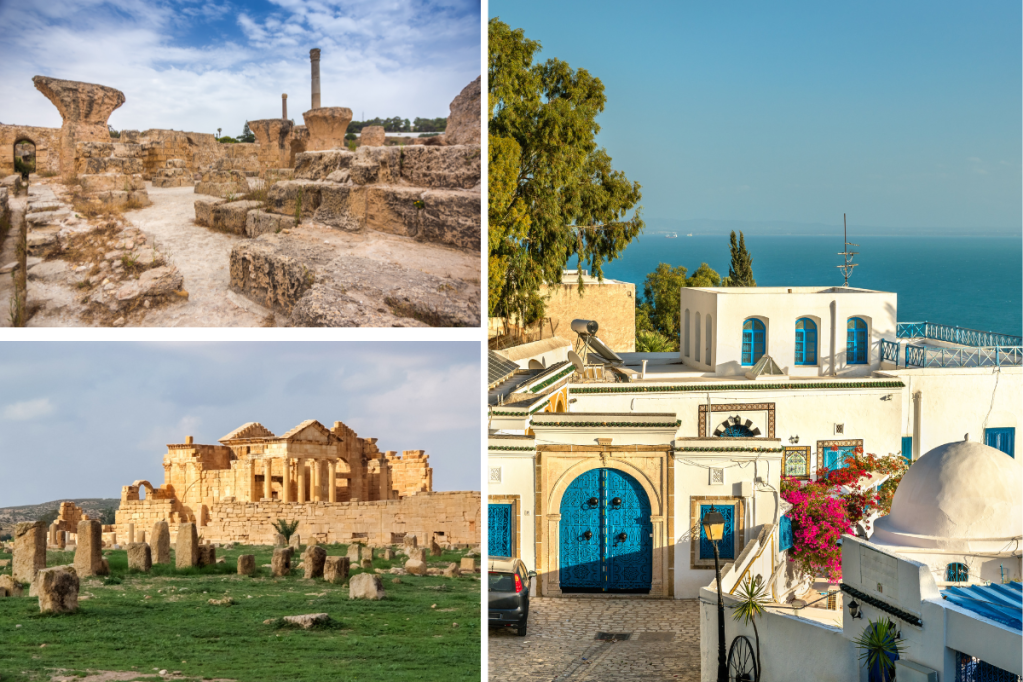
The country’s traditional architecture is a manifestation of this cultural fusion. Berber, Arab, and European styles are evident in Sidi Bou Said’s blue-and-white buildings and Tunis’s colorful souks. Tunisian music blends Arab, African, and Andalusian influences.
Tunisian cuisine showcases the country’s diverse influences. The cuisine combines Arabic, Mediterranean, and Berber influences. Couscous, a Berber semolina meal paired with meats and vegetables, is a favorite. Harissa and brik, a fried egg and tuna pastry, are also popular.
Tunisia’s cultural diversity is also reflected in its fashion sector. Tunisian attire blends Berber, Arab, and Ottoman elements. The country’s vibrant fashion sector mixes traditional and modern patterns to create unique and colorful clothes. Tunis and other cities’ souks provide fashion tours.
A Trip Through Time: Immersing Yourself in Tunisia’s Fascinating History
Tunisia’s Mediterranean geography has shaped its history. Over the centuries, the country’s location at Africa-Europe’s crossroads has made it a trade hub and conquest target. A trip through Tunisia is a journey through time, with countless historical sites and monuments to explore.
One of the most famous historical sites in Tunisia is the ancient city of Carthage. Founded in the 9th century BC, Carthage was a major power in the Mediterranean for centuries. The Punic ports, Antonine Baths, and Amphitheater are open to tourists.
Another major historical site in Tunisia is the city of Dougga. Located in the northwest of the country, Dougga was a major Roman city and is now a UNESCO World Heritage Site. The Capitol, Theater, and Triumphal Arch are well-preserved ruins that visitors can tour.
Tunisia’s history is not limited to its ancient past. The country also played a major part in World conflict II, with the Battle of Tunisia marking a turning point in the conflict in North Africa. Visitors can explore the battlefields and cemeteries of the conflict, including the North Africa American Cemetery and Memorial.
Tunisia’s history is a rich tapestry of cultures and civilizations. From ancient ruins to modern monuments, the country’s historical sites offer a glimpse into its rich and diverse past.
From Music to Fashion: A Celebration of Tunisia’s Creative Industries
Tunisia’s diverse culture and rich history inspire its creative industries. The country’s creative scene celebrates its diversity, from traditional music to current fashion. Visit Tunisia to learn about its creative industries and artists and designers.
Tunisia’s Arab, African, and Mediterranean roots are reflected in its music. Traditional Tunisian music uses the oud, a stringed instrument like a lute, and the qanun, a zither. Modern Tunisian music blends these ancient components with contemporary genres to create a dynamic sound.
Another illustration of Tunisia’s creativity is its fashion sector. The business creates bright, unique clothes by mixing traditional and modern components. Tunisian fashion designers are noted for their inventive textile utilization and ability to blend traditional needlework and patterns into modern designs.
Tunisia’s film industry is also rising. The country’s rich cultural heritage and stunning landscapes make it a great filming site. Tunisian films like “Hedi” and “Beauty and the Dogs” are garnering international honors.
The creative industries of Tunisia reveal the nation’s unique identity. The country’s creative scene celebrates its unique culture in music, fashion, film, and art.
Relish the Local Life: Experiencing Tunisia’s Traditional Festivals and Celebrations
Tunisia’s rich cultural legacy is reflected in its festivals and celebrations. From religious holidays to cultural celebrations, these events allow locals and visitors to experience Tunisia’s traditional way of life and colorful culture.
The Festival of the Sahara is Tunisia’s most popular. In Douz, this festival honors Bedouin culture with music, dance, and camel races and horseback riding. Visitors from throughout the world flock to the celebration.
Tunisia’s Sidi Bou Said Festival is also significant. The scenic hamlet of Sidi Bou Said celebrates its unique blend of Arab and Mediterranean cultures with traditional music, dance, and food at this festival. The festival showcases the town’s traditional architecture, with inhabitants decorating their homes with blue-and-white tiles and flowers.
Tunisia’s Eid al-Fitr is also significant. The conclusion of Ramadan is commemorated with feasting and gift-giving. The festival brings family and friends together to eat brik and couscous.
Tunisia’s traditional festivals and celebrations offer a chance to discover its unique culture and dynamic social scene. Visitors visiting Tunisia will be charmed by the country’s rich and diverse traditions, whether during a religious or cultural festival.
A Journey of the Senses: Sampling Tunisia’s Traditional Crafts and Arts
Tunisia’s traditional crafts and arts showcase its brilliant colors, elaborate patterns, and captivating textures. Tunisia’s handmade pottery, textiles, woodcarvings, and jewelry reflect its rich history and culture. Tunisia’s ancient crafts and arts will captivate and inspire.
Tunisian crafts use locally derived materials such clay, wool, leather, and olive wood. Tunisian ceramics are known for their elaborate designs and vibrant hues, which reflect the country’s Berber, Arab, Ottoman, and Andalusian traditions. The elaborate stitching of Tunisian fabrics, with colorful themes and geometric designs that differ by location, is also stunning.
Tunisia’s excellent woodcarvers and metalworkers create ornate door and window frames, jewelry boxes, and lamps. The country’s jewelry-making tradition is centuries old and deeply rooted in its culture. Each piece tells a narrative and has symbolic importance. For its intricate designs and fine craftsmanship, Tunisian silver jewelry is highly sought after.
In Tunisia’s many souks, or markets, local artisans display their crafts and products. Tunis’s medina, a UNESCO World Heritage site, is home to some of the country’s most famous souks, such as the Souk El Attarine, which sells spices, perfumes, and traditional medicines, and the Souk des Teinturiers, which sells bright textiles.
Conclusion
Tunisia’s cultural and historical heritage is a unique and fascinating blend of influences from many different cultures and civilizations. Whether exploring the country’s traditional architecture, music, and cuisine, or delving into its rich and complex history, visitors to Tunisia are sure to be captivated by the country’s unique identity and vibrant cultural scene.
Tunisia’s creative industries and traditional festivals are a testament to the country’s rich cultural heritage and vibrant social scene. From traditional music to modern fashion, and from religious festivals to cultural celebrations, Tunisia’s diverse cultural offerings provide a unique and captivating experience for visitors. Exploring these aspects of Tunisia’s culture offers a glimpse into the country’s unique identity and the opportunity to relish the local way of life.
Tunisia’s traditional crafts and arts offer a fascinating glimpse into the country’s cultural heritage and are a testament to the skill and creativity of its artisans. A journey of the senses through Tunisia’s souks and workshops is an unforgettable experience that is sure to leave visitors with a deeper appreciation for the country’s rich artistic traditions.
 Hey Singapore