
Our guide to Armenia’s top attractions reveals its hidden gems, rich history, and natural beauty. Discover Armenia’s unique destinations and breathtaking landscapes, from the mystical Garni Temple to Lake Sevan. Plan your trip today.
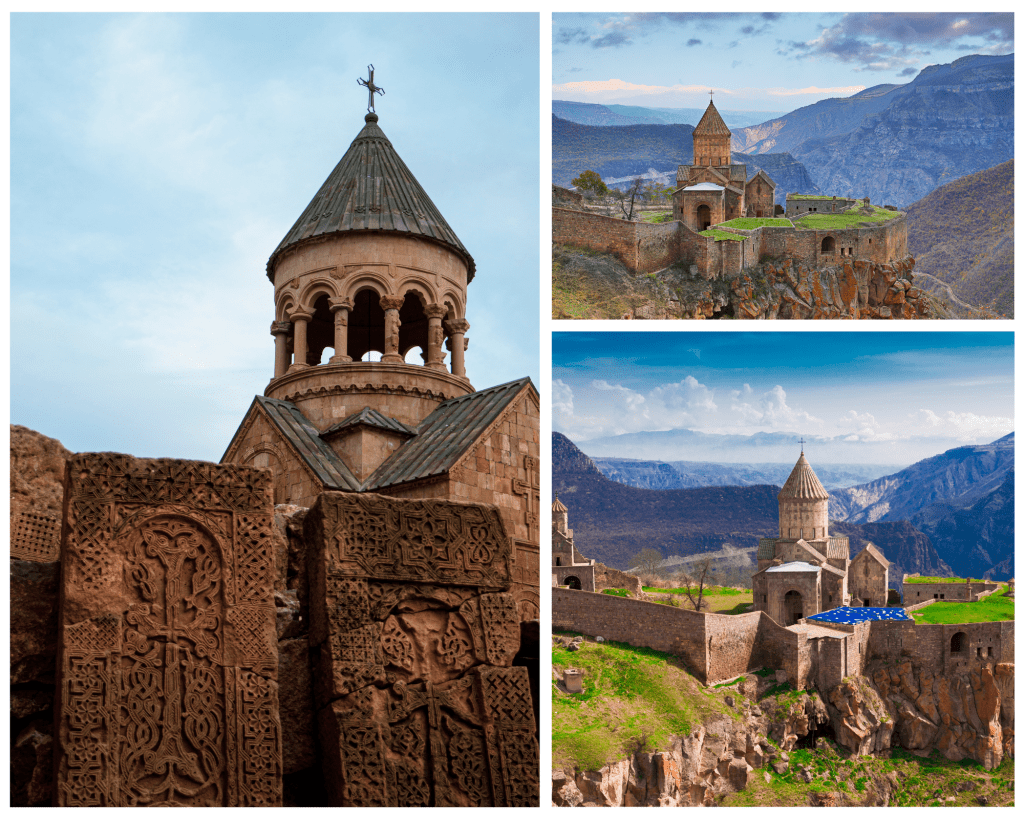
The Enchanting Tatev Monastery and the World’s Longest Cable Car
The Tatev Monastery in southern Armenia is an exquisite complex of religious buildings and monuments. This monastic complex is famed for its rich history, gorgeous architecture, and breathtaking views. Tatev Monastery’s cable car is the world’s longest non-stop reversible aerial tramway. “Wings of Tatev,” the cable car that takes passengers across the Vorotan River Gorge and up to the monastery, is a memorable experience.
Saint Gregory the Illuminator erected a modest church in the area in the 4th century, which became Tatev Monastery. The complex developed in size and importance over the ages, becoming one of the region’s most important cultural and educational hubs. The monastery’s St. Astvatsatsin Church is a beautiful example of Armenian ecclesiastical architecture. The church has centuries-old carvings, frescoes, and decorative embellishments.
The Wings of Tatev cable vehicle, built in 2010, is a modern engineering marvel. The 5.7-kilometer cable car offers amazing views of the surrounding mountains and valleys. Armenia’s gorgeous natural scenery may be seen during the 12-minute ride. Visitors can explore the monastery’s many buildings and monuments. The Tatev Monastery is one of the few places that combines historical relevance, cultural significance, and natural beauty.
The Mystical Garni Temple: A Journey to the Pagan Past
Visitors can see Armenia’s pagan past at the Garni Temple. Armenia’s sole Hellenistic temple is thought to have been built in the 1st century AD. Armenia’s architectural traditions were influenced by ancient Greek civilization, as shown by the temple’s columns and arches.
The Garni Temple’s history is unknown, however King Tiridates I may have built it as a tribute to Mihr, the sun deity. The temple’s mysterious ambiance is enhanced by its hilltop location overlooking the Azat River Gorge. Visitors can tour the temple’s intricately carved and decorated chambers. The temple’s remarkable colonnade has 24 columns that support a massive pediment.
Armenia’s cultural history is symbolized by the Garni Temple, a great architectural feat. The temple’s survival shows Armenian culture’s tenacity. The temple is a prominent tourist attraction where visitors may learn about Armenia’s history and admire its beauty. Garni Temple offers a rare peek into Armenia’s ancient past.
The Fairy Tale Village of Dilijan: A Serene Escape
Dilijan, a scenic village in Armenia, is known as “Little Switzerland” for its beautiful scenery and elegant architecture. In Tavush, this fairy tale town offers a peaceful retreat from daily life. Dilijan’s thick forests, crystal-clear streams, and calm ambiance make it a great place for nature enthusiasts and those seeking peace and leisure.
Dilijan’s Dilijan National Park is one of Armenia’s largest protected regions. The park is famous for its hiking paths, views, and unique flora and fauna. The park’s ecosystems, from alpine meadows to deep woods, can be explored. The Old Town in Dilijan is a well-preserved example of Armenian folk architecture. The Old Town has various old buildings and churches, including the UNESCO World Heritage-listed Saint Astvatsatsin Church.
Wood carving, ceramics, and rug weaving are Dilijan’s traditional crafts. Visitors can tour the village’s craft workshops and watch artists at work. The Dilijan History Museum, which highlights the village’s rich cultural legacy, is one of numerous museums in the village. Dilijan is a great place to visit for nature, history, and traditional crafts.
The Secret Caves of Khndzoresk: A Journey into the Past
Khndzoresk, in southeast Armenia, is recognized for its remarkable underground cave network. These caves, chiseled by hand over ages, were home to a thriving Armenian subterranean society. Visitors can experience a fascinating part of Armenian history and culture in the caves.
Armenian monks are thought to have carved Khndzoresk’s caves in the 4th century. The caves increased in size and intricacy over the years, eventually housing hundreds of cave dwellers. The population prospered in the caves, which were used as homes, stables, and churches for generations before shifting to more contemporary homes in the early 20th century.
Khndzoresk’s caves and history are open to visitors today. The caves illustrate the cave inhabitants’ creativity, inventiveness, and adaptability. The village’s lovely architecture, old churches, and beautiful natural settings can be explored by visitors. The town is in a beautiful gorge with stunning views of the mountains and valleys.
The Underground World of the Geghard Monastery: A Marvel of Architecture
Armenia’s Geghard Monastery is a remarkable example of Armenian architecture. The 4th-century rock-carved monastery located in Kotayk province. The monastery’s elaborate carvings, beautiful frescoes, and underground chambers are engineering feats.
The Geghard Monastery’s underground rock-carved chambers stand out. The monastery monks worshipped and meditated in these chambers. The compartments are connected by small tunnels to shield the monks from attacking armies. The chambers’ acoustics are perfect for choir concerts and other musical activities.
The UNESCO World Heritage-listed Surb Astvatsatsin Church is one of several remarkable buildings at the Geghard Monastery. The church’s sculptures and frescoes portray biblical scenes. The monastery’s courtyards, chapels, and other architectural features showcase the Armenian architects and builders’ ingenuity and inventiveness.
Tourists and pilgrims visit Geghard Monastery for its architecture and culture. The Azat River Gorge and Garni Temple are among the monastery’s beautiful environs. Visitors can also visit Geghard, which has various traditional craft workshops and other cultural attractions. The Geghard Monastery has something for everyone—history, culture, and architecture.
Conclusion
The Geghard Monastery is a wonderful example of Armenian architecture and culture. The Armenian architects and builders who built the monastery were creative and ingenious, as shown by its underground rooms, complex carvings, and gorgeous murals. The monastery attracts tourists and pilgrims who want to learn about Armenia’s history and culture. The Geghard Monastery is worth seeing if you like architecture, history, or nature.Armenia’s most intriguing attractions are Dilijan and Khndzoresk. Dilijan offers a peaceful getaway into nature, while Khndzoresk takes tourists back in time to see Armenian cave dwellers’ intriguing life. These sites provide something for everyone, whether you like history, culture, or nature. These attractions are only a handful of the many fascinating spots in Armenia, which is rich in history and culture.Tatev Monastery and Garni Temple are Armenia’s most spectacular and distinctive destinations. These places allow tourists to understand the country’s rich history and culture while appreciating some of the most beautiful Armenian architecture. The Wings of Tatev cable car and Garni Temple offer a look into Armenia’s pagan past, respectively.
 Hey Singapore