
Experience the allure of Dijon, France, a captivating destination for aficionados of history, culture, and food. Discover the city’s hidden gems and gastronomic delights.
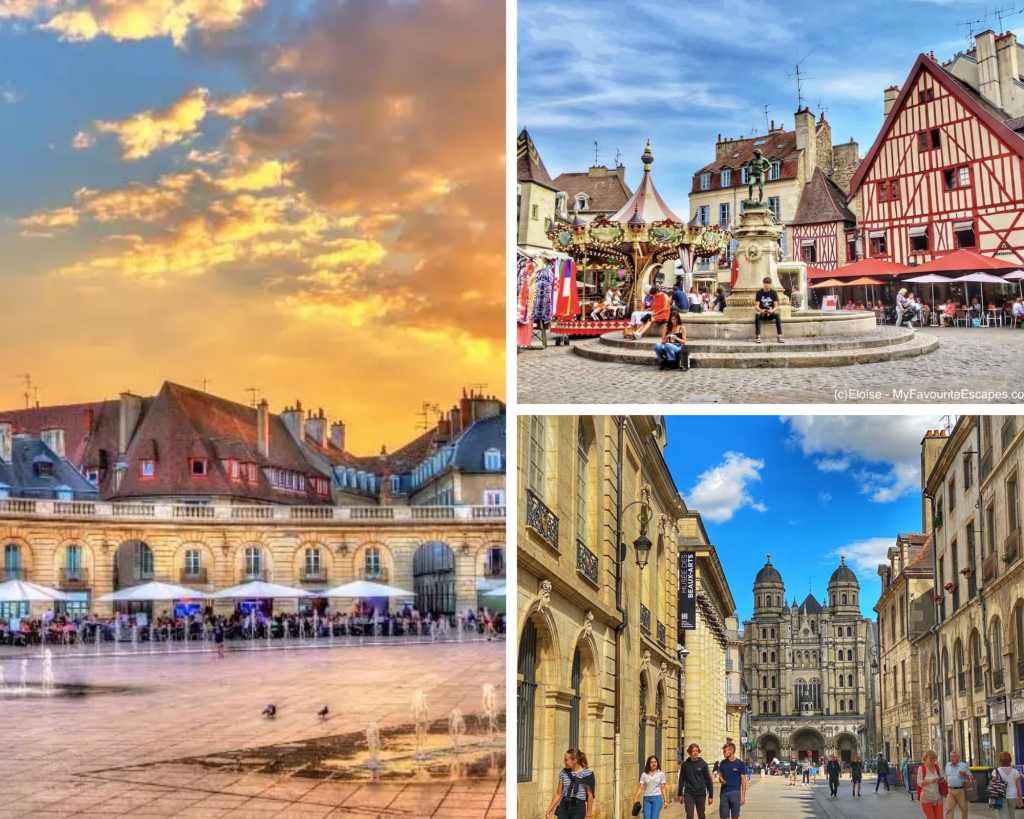
The Capital of Burgundy: A Brief History of Dijon and Its Importance in France
In eastern France, Dijon, the capital of Burgundy, has a rich history and culture. The city was founded as a Roman town in the 1st century BC and later became the capital of Burgundy. Due to its location at the crossroads of several trade routes, Dijon was a major economic and political center in the Middle Ages.
Dijon flourished economically and creatively throughout the Renaissance. The city’s authorities commissioned some great architectural projects and supported famous artists like Claus Sluter and Jean de Marville. The Burgundy School of Music and the Hôtel des Ducs, now Dijon’s Museum of Fine Arts, were founded in the 17th and 18th centuries, boosting Dijon’s cultural status. These monuments boosted Dijon’s cultural and musical prestige.
Dijon remains France’s cultural and economic hub. Its wine, mustard, and architectural treasures are renowned. The Palace of the Dukes of Burgundy, Notre-Dame Cathedral, and Philippe le Bon Tower are among the city’s museums, art galleries, and historic structures that travelers may visit to learn about its rich history and culture.
Exploring Dijon’s Rich Artistic and Architectural Heritage
The city’s artistic and architectural heritage honors Dijon’s rich history and culture. The city has several museums and galleries that showcase its artistic achievements, as well as a magnificent collection of Gothic, Renaissance, and Baroque buildings.
One of the city’s most famous sites, the Palace of the Dukes of Burgundy, dates back to the 14th century and is a stunning example of medieval architecture. The palace’s walls and ceilings are covered with sculptures, tapestries, and paintings. Gothic and Renaissance design elements are used. The Museum of Fine Arts, which houses paintings, sculptures, and decorative arts, is located in the palace.
Another Dijon feature is the 13th-century Notre-Dame Cathedral. The city erected this gothic marvel. The church’s nave, stained-glass windows, and facade include intricate carvings and sculptures. Just as stunning is the cathedral’s interior.
Gustave Eiffel, Henri Matisse, and Pablo Picasso’s works are on display at the city’s museums and galleries. For example, the Musée Magnin contains a stunning collection of 18th- and 19th-century paintings, sculptures, and furniture, while the Musée d’Art Sacré has a stunning collection of religious art and relics. Both museums are in Paris.
Savoring Dijon’s Gastronomic Delights: From Mustard to Michelin-starred Restaurants
Dijon’s Michelin-starred restaurants and world-famous mustard make it a gourmet destination. The city’s cuisine is heavily influenced by the nearby Burgundy wine region and local cuisines.
Dijon’s famous mustard is made from mustard seeds, vinegar, and wine. The city’s mustard plants and shops provide tours of the mustard-making process and tastings.
Dijon is famed for its mustard and classic French dishes like coq au vin, beef bourguignon, and escargots. The city has many Michelin-starred restaurants, like Loiseau des Ducs and William Frachot, which provide delicious food made with fresh, local ingredients and modern techniques.
Dijon’s famous cuisine may be sampled at the city’s many markets, such as Les Halles, which has a wide assortment of fresh fruit, meats, and cheeses. The city also has other food-related events throughout the year, such as the Dijon Gastronomique festival, which celebrates the city’s culinary heritage with tastings, competitions, and chef demonstrations.
The Best Places to Enjoy Burgundy Wines in Dijon: Vineyards, Cellars, and Tasting Rooms
Dijon, the center of Burgundy and home to one of the world’s most famous winemaking regions, is the perfect site to start exploring the region’s vineyards, cellars, and tasting rooms. The city is on the Côte d’Or, Burgundy’s most famous wine-growing area, and has several famous wine merchants and producers.
Visiting Dijon’s many vineyards and wineries is a great opportunity to sample Burgundy wines. Dijon is near Gevrey-Chambertin, Vosne-Romanée, and Meursault. These towns provide stunning views of sloping vineyards and picturesque villages.
Dijon’s many wine cellars and tasting rooms allow visitors to sample and buy wines from some of the region’s most esteemed growers. Dijon’s most famous wine merchants are Joseph Drouhin and Louis Jadot. Visit any of these places to see their cellars and sample their wines.
Tourists looking to maximize their Burgundy wine experience might take a wine-tasting tour. On these trips, tourists learn about the region’s winemaking history and drink wines from various vineyards and producers. Dijon’s most popular wine-tasting tours are the Côte de Nuits and Côte de Beaune, which showcase the region’s best wines.
Discovering Dijon’s Natural Beauty: Parks, Gardens, and Nature Reserves
Dijon, the Burgundy region’s capital, is famed for its rich culture, delicious food, and fine wines. Despite this, the city has a wonderful selection of natural sites worth seeing. From well-kept parks and gardens to natural preserves and open spaces, Dijon has something for everyone.
One of the city’s most famous parks is Parc de la Colombière. Its vast lawns, tranquil lakes, and diverse flora and wildlife make it a large park. At this park, you may picnic, stroll at your own leisure, or play frisbee with friends. The Jardin Darcy is another city park. It boasts a beautiful fountain and city views on a hillside.
The Côte-d’Or department has many environmental reserves, including the Forest of Citeaux and the Morvan Regional Environmental Park, where visitors may learn about the region’s extensive natural resources. Walking, bicycling, or simply relaxing in these regions is great.
Whether you love nature or just want to escape the city, Dijon’s parks, gardens, and natural reserves are worth a visit.
A Night Out in Dijon: Bars, Clubs, and Entertainment Venues for All Tastes
Dijon’s nightlife comes alive after sunset. Dijon has everything for everyone, from cozy wine bars to lively nightclubs and everything in between.
Try Burgundy’s most famous wines in one of the city’s numerous wine bars for a more relaxing night out. L’Instant Vin is a romantic wine cellar, whereas Le Millésime is a quiet wine bar with a huge wine selection by the glass or bottle. They share a building.
Dijon has several options for a livelier atmosphere. Rue de la Chouette features several bars for bar-hopping. Le Pop Art is an art-inspired pub with numerous DJ nights, while Le Comptoir des Colonies is a lively tropical-themed bar with a large cocktail menu.
Dijon has several nightclubs that play a variety of music, perfect for partying. Le Deep, a hip-hop and R&B club, and L’An-Fer, an electronic music club since the 1980s, are popular.
Dijon’s bars, clubs, and other entertainment venues provide everything from a quiet drink to a wild night out.
Dijon is a must-see for French history, culture, and gastronomy lovers. Burgundy’s capital has a Roman past. The Palace of the Dukes of Burgundy, Notre-Dame Cathedral, and Philippe le Bon Tower are famous Dijon landmarks. These buildings show the city’s cultural and architectural heritage. This city’s famed mustard, Michelin-starred restaurants, and traditional French cooking have been influenced by Burgundy’s wine region. Dijon’s wineries, cellars, and tasting rooms attract wine lovers. The Côte d’Or, Burgundy’s most famous wine area, borders the city. Finally, Dijon’s natural splendor makes its parks, gardens, and nature reserves worth seeing. Dijon is a fascinating city with something for everyone.
 Hey Singapore