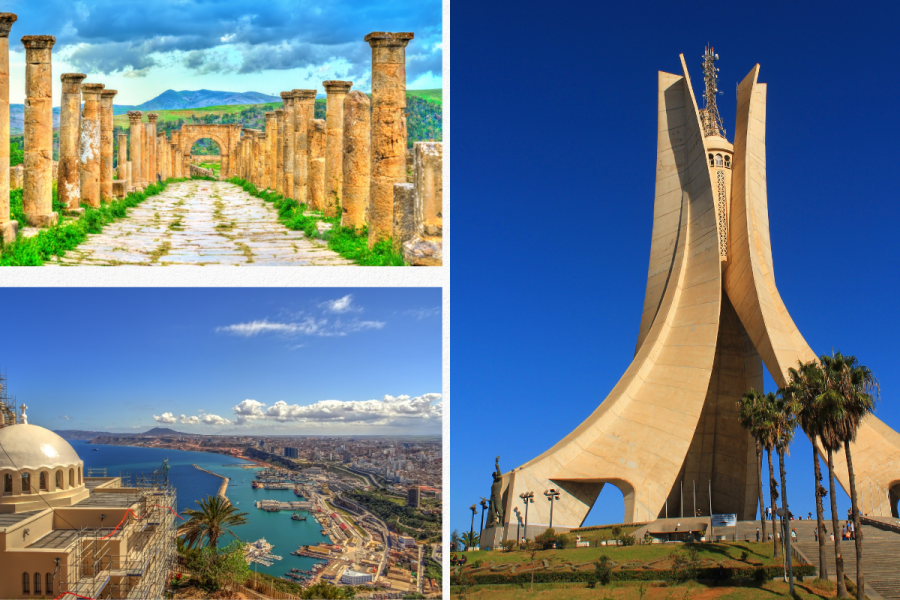
The Mediterranean coast, the Sahara desert, and breathtaking mountain ranges may all be found in Algeria, a nation in North Africa. Whether you’re an adventurer, a history buff, or a gourmet, Algeria offers something for you. This article will explore some of the top things to do in Algeria.
Visit the Roman Ruins of Timgad
One of Algeria’s most spectacular archaeological sites is the Roman ruins at Timgad, also known as Thamugadi. Timgad, a well-preserved Roman city from the first century AD, is located in the northern region of the nation close to the town of Batna.
In North Africa, Timgad was a significant Roman stronghold and a significant hub for trade. Roman urban planning was readily seen in the city’s layout, which had a grid of streets and a number of public structures including a theater, a market, and a library.
Visitors who wish to learn more about Roman city life may now see Timgad’s well-preserved ruins. The city’s old religious center, the Capitolium, the Arch of Trajan, the city’s main entrance, and the 3,500-seat Amphitheater are a few of the prominent attractions.
Trek through the Sahara Desert
When visiting Algeria, trekking across the Sahara Desert is an incredible experience that should not be missed. The Sahara, the world’s biggest scorching desert, spans most of North Africa and Algeria’s most southern area.
The Sahara is well known for its expansive and varied landscapes, which vary from towering sand dunes to rocky plateaus and breathtaking canyons. Trekking across the desert offers a rare chance to discover this hard yet stunning landscape and to take in the desert’s isolation and stillness.
Several daylong to multi-weeklong guided treks in the Sahara are available from a variety of travel operators. The Tassili n’Ajjer National Park, a UNESCO World Heritage Site noted for its spectacular rock art and dramatic scenery, is where treks often begin in Algeria’s southern city of Tamanrasset.
Discover the Traditional Berber Culture in the M’zab Valley
A distinctive and dynamic culture may be found in the M’zab Valley, a UNESCO World Heritage Site in Algeria’s Ghardaia Province. The valley is well-known for its unique architecture, which is distinguished by the use of clay materials and elaborate geometric patterns.
The Mozabite people, a Berber ethnic minority that has lived in the M’zab Valley for millennia, also call it home. The ancient way of life and cultural traditions of the Mozabites have been maintained, making the valley a top choice for tourists who wish to learn more about Berber culture.
Visiting the nearby villages on a guided trip is among the greatest ways to explore the Berber culture in the M’zab Valley. These excursions often involve stops at authentic Berber houses so guests may see Mozabites at work and living. Additionally, visitors could get to see traditional Berber crafts like pottery and weaving being made.
Explore the Coastal City of Oran
In the Algerian coastal city of Oran, you may enjoy swimming and water sports at lovely beaches including Plage Les Andalouses and Plage de Madagh. Historic sites including Santa Cruz Fort and the Great Mosque of Oran, which highlight the city’s rich history and architecture, are also located there. The Ahmed Zabana National Museum and the Oran Regional Theatre are only two examples of Oran’s thriving cultural scene. Visitors may savor delectable regional food that has been inspired by Arab and Berber traditions. Oran, which is located in northwest Algeria, is a must-visit location because it provides a distinctive fusion of beach life, history, culture, and food.
Visit the Ancient City of Djemila
The Romans established Djemila, also called Cuicul, in the first century AD, and it swiftly developed into a bustling metropolis. Visitors may now tour the impressively well-preserved remains, which display the city’s previous splendor. Two of the most impressive structures are the ancient forum, which served as the center of the city’s political and social life, and the well-preserved Roman theater, which is still used to present plays today.
Another well-liked destination in Djemila is the Temple of Septimius Severus, which is renowned for its complex carvings and breathtaking views of the hills in the area. The House of the Bathers, an old bath complex that offers insight into the city’s everyday life and cleanliness procedures, is another attraction open to visitors.
Djemila is a well-liked destination for hikers and environment lovers due to its hillside position, which offers panoramic views of the nearby mountains and valleys. The adjacent hot springs and ancient Berber settlements are also available for visitors to experience.
Enjoy the Mediterranean Coastline in Annaba
The city of Annaba, which is situated on Algeria’s northeastern coast, is well known for its stunning Mediterranean shoreline. This breathtaking location is well-known for its immaculate beaches, extensive history, and dynamic culture, making it a well-liked option for tourists looking for a distinctive and restful vacation experience. This article will examine some of Annaba’s top activities, concentrating on its Mediterranean shoreline.
Visit the El Oued Oasis
Located in Algeria’s east, El Oued Oasis is a wonderful place to visit. This oasis is renowned for its magnificent palm trees, historic buildings, and rich culture. Visitors to El Oued may stroll through the narrow streets of the “ksar,” or old town, and take in the local mud-brick architecture.
The Grand Mosque, a magnificent example of Islamic architecture from the 17th century, is one of El Oued’s top attractions. A lively market that sells a range of things, including traditional handicrafts and spices, is the neighborhood souk, which visitors may also explore.
The mainstay of the regional economy, date palms are another reason why El Oued is well-known. Visitors may try a selection of delectable date-based treats, such as pastries, jams, and sweets. Beautiful in their own right, the palm groves provide a tranquil oasis in the middle of the dry desert terrain.
Experience the Vibrant Culture of Constantine
The city of Constantine, which lies in northeastern Algeria, has a bustling environment and a rich cultural history. The city is renowned for its breathtaking setting, sitting on a plateau with a view of the Rhumel River’s deep valley.
The Casbah, a fortified fortress that has been recognized as a UNESCO World Heritage Site, is one of Constantine’s top attractions. Some of the city’s most iconic structures and sites may be found in the Casbah, a tangle of congested streets, lanes, and stairs.
The Emir Abdelkader Mosque, one of Algeria’s biggest and most magnificent mosques, is another must-see site in Constantine. The mosque has a magnificent exterior made of white marble and a roomy interior that can hold a large number of worshippers.
Explore the Beautiful Mountains of Kabylie
The Kabylie Mountains, which are found in northern Algeria, are renowned for both their breathtaking natural beauty and distinctive cultural legacy. Numerous Berber tribes, who have lived in the area for countless years, call it home.
The Tizi n’Tirourda pass, a picturesque route that snakes through the mountains and provides stunning views of the surrounding scenery, is one of the most well-known attractions in the Kabylie Mountains. Along the trip, there are several overlooks where travelers may stop and take in the breathtaking beauty. They can also visit the numerous little villages and towns that dot the landscape.
The village of Tizi-Ouzou, which acts as the area’s entry point, is another well-liked destination in the Kabylie Mountains. A variety of museums and cultural institutes that reflect the history and culture of the Kabylie people are located in the town, and tourists may also try traditional Berber food at nearby cafés and restaurants.
 Hey Singapore