
Looking for the perfect study space for your child? Discover the benefits of a kids study table Singapore. Find the best designs and features today.
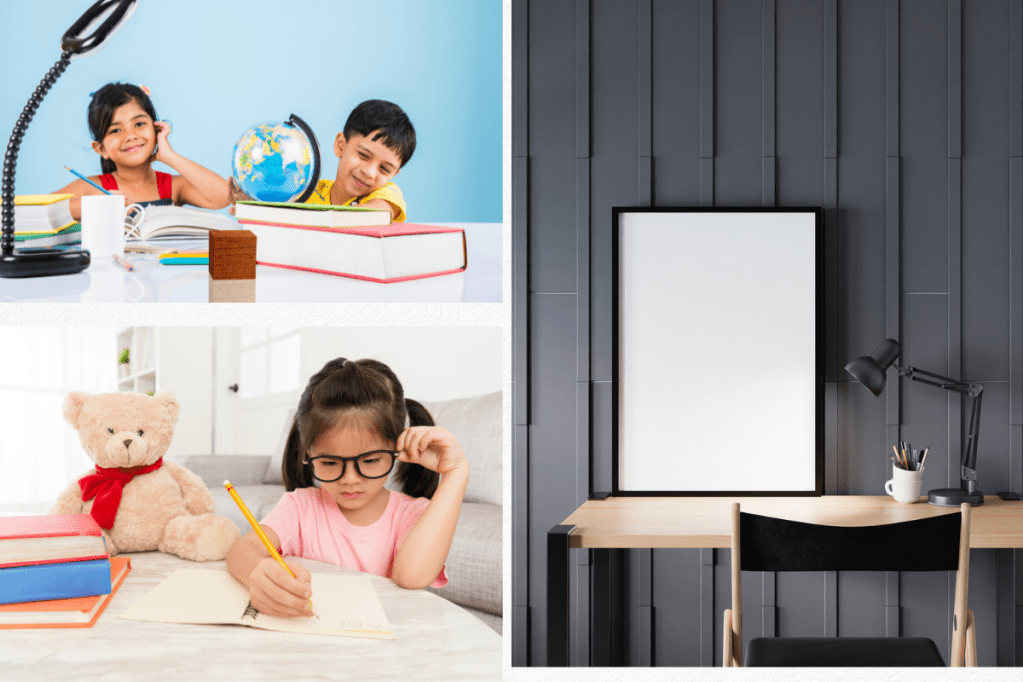
Incorporating ergonomic chairs and lighting
Ergonomic chairs and lighting are essential for any study or work room, especially for kids who spend long hours reading or typing. Proper lighting and seating can reduce eye strain and neck and back pain. There are various variables to consider when adding ergonomic chairs and lighting to a child’s study environment.
First, the chair should be adjustable in height and depth with a comfortable seat and backrest that promotes excellent posture. Look for chairs with lumbar support and armrests that can be adjusted to the child’s desk height. Too-big or too-small chairs can cause discomfort and strain.
Second, illumination is vital for productivity and comfort. Choose a desk lamp that delivers bright, even light without glare if natural light is not available. Avoid fluorescent lighting, which can trigger headaches. To brighten the area, place the desk near a window or use light-colored walls.
Finally, encourage exercise and breaks throughout study time. Add a balance ball or cushion to the chair to improve posture and core strength. To avoid stiffness and weariness, encourage kids to take pauses and move, stretch, and exercise.
For a comfortable, productive, and healthy study space, ergonomic chairs and lighting are necessary. By choosing the correct chair and lighting, promoting mobility and breaks, and stressing excellent posture and eye health, parents may help their children reach their academic potential.
Adding personal touches and decorations
Personal touches and decorations can make a study place more appealing and motivating for kids. Personal touches can also help kids feel more connected to their studies and push them to work harder.
Consider the child’s hobbies and interests while decorating a study space. Hang posters or photographs of their favorite animals, sports, or novels. Plants and flowers on desks and shelves increase air quality and mood. A corkboard or whiteboard for kids’ artwork or notes is a good idea.
Choosing the correct workstation and storage options is another way to personalize. Books, documents, and supplies can be organized on desks with drawers or shelves. Choose a color or pattern that complements the room or the child’s taste. Encourage kids to decorate their desks with stickers, magnets, and other tiny decorations.
Adding personal touches and decorations to a study area can help kids feel more engaged and motivated. Parents may help kids enjoy learning and accomplish their academic goals by establishing an environment that represents their interests and personality.
Using colour psychology to enhance mood and creativity
Colour psychology studies how colors affect human behavior and emotions. The appropriate colors can boost mood and creativity in a child’s study space, improving focus, productivity, and academic performance.
Blue is soothing and helps reduce anxiety and boost attention. Green’s association with nature and growth makes it a fantastic color for learning and creativity. Yellow is a happy, vibrant color that can increase mood and motivation. Red boosts heart rate and attention, making it a fantastic choice for brief concentration sessions.
It’s crucial to pick the proper colors for a study space that uses color psychology. Avoid overloading with one color. To provide visual variation, use accent colors or patterns. Neutral walls and furniture can help balance brighter colors.
Color psychology can improve children’s academic performance and well-being by boosting mood and creativity in a study space. Parents may create a focused, motivated, and inspired setting by choosing the proper colors and combinations.
Maximising storage space and organisation
Maximizing storage and organization is crucial for a productive and effective children’s study place. Distractions, worry, and lost time can result from clutter and disorganization. Parents may assist their kids stay focused, productive, and on track with their schoolwork by prioritizing storage solutions and organizing.
Consider the child’s routines and needs while constructing a study place. To keep books, documents, and supplies organized and accessible, choose desks with built-in storage or add shelves, drawers, or cubbies. Label or color-code storage options to make stuff easy to find and access. To avoid clutter, encourage kids to declutter periodically.
Vertical space can also be used for storage. To store and show objects, hang shelves or pegboards on walls. Use stackable storage containers or boxes to maximize shelf or closet space. Use flexible storage options to meet changing needs.
For a study environment to be useful, efficient, and conducive to learning, storage and organization must be maximized. Parents may assist their children stay focused, productive, and on top of their schoolwork by prioritizing storage solutions, tidying regularly, and using vertical space.
Creating a comfortable and inspiring atmosphere for learning
For academic performance and well-being, children need a comfortable and exciting learning environment. A well-designed study room can help kids stay focused, motivated, and involved in their studies while instilling a lifelong love of learning.
There are various elements to consider when constructing a study area. First, choose ergonomic furniture like chairs that promote excellent posture and prevent back and neck pain. Choose mild lighting that won’t strain your eyes or induce headaches. To relax the room, use plants or natural materials like wood or bamboo.
Second, use color psychology to inspire and motivate, as we described in the preceding section. Blues, greens, and yellows enhance focus, creativity, and positivity. Motivate students using posters or artwork. Playing peaceful or uplifting music in the background helps reduce tension and enhance concentration.
Third, assess the study area’s layout and arrangement. Place the workstation and chair to optimize natural light and reduce distractions. Keep books, documents, and supplies organized and accessible with shelves, cubbies, and drawers. Schedules, to-do lists, and other critical information can be displayed on a whiteboard or corkboard.
Overall, a child’s academic achievement and well-being depend on a comfortable and motivating learning environment. Parents may help their kids focus, engage, and be inspired in school by prioritizing comfort, motivation, and organization.
Conclusion
In conclusion, establishing a well-organized and comfortable study place with ergonomic chairs, proper lighting, personal touches, color psychology, and optimal storage space might improve a child’s academic progress and well-being. By emphasizing these factors and providing a place that promotes focus, motivation, and inspiration, parents may help their children succeed in school and beyond.
 Hey Singapore