
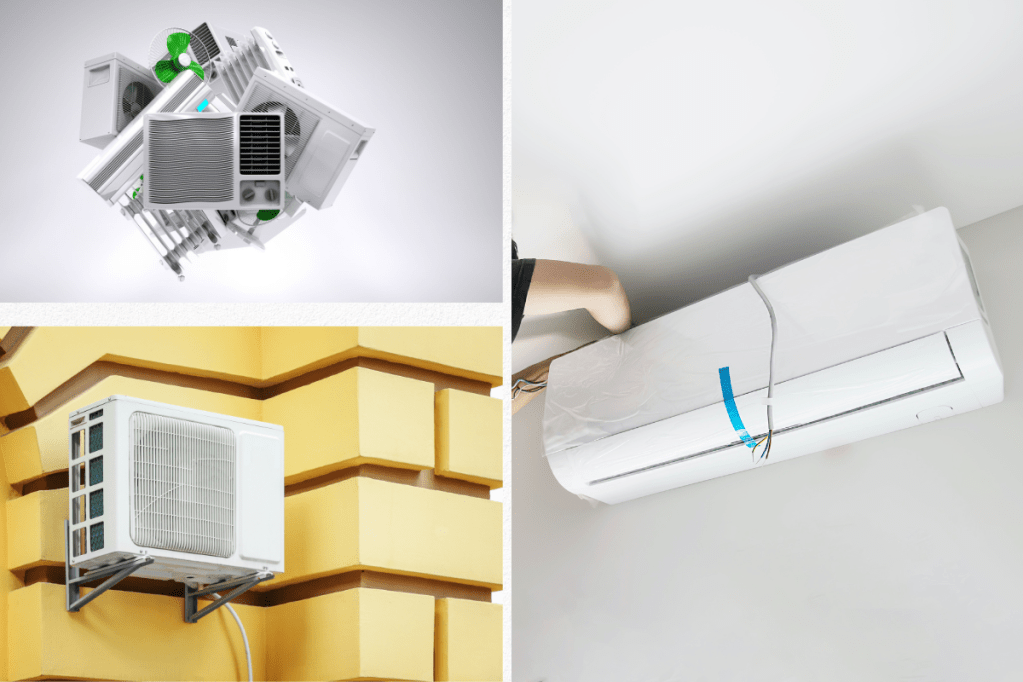
When it comes to purchasing an air conditioning unit, you will come across various terms and models that may seem confusing at first. One of them is the non-inverter aircon. This type of aircon has been around for quite some time and is still popular among households and businesses today. However, if you’re not familiar with the term “non-inverter” or what it means in English language, it can be overwhelming to make a decision. In this blog post, we will take a closer look at non-inverter aircon and break down the meaning behind this type of cooling system.
Introduction to Non-Inverter Air Conditioners
The conventional air conditioning units that have been in use for many years are non-inverter air conditioners, sometimes referred to as fixed speed air conditioners. In these systems, the compressor is either on or off thanks to a fixed-speed motor that functions on a “all or nothing” concept. Despite perhaps being less expensive than inverter air conditioners, they have poorer energy efficiency ratings and may not provide constant cooling comfort. Non-inverter air conditioners often stop and start, using more energy and placing stress on the electrical system. In contrast, inverter air conditioners operate more quietly and efficiently thanks to a programmable compressor unit that can change its energy output as required. A non-inverter air conditioner can be the best choice for you if you’re seeking for a less expensive solution with a straightforward operation. An inverter air conditioner could be a better option, however, if energy economy and noise reduction are important to you.
Fixed Speed Compressor
As previously mentioned, non-inverter air conditioners have a fixed speed compressor that operates on an on/off mechanism. This means that it consumes more energy while running because it cannot adjust the speed of the compressor. The fixed speed compressor also causes the non-inverter model to turn on and off frequently, making it noisier than inverter air conditioners. However, fixed speed compressors are less expensive to purchase than variable speed compressors used in inverter systems. Overall, the fixed speed compressor is just one aspect to consider when deciding between an inverter or non-inverter air conditioner, as energy efficiency and noise level are also important factors to weigh.
All or None Principle
The all or none principle is a defining characteristic of non-inverter air conditioners. These units have a fixed speed compressor that only works on full power until the desired temperature is reached. At this point, the compressor switches off, and the aircon stops cooling until the room heats up again. This on-and-off mechanism can make non-inverter air conditioners less energy efficient than their inverter counterparts, which have greater control over the compressor. Inverter AC units can adjust the compressor speed to match the cooling needs of the room, resulting in significant energy savings. Additionally, inverter technology results in a quieter operation, making inverter air conditioners the preferred choice for many homeowners. Despite costing more, the benefits of inverter ACs may make them a more attractive and more cost-effective option in the long run.
Cost Comparison: Inverter vs Non-Inverter AC
One of the key things to think about when buying an air conditioner is the price. Depending on the brand and kind, non-inverter AC units may range in price from $100 for portable units to $10,000 for central units. However, compared to non-inverter air conditioners, inverter air conditioners often have a greater upfront cost. However, inverter air conditioners are more power- and energy-efficient than conventional AC systems. This indicates that over time, inverter AC units may result in considerable energy savings and may prove to be economically advantageous. When determining which AC unit is best for you, it’s crucial to take both the purchase and ongoing expenditures into account.
Mechanism for Non-Inverter AC On/Off
As already indicated, non-inverter air conditioners depend on a basic on/off mechanism to keep the room at the correct temperature. Non-inverter air conditioners do not adjust to the cooling capacity needed by the room, unlike their inverter counterparts. Up until the necessary temperature is reached, the compressor operates at full speed before fully cutting off. Higher energy consumption and increased compressor wear and tear may be the results of this kind of operation. Additionally, the compressor operating often might disrupt the peace in the space. Non-inverter air conditioners are initially less costly than inverter air conditioners, but because of their inefficiency, they could wind up costing more in the long term. Before purchasing an air conditioner, it is essential to examine the advantages and disadvantages and take into account the requirements of one’s particular scenario.
Energy Efficiency Rating
In addition to the fixed compressor speed, the energy efficiency rating is another feature that distinguishes non-inverter air conditioners from their inverter counterparts. As previously mentioned, non-inverters have a lower energy-efficient rating, making them less environmentally friendly and more costly in terms of energy consumption. On the other hand, inverter ACs have a higher energy efficiency rating, which allows them to adapt power consumption depending on the outdoor temperature. This feature is particularly helpful during summer when the temperature spikes as frequent adjustments are necessary to achieve the desired temperature. With a higher energy efficiency rating, inverter ACs consume less electricity and ultimately lessen the financial burden of monthly utility bills. Therefore, if energy efficiency is a priority, choosing an inverter AC is the best choice.
Inverter AC: Quieter and More Energy-Efficient
Inverter ACs are known for their improved efficiency and quieter operation. Compared to non-inverter models, they have a variable speed compressor that allows them to adjust the cooling output as needed, thereby consuming less energy to keep the desired temperature. In addition, the compressor speed can be adjusted gradually, which minimizes the need for frequent starts and stops that produce noise and wear out the parts faster. This makes inverter ACs a great option for those who value energy savings, comfort and peace of mind. However, they do come at a higher upfront cost than non-inverter models, which may not be affordable for everyone. Thus, it is important to weigh the pros and cons of each type before making a purchase decision.
Inverter Technology
Inverter technology is a revolutionary concept in the air conditioning industry. As mentioned in the previous sections, a non-inverter aircon has a fixed-speed compressor, while an inverter AC has a variable speed compressor. This means that inverter ACs automatically adjust to the cooling requirements of the room, providing consistent and energy-efficient performance. With this technology, air conditioners can operate at different levels of cooling capacity, which generally means that the compressor can operate at a slower speed for longer periods of time, allowing it to maintain a stable temperature in the room. Additionally, inverter technology allows the compressor to ramp up and down more smoothly, leading to a smoother and quieter operation. For those who value efficiency and comfort above all else, opting for an inverter AC is a great choice.
Conclusion
In conclusion, choosing between an inverter and non-inverter AC comes down to personal preference and budget. Non-inverter ACs are cheaper and work well for those on a tight budget, but they come with some drawbacks, such as loud noise and uneven cooling. On the other hand, inverter ACs are pricier but offer superior energy efficiency, quiet operation, and even cooling. If you’re looking for a long-term investment, an inverter AC may be the right choice for you. However, if you’re not willing to pay the extra cost upfront, a non-inverter AC can still get the job done. Ultimately, it comes down to your specific needs and preferences.
 Hey Singapore