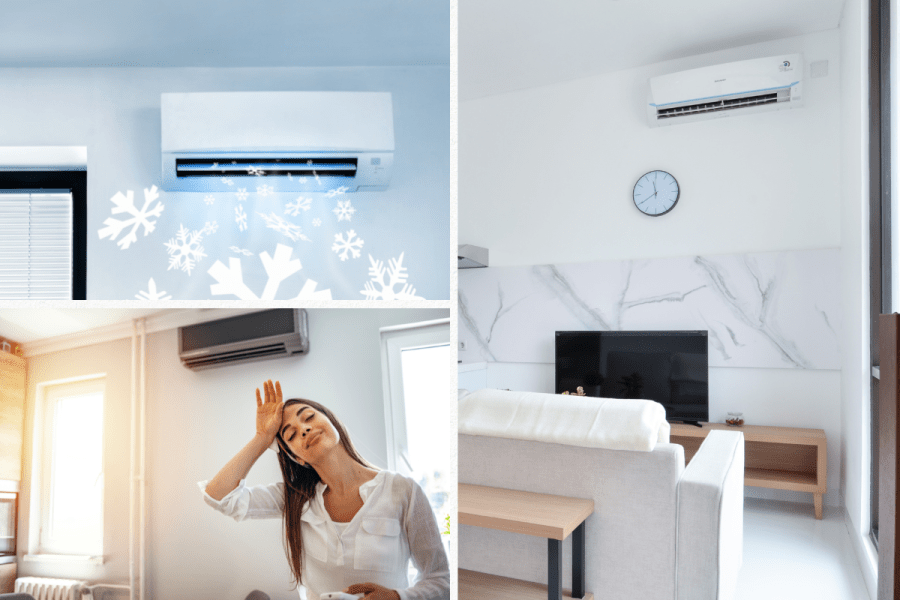
The problem of heat waves is more obvious than ever as the world moves toward modernization. The hot summers now pose a risk to people’s health rather than just being uncomfortable. In today’s world, having a well-equipped, effective air conditioning system is absolutely necessary. The development of air conditioning units has completely changed how we work and live. Numerous new air conditioners have been developed as a result of the development of modern technology; these air conditioners outperform their forerunners in terms of cooling performance, energy efficiency, and environmental friendliness. In this article, we’ll examine the air conditioning units in all its splendor, from its early days to the present, and show how it developed into the pinnacle of sophistication.
The History of Air Conditioning:
The idea of cooling the air goes back to the ancient civilizations of Rome and Egypt, where the wealthy classes would use ice to cool the indoor air. However, the concept of air conditioning as we know it today was first introduced by Willis Haviland Carrier in 1902. Carrier designed the first air conditioning system to solve a problem in a Brooklyn-based printing company. The humidity and heat were causing the paper to expand and contract, resulting in misaligned print. Carrier’s solution was to develop a system that would regulate temperature and humidity levels to ensure stable printing conditions.
Since then, air conditioning systems have advanced considerably. Air conditioning was initially only used in large commercial structures and movie theaters. However, as air conditioning units became more accessible and less expensive over time, their use skyrocketed. Nearly every home, workplace, and automobile today has an air conditioning unit.
Air conditioning unit types:
There are many different types of air conditioning units on the market today, each with specific features and advantages. Let’s examine some of the most well-liked air conditioning unit types in more detail.
Window Air Conditioning Unit:
A window air conditioning unit is a compact and affordable option for cooling a single room. It is easy to install and can be fitted in a window frame. Window air conditioning units are perfect for small apartments or rooms that need occasional cooling. However, they can be noisy and are not energy-efficient.
Split Air Conditioning System:
A split air conditioning system consists of two units: an indoor unit that is installed inside the room and an outdoor unit that is placed outside the building. The indoor unit contains the evaporator, while the outdoor unit houses the compressor. Split air conditioning systems are more energy-efficient than window units and provide better cooling. They are also quieter than window units and can cool multiple rooms.
Portable Air Conditioning Unit:
A portable air conditioner is an independent unit that can be moved from room to room. It is ideal for rooms that require occasional cooling, like bedrooms and living rooms. Portable air conditioners are simple to install and may be an energy-efficient alternative to window units.
Central Air Conditioning System:
The most common type of air conditioning unit used in large buildings, such as offices and hotels, is a central system. A large compressor is located outside the building, and a network of ducts distributes cool air throughout the structure. Central air conditioning systems are efficient and provide uniform cooling throughout a building. However, they are costly to install and require routine upkeep.
Ductless Mini-Split Air Conditioning System:
A ductless mini-split air conditioning system is a variation of the split air conditioning system. It consists of an outdoor unit and multiple indoor units that are installed in each room. The indoor units are connected to the outdoor unit through a conduit that contains the refrigerant line, power cable, and condensate drain. Ductless mini-split systems are ideal for homes that do not have ductwork, and they provide zoned cooling, allowing different rooms to be set at different temperatures.
Innovations in Air Conditioning:
As technology has advanced, so has the industry of air conditioning. Modern air conditioning units are more environmentally friendly, energy-efficient, and technologically advanced than ever before. Explore the most recent advancements in air conditioning.
Smart Air Conditioning Units
Connected to the internet and controllable via a smartphone application, intelligent air conditioners are internet-enabled. In addition, they can be integrated with other smart home devices, such as thermostats, for even greater control over the cooling system. Energy-efficient air conditioning units can save homeowners money on their energy bills.
Inverter Technology:
Inverter technology is a feature found in modern air conditioning units that allows the compressor to vary its speed according to the cooling requirements of the room. This means that the air conditioning unit can adjust its output to match the cooling needs of the room, resulting in energy savings and more precise temperature control.
Eco-Friendly Refrigerants:
Refrigerants used in air conditioning units have been found to contribute to global warming. In response to this, manufacturers are developing eco-friendly refrigerants that have a lower impact on the environment. One such refrigerant is R-32, which has a lower global warming potential than traditional refrigerants.
Air Purification Systems:
Air purification systems are becoming increasingly popular in air conditioning units. These systems use filters to remove impurities and allergens from the air, resulting in cleaner and healthier indoor air quality.
The Future of Air Conditioning:
As the world becomes more environmentally conscious, the air conditioning industry is also evolving to become more sustainable. The future of air conditioning looks promising, with new innovations being developed every day. Let us take a look at some of the potential future developments in air conditioning.
Solar-Powered Air Conditioning:
Solar-powered air conditioning units are becoming increasingly popular in areas with abundant sunshine. These units use solar panels to generate electricity to power the air conditioning unit, resulting in energy savings and reduced environmental impact.
Magnetic Cooling:
Magnetic cooling is a new technology being developed that uses a magnetic field to cool the air. This technology has the potential to be more energy-efficient than traditional refrigerant-based air conditioning systems and could revolutionize the air conditioning industry.
Carbon-Neutral Air Conditioning:
Carbon-neutral air conditioning is a concept that aims to create air conditioning units that have zero carbon emissions. This could be achieved through the use of renewable energy sources, such as solar or wind power, or by using carbon capture technology to offset any emissions produced by the air conditioning unit.
Conclusion:
Air conditioning units have come a long way since their inception. From window units to ductless mini-split systems, air conditioning technology has evolved to provide more efficient and sustainable cooling solutions. As we move towards a more environmentally conscious future, the air conditioning industry is also evolving to become more sustainable, with new innovations being developed every day. The future of air conditioning looks bright, and we can expect to see even more innovative and sustainable cooling solutions in the years to come.
 Hey Singapore