
Discover the versatility of sideboards beyond the dining room. Maximize storage and style in every room with our innovative ideas and design tips.
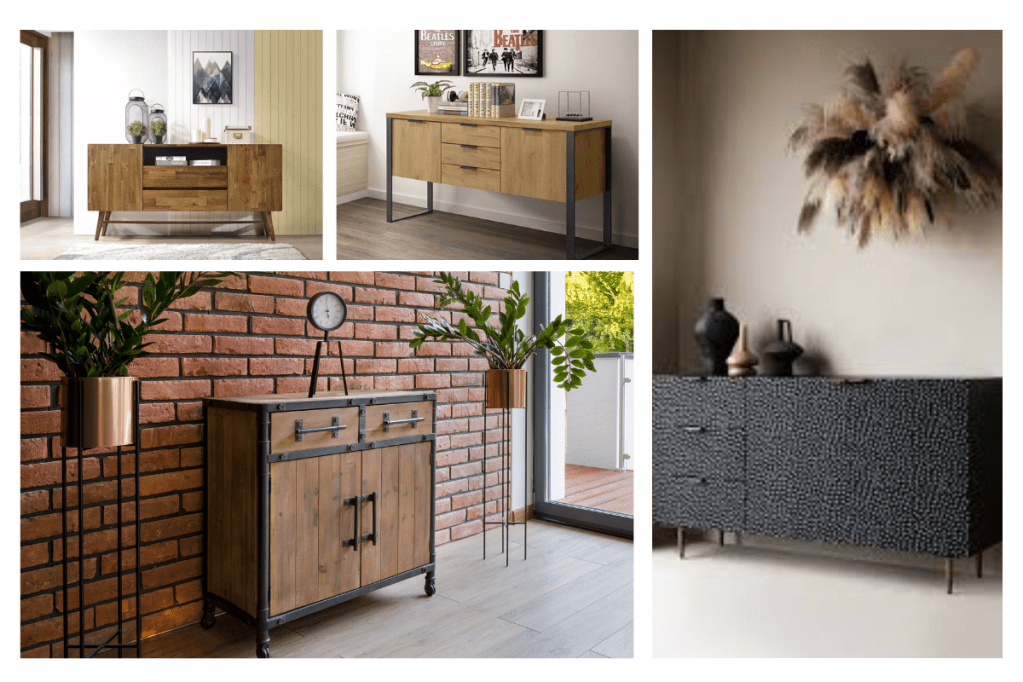
The Evolution of Sideboards: From Renaissance Era to Modern Times
Over the decades, sideboards have evolved from modest cupboards to ornate pieces of furniture. Sideboards were originally used to store dishes and utensils and were not attractive. They became more ornamental, functional, and useful over time.
Oak sideboards from the Renaissance were simple and durable. Fruits, foliage, and animals were carved into the doors’ iron handles. Sideboards were more extravagant throughout the Baroque period, with exquisite carvings, inlaid patterns, and gilded ornaments. Sideboards were manufactured of mahogany and other exotic woods in the 18th and 19th centuries and embellished with complex motifs like the Sheraton style.
Sideboards grew simpler, more useful, and practical throughout the 20th century. Modernist sideboards were sleek, functional, and minimal. The Eames sideboard, Knoll credenza, and Bauhaus-inspired sideboard are some of the most iconic designs of the 20th century.
Many modern homes still need sideboards. They are now made of wood, metal, glass, and plastic and fit a variety of interior styles, from traditional to modern.
Choosing the Perfect Sideboard: A Step-by-Step Guide
Choosing the ideal sideboard for your home can be difficult, but with the appropriate attitude, it can be fun and gratifying. A step-by-step guide helps you find the right sideboard for your area.
Step 1: Assess Your Requirements Think about the sideboard’s purpose. Will it be displayed or stored? Do you want shelves or drawers? Understanding your needs will restrict your possibilities.
Step 2: Assess Your Space – Evaluate the size and arrangement of your room. You want a sideboard that complements the room’s other furniture. Make sure the sideboard fits by measuring the space.
Step 3: Select Your Style – Evaluate your room’s style and choose a sideboard that matches. Sideboards are offered in conventional, modern, and eclectic styles.
Step 4: Choose Your Material – Sideboards can be made of wood, metal, glass, or plastic. Before choosing, consider each material’s longevity, maintenance, and style.
Step 5: Examine the Details – Take attention to the sideboard’s knobs, handles, and finishes. Little details might change the piece’s appearance.
By following these steps, you may select the right sideboard for your house that fulfills your demands, fits your taste, and fits your space.
Sideboards and Feng Shui: How to Use Sideboards for Better Energy Flow
Sideboards are a terrific way to add flair and purpose to your house, and Feng Shui can optimize energy flow. Feng Shui is an ancient Chinese discipline that emphasizes energy flow, or Qi, and its effects on health. You may create a harmonious and balanced environment that supports positive energy flow by arranging furniture and decor.
Sideboards should be placed strategically throughout the room. The sideboard should face a strong wall in the dining room or living room, according to Feng Shui. Qi doesn’t stagnate and energy flows freely. Heavy or cluttered items on top of the sideboard might also block energy flow.
Color and texture can improve the Feng Shui of your sideboard. In Feng Shui, wood sideboards symbolize growth and rebirth. Use plants or natural items like stones or crystals to calm and ground the space. Green and blue colors can also provide a sense of calm.
Feng Shui sideboard style can improve your health and energy flow. To establish harmony and balance, consider where you put your sideboard, what you put on top, and what you add.
Sideboard Styling 101: Tips and Tricks for Decorating Your Sideboard
Sideboards are multipurpose furniture that can enhance your home’s design and functionality. Style your sideboard with these tips, whether you use it for storage or decoration.
Your home’s style should come first. Your sideboard should match your present decor and improve the room’s appearance. Choose a sleek, minimalist sideboard for a modern home. Choose a sideboard with intricate elements and a classic design if your style is more conventional.
Start styling after choosing your sideboard. Make the sideboard’s top a focal point. This could be a vase of flowers, artwork, or a decorative tray. After that, you can add candles, books, and other decorations.
Balance and symmetry are essential for sideboard styling. Arrange items to look good and create harmony. This could mean using groups of three or placing larger items in the center and smaller items on either side.
Don’t forget functionality. Your sideboard should look good and be useful. Use it to store or display glasses or serving dishes you use often.
Using these guidelines, you can design a beautifully styled sideboard that enhances the look and feel of your house while providing a useful purpose.
Unique Sideboard Ideas: Using Uncommon Materials and Styles to Create a Statement Piece
Sideboards are a great way to make a home statement. Your sideboard can be made from unusual materials to achieve this. For a rustic, industrial style, use salvaged wood or metal, or use glass or acrylic for a sleek, modern look. These materials can give your sideboard a unique texture and appearance.
Playing with odd styles and shapes is another method to make a unique sideboard. To create a more dynamic and unexpected look, try a circular or oval shape instead of a rectangular one. Asymmetrical lines and angles add a modern, abstract look. You can make a sideboard that stands out in your home by thinking outside the box and experimenting with unconventional styles.
Creative storage solutions can give your sideboard a unique look in addition to its construction and design. Consider adding hidden compartments or drawers to your sideboard to make it more functional and interesting. Open shelving or display cases can also be used to display your favorite items.
Finally, don’t be afraid to use bright colors or patterns on your sideboard. Whether it’s a bright pop of color or a bold geometric pattern, adding a statement element can make a piece stand out. Choose a color or pattern that matches your home’s style and adds a unique touch to your sideboard.
Conclusion
Sideboards have come a long way from their humble beginnings in the Renaissance era to the sleek and modern designs of today. With so many options available, choosing the perfect sideboard for your home can be overwhelming. However, by considering your needs, space, style, material, and details, you can find a sideboard that is both practical and beautiful. Whether you’re looking for a storage solution or a statement piece for your room, a well-chosen sideboard can add both function and style to your home. So take your time, do your research, and invest in a sideboard that you’ll love for years to come.
Sideboards are a versatile and functional piece of furniture that can add both style and storage to your home. Whether you’re looking to incorporate Feng Shui principles for better energy flow, or simply want to create a beautifully styled display, there are many ways to make the most of your sideboard.
Creating a unique sideboard that stands out in your home can be achieved through the use of uncommon materials, unconventional styles, creative storage solutions, and bold colors or patterns. By thinking outside the box and experimenting with different design elements, you can create a statement piece that truly reflects your personal style and enhances the overall look and feel of your home.
 Hey Singapore