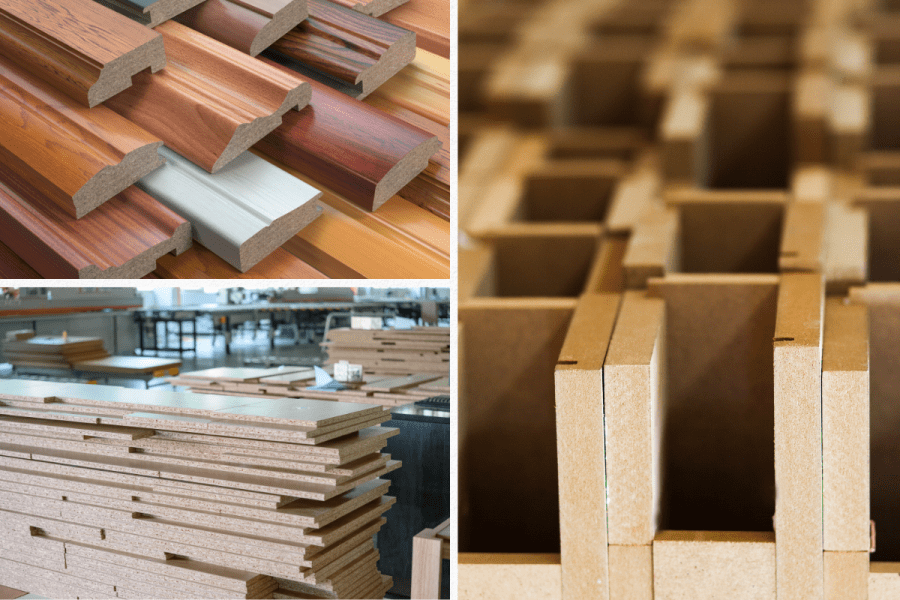
One of the most frequently used engineered wood products in the construction sector is medium-density fiberboard, or MDF board. MDF boards are the ideal choice for a variety of applications, from furniture manufacturing to interior design, thanks to their adaptability, toughness, and affordability. MDF boards in Singapore are produced by compressing wood fibers and resin at high temperatures and pressures to produce a smooth, dense panel that is manageable. MDF boards are in high demand in Singapore, and there are numerous suppliers and producers from which to choose. In this article, we’ll examine the various MDF board varieties that are offered in Singapore and give you a detailed guide on how to pick the highest-quality boards for your project.
MDF board varieties in Singapore:
Moisture-resistant MDF board:
As the name implies, moisture-resistant MDF board is made to withstand exposure to moisture and humidity. This kind of MDF board is frequently used in kitchens, bathrooms, and other wet-damage-prone spaces. The special chemicals used to treat moisture-resistant MDF boards increase their resistance to swelling, warping, and water absorption.
Fire-resistant MDF board:
Because it is designed to withstand fire and high temperatures, fire-resistant MDF board is a common option for commercial and industrial applications. Special additives are added to this type of MDF board to help it resist fire and smoke. Frequently found in public structures like schools, hospitals, and airports are MDF boards that can withstand fire.
Veneered MDF board:
The MDF board known as veneered MDF has a thin veneer of wood glued to its surface. This preserves the benefits of MDF boards while giving the board the appearance of solid wood. Veneered MDF boards are a popular option for furniture manufacturing and interior design because they come in a variety of wood species, textures, and finishes.
Laminated MDF board:
A decorative layer of paper or plastic has been laminated to the surface of laminated MDF board, a type of MDF board. This layer is adaptable and reasonably priced for furniture manufacturing and interior design because it can be printed with different patterns and designs. Additionally, there are numerous finishes for laminated MDF boards, including glossy, matte, and textured.
Choosing MDF Boards of the Best Quality
There are a number of things to take into account when selecting the highest-quality MDF boards in Singapore, including:
Density:
The strength, stability, and durability of MDF boards can be impacted by the board’s density, which ranges from low to high. Although higher density MDF boards tend to be heavier and more expensive than low density boards, they are typically stronger and more durable. Based on your project’s intended use and load-bearing capacity, it’s critical to select the appropriate density of MDF board.
Thickness:
The thickness of MDF boards ranges from 3 mm to 30 mm or more. Although thicker boards tend to be heavier and more challenging to work with than thinner ones, they are typically stronger and more stable. It’s critical to select the appropriate MDF board thickness for your project based on the project’s intended use and structural requirements.
Surface quality:
Although the smooth and uniform surface of MDF boards is well-known, the surface’s quality can vary depending on the manufacturing process and quality control procedures. Selecting MDF boards with a high-quality surface that is free of flaws like bumps, dents, and scratches is crucial.
Moisture resistance:
The MDF boards you choose for your project should be moisture-resistant if it involves rooms like bathrooms or kitchens that are prone to moisture and humidity. The special chemicals used to treat moisture-resistant MDF boards increase their resistance to swelling, warping, and water absorption.
Fire resistance:
It is crucial to select fire-resistant MDF boards if your project involves areas that call for such materials, such as public buildings or industrial applications. Special additives are used to treat fire-resistant MDF boards so they can withstand flames and smoke.
Sustainability:
It’s crucial to take the sustainability of the MDF boards you’re choosing into account because more and more people are becoming aware of how their decisions affect the environment. Look for MDF boards that are produced with eco-friendly methods using wood fibers that are sourced sustainably and ethically.
Price:
Finally, when selecting MDF boards, cost is always a crucial factor. Although MDF boards are typically less expensive than solid wood boards, the cost can change depending on the type, quality, and thickness of MDF board you select. When selecting MDF boards, it’s important to take your budget into account as well as the value you’re getting.
Alternative Uses of MDF Boards:
There are some alternative uses for MDF boards in Singapore besides the conventional ones in building and furniture manufacturing. These consist of:
Signage:
MDF boards can be used as the foundation for both indoor and outdoor signage. MDF boards are a versatile and affordable option for signage because they can be easily painted, laminated, or printed with different designs and logos.
Display stands:
MDF boards can be used to make display stands for a variety of products, including jewelry, books, and magazines. MDF boards can be carved, shaped, and painted to make unique stands that are both strong and beautiful.
Artwork:
MDF boards can be used as the foundation for a variety of artistic mediums, including paintings, sculptures, and mixed media. MDF boards can be painted, printed, or covered with various materials to create original and imaginative artwork. They have a smooth, uniform surface that is simple to work with.
DIY Projects:
In Singapore, MDF boards are a common material choice for do-it-yourself projects. From shelves and storage units to decorative panels and room dividers, they can be used to make a wide variety of objects. MDF boards are a great material for DIY enthusiasts because they are simple to cut, drill, and sand.
Work with MDF Boards: Some Tips
Here are some suggestions to help you achieve the best results if you intend to work with MDF boards for your project in Singapore:
Use the appropriate tools:
MDF boards must be cut, drilled, and sanded with the proper equipment due to their density and uniformity. Use MDF-specific saw blades, drill bits, and sandpaper of the highest caliber.
Finish the edges:
The tendency of MDF boards to absorb moisture can result in the edges swelling and becoming rough. Before painting or laminating MDF boards, it’s crucial to seal the edges with a sealant or primer to avoid this.
Sand the surface:
MDF boards can have minor flaws or rough spots despite having a smooth and uniform surface. Before painting or laminating MDF boards, the surface should be sanded to ensure a smooth and even finish.
Use safety equipment:
Use safety equipment, such as gloves, goggles, and a mask, when working with MDF boards to shield yourself from dust and other particles.
Conclusion:
In Singapore, MDF boards are a flexible and affordable option for a variety of building and interior design projects. They can be used for both conventional purposes, like the manufacture of furniture, and non-conventional ones, like signage and artwork. They are available in a variety of types, densities, and finishes. To get the best results when working with MDF boards, it’s crucial to choose the right kind and grade for your project, as well as to adhere to the right procedures and safety precautions.
 Hey Singapore