
Learn everything you need to know to select the best free-standing air conditioner for your house in this comprehensive guide. Invest in a good air conditioner to maintain a comfortable temperature in your space.
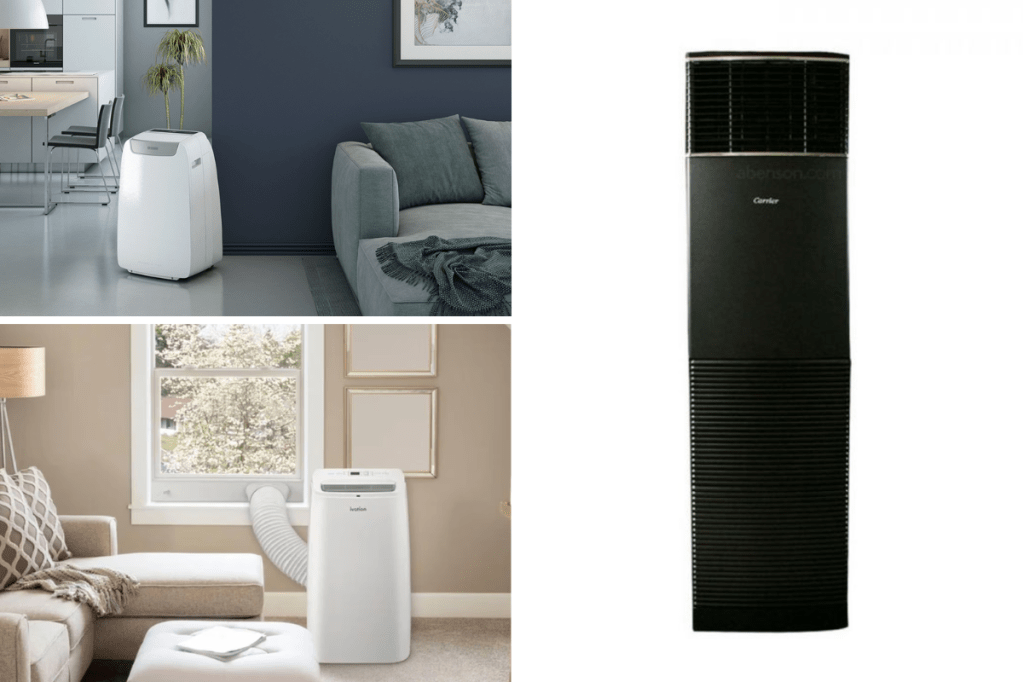
Features to Consider When Selecting a Standing Air Con
To get the greatest standing air conditioner, consider several key aspects. Then, pick a model that can chill your room. A big unit wastes energy and costs more, while a tiny unit may not chill the space. Your room’s square footage determines its cooling capability.
Second, if you want to use the unit in a bedroom or other peaceful place, evaluate its noise level. Choose a low-decibel standing air conditioner to minimize noise. Energy efficiency helps you save money and reduce your carbon footprint. Choose a high-efficiency air conditioner.
Third, consider unit usability and upkeep. A washable filter and simple controls make an air conditioner easy to use and maintain. Find models with remote controls, customizable settings, and timers.
Finally, analyze the unit’s design and aesthetics. A sleek, modern standing air conditioner will compliment your room’s decor. Consider the air conditioner’s size, weight, and portability. Caster wheels make air conditioning easy to transport.
Choosing a home standing air conditioner demands careful consideration of various crucial qualities. Research and compare models by cooling capacity, noise level, energy efficiency, ease of use and maintenance, and design. The correct unit can provide year-round comfort and cooling.
Factors to Consider Before Buying a Standing Air Con
Before buying a standing air conditioner, consider various considerations. The appropriate option will cool your room perfectly, while the wrong one can waste money. This advice will help you choose wisely.
Room size is vital. Choose a device that can cool your space’s square footage. Oversized air conditioners waste energy and money, while undersized ones struggle to cool the room. Find a room-sized standing air conditioner.
Energy efficiency is another important consideration when selecting a standing air conditioner. Choose a model with a high EER or SEER (SEER). A higher EER or SEER air conditioner will save money over time. It saves electricity and energy.
Standing air conditioner noise is another key aspect. Choose a quiet model for your bedroom or other peaceful place. Search for 50-decibel units. Noise level is less important in a noisy workshop.
Standing air conditioners have programmable timers, numerous fan speeds, and sleep modes. Certain types include air purifiers or dehumidifiers. Before buying, decide what features you need. Evaluate whether the unit should heat in winter.
So, buying a standing air conditioner requires some thought. Consider the unit’s energy efficiency, noise level, spaciousness, and features. Doing so will ensure that you select the best cooling solution for your home and that it will last for years.
How to Ensure the Standing Air Con Fits Your Room Space
It’s necessary to buy a room-sized standing air conditioner. A too-small unit won’t cool the space, while a too-large one wastes energy and money. Consider numerous considerations to determine the proper size unit.
Room size comes foremost. Square footage is calculated by multiplying room length and width. Use the manufacturer’s size chart to determine your space’s BTU rating. Larger rooms require greater BTU units.
Ceiling height is another factor. Higher ceilings require more BTUs to cool the room. A 10-foot ceiling requires 25% more BTUs than an 8-foot ceiling.
Direct sunshine, gadgets, and appliances will also heat the space. These sources raise room temperature, requiring a larger BTU rating.
Finally, consider room insulation. An uninsulated space needs more BTUs to cool. Seal window and door gaps to increase insulation.
The appropriate size standing air conditioner is vital for cooling your space and saving energy. Measure your room, consider the ceiling height, heat sources, and insulation to determine the BTU rating.
Selecting the Right Size for Your Standing Air Con
For best cooling and energy efficiency, choose the proper standing air conditioner size. The room you want to cool should determine the size of your air conditioner. If your air conditioner is too tiny for the room, it will work more to cool it, resulting in higher energy bills and a shorter lifespan. If your air conditioner is too huge for the area, it will cool the space too rapidly and not remove humidity, leaving it cold and clammy.
BTUs (British Thermal Units) are needed to calculate the right air conditioner size for your room. The standard is 20 BTUs per square foot. An air conditioner with 10,000 BTUs is needed for a 500-square-foot room. The BTU requirements can also be affected by ceiling height, insulation, and window number.
The air conditioning unit’s location is crucial. It should be mounted on an inner wall away from direct sunshine and heat. It will chill the space more efficiently.
Choosing a standing air conditioner size depends on room size and other considerations. Taking the effort to calculate BTUs and consider location can assure optimal cooling and energy efficiency, creating a comfortable and cost-effective living environment.
Energy Efficiency of Standing Air Cons
Choose an energy-efficient standing air conditioner. An energy-efficient model reduces your environmental impact and lowers your electricity bills. Standing air conditioner energy efficiency depends on numerous things.
SEER is crucial. Seasonal Energy Efficiency Ratio (SEER) is an air conditioner’s cooling output over a typical cooling season divided by its watt-hour consumption. More efficient air conditioners have higher SEER ratings. Some models have a 26-SEER rating, although 14 or greater is energy efficient.
The unit’s EER rating is also crucial. EER is an air conditioner’s cooling output divided by its watt-hour energy consumption at a certain temperature. EER is measured at 95 degrees Fahrenheit, while SEER is measured across a season. Energy Star-qualified air conditioners must have a minimum EER of 12.
Energy efficiency also depends on the compressor. Inverter compressors can alter their speed to meet cooling demand, making them more efficient. They use less energy to keep the temperature constant.
Finally, the unit’s size should match the room it’s cooling. Oversized air conditioners waste energy and may cause temperature and humidity issues. Undersized units use more energy to maintain a pleasant temperature. Choose a device that fits the room you’re cooling.
 Hey Singapore