
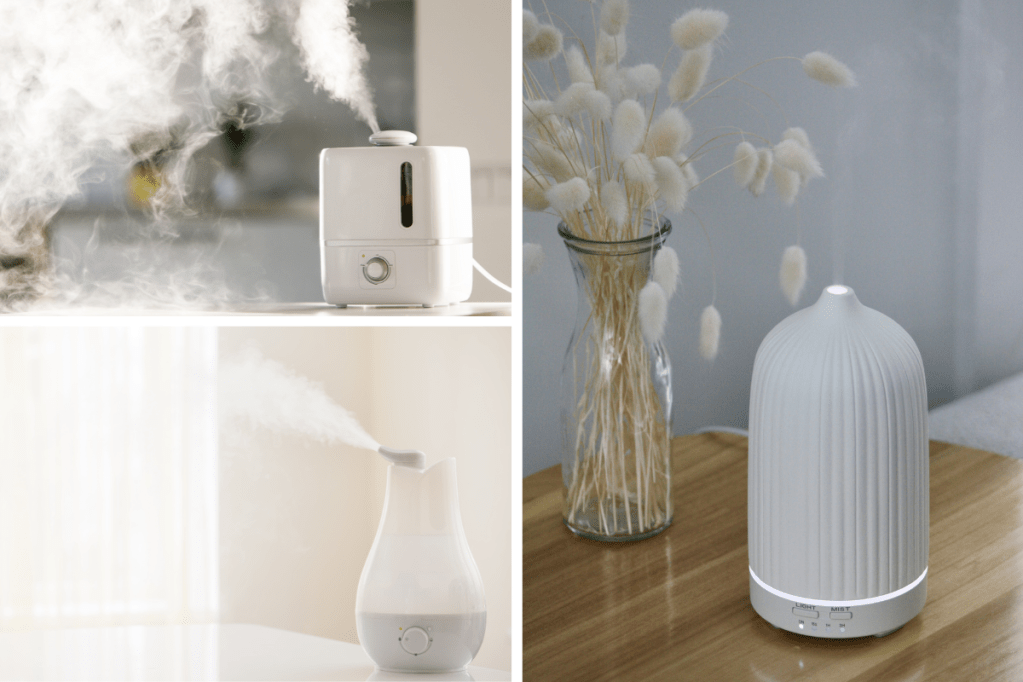
Using our guide to choose between humidifiers vs diffusers for your home or workplace, you can find the ideal gadget for your space. Learn the ins and outs and work on the air quality within your home.
Differentiating Between Humidifiers and Diffusers Based on Functionality and Design
Humidifiers and diffusers are used to improve indoor air quality. Both have some similarities, but their functionality and design are different. Humidifiers increase atmospheric moisture to aid breathing and lower the danger of airborne diseases. Evaporative, ultrasonic, cold mist, and warm mist humidifiers are available. Nevertheless, diffusers release essential oils into the air to improve mood, reduce tension, and enhance ambiance. Ultrasonic, thermal, and nebulizing diffusers are available.
The type of humidifier determines its function. Warm mist humidifiers use heat to produce steam, whereas cool mist humidifiers use a fan to evaporate water into the air. Ultrasonic humidifiers employ ultrasonic vibrations to turn water into a fine mist, while evaporative humidifiers use a fan to blow air over a wet wick. In winter and dry areas, humidifiers are useful. Dry skin, nasal congestion, and allergies are relieved by them.
Diffusers employ essential oils to clean the air. Essential oils are natural plant extracts with medicinal characteristics that can reduce stress, increase mood, and relax. Ultrasonic diffusers use ultrasonic vibrations to break down essential oils into micro-particles that can be spread into the air. Nebulizing diffusers employ high-pressure air to turn essential oils into mist, while heat diffusers release them into the air. Yoga studios, spas, and bedrooms are good places to employ diffusers for relaxation and stress alleviation.
Examining the Benefits and Limitations of Humidifiers and Diffusers in Different Environments
Diffusers and humidifiers have pros and cons that make them suited for diverse situations. In cold, dry areas, humidifiers help. They relieve allergies, dry skin, and nasal congestion. They need regular cleaning and maintenance to prevent mold and bacteria growth. Burns from warm mist humidifiers can also harm youngsters.
Diffusers, on the other hand, help relieve stress and relax. They boost mood, relax, and beautify a room. They should not be used around children under three years old because essential oils are harmful if eaten. Some people are allergic to essential oils and they can worsen respiratory issues.
In a bedroom, a diffuser is better than a humidifier. It promotes comfortable sleep by calming the surroundings. Lavender, chamomile, and bergamot essential oils can help you relax and sleep. A humidifier, however, may disturb sleep.
A humidifier is better than a diffuser for the office. Low workplace humidity causes dry eyes, throat, and skin, affecting productivity and comfort. A humidifier can enhance air quality and decrease airborne diseases in the workplace.
Comparing the Costs and Maintenance Requirements of Humidifiers and Diffusers
When comparing humidifier and diffuser prices and upkeep, there are several important aspects. Humidifiers supply moisture to the air, while diffusers release essential oils for aromatherapy. The devices are distinct, but their upkeep and expense are the same.
Humidifiers are usually more expensive than diffusers. Humidifiers have more functionality than diffusers and can manage larger spaces. Diffusers, on the other hand, are inexpensive and widely accessible. Diffuser prices depend on the type and materials used to make them.
Humidifiers and diffusers must be cleaned regularly to prevent bacteria and mold growth. Humidifiers are larger and more complicated than diffusers, making them harder to clean. A mild detergent and distilled water should be used to clean humidifiers weekly. Diffusers may be cleaned with a moist cloth and don’t need special cleaning products.
Diffusers are cheaper and require less maintenance than humidifiers, while humidifiers are more expensive. It’s crucial to consider each device’s intended use while making a choice.
Exploring the Scientific Evidence for the Effects of Humidifiers and Diffusers on Air Quality and Health
Humidifiers and diffusers are scientifically proven to improve air quality and wellness. Humidifiers can improve nasal congestion, dry skin, and other respiratory issues by increasing ambient humidity. They can also minimize dust and allergens in the air, which can aid asthmatics.
Diffusers improve air quality and wellness as well. They release essential oils into the air, which can help health. For instance, some essential oils have antibacterial and antiviral characteristics that can help prevent disease and reduce infections. Stressed or anxious people may benefit from oils that calm or energize.
It’s crucial to know that not all essential oils are acceptable for diffusers, and some may be dangerous if ingested or handled improperly. Research essential oils before using them in a diffuser. Use high-quality essential oils for optimal efficacy and safety.
In conclusion, humidifiers and diffusers improve air quality and health according to scientific research. Before using these devices, it’s crucial to think about their function and do your homework. One can benefit from these technologies by using them appropriately and cautiously.
Determining the Best Humidifier vs Diffuser for Your Specific Needs and Preferences
You must consider your needs and interests before choosing a humidifier or diffuser. Selecting the right device for your home or office isn’t easy. To assist you choose the right humidifier or diffuser, I’ll discuss the variables you should consider.
Think About:
The size of the region you wish to humidify or distribute is crucial. A small room needs a portable humidifier or diffuser. If you need to humidify a bigger space, try a whole-house humidifier. The humidifier vs diffuser you want is also important. For instance, an ultrasonic humidifier or diffuser may be appropriate if you want a quiet, efficient appliance.
The humidifier or diffuser features are next. A timer lets you set the length of use on some devices. Adjustable humidity levels let you control humidity output in other devices. Some humidifiers have air purifiers to clean the air.
Third, consider equipment maintenance and cleaning. Certain devices require more frequent cleaning and maintenance. A warm-mist humidifier may need more cleaning than a cool-mist humidifier. Certain devices require special cleaning solutions or filters, which might increase their cost.
Finally, examine the humidifier’s cost. While cost shouldn’t be the sole concern, it’s important to make sure the equipment you purchase matches your budget. Keep in mind that some devices require replacement filters or cleaning solutions.
Conclusion:
By examining the aforementioned parameters, you may choose the ideal humidifier or diffuser for your needs. Consider the device’s functions, the extent of the area you wish to humidify or distribute, the maintenance and cleaning requirements, and the cost. By doing so, you can choose a device that fulfills your needs and tastes and enjoy a well-humidified or diffused environment.
Conclusion
Humidifiers and diffusers are two common indoor air quality devices. Humidifiers add moisture to the air, while diffusers spread essential oils. Both devices have pros and cons that make them suitable for different situations. Consider the environment and desired result when choosing between a humidifier and a diffuser. Diffusers are better for relaxing and stress-relieving spaces like bedrooms and yoga studios, while humidifiers are better for dry and cold climates.
To prevent mold and bacteria growth, humidifiers and diffusers must be cleaned and maintained regularly. Essential oils should also be used with caution around children and people with respiratory conditions. Before using therapeutic essential oils, consult a doctor.
In conclusion, humidifiers and diffusers are useful devices that improve indoor air quality and health. By understanding their functionality and limitations, people can choose the right device for their needs and environment. Both devices need regular cleaning and maintenance, and essential oils should be used with caution around children and respiratory patients.
 Hey Singapore