
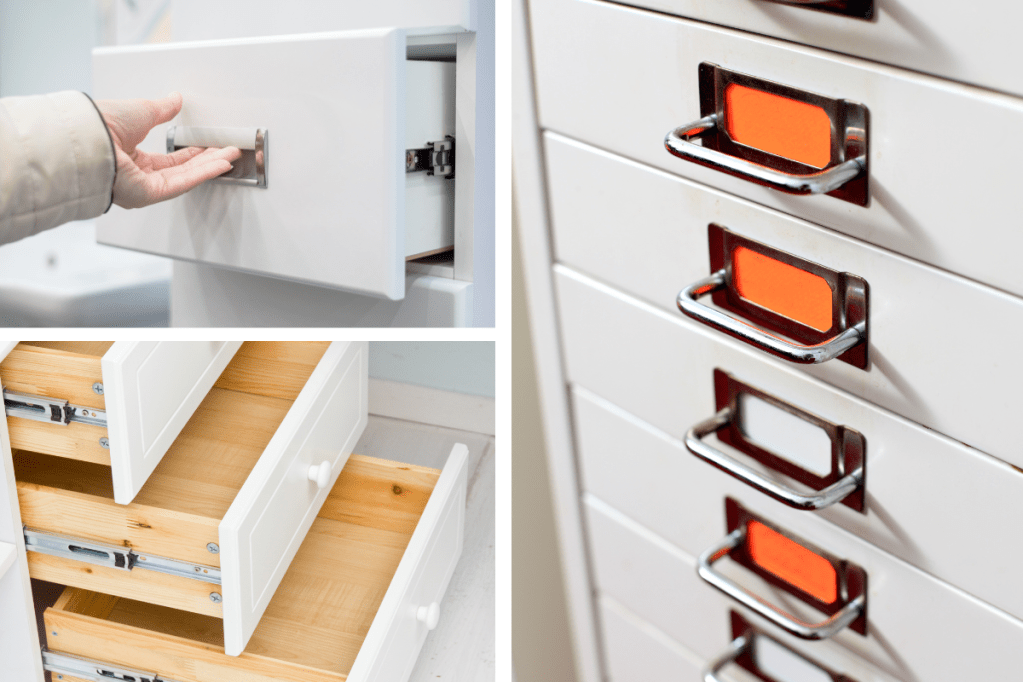
Get the inside scoop on purchasing cabinet drawers with our comprehensive guide. For a wise purchase, learn the advantages and disadvantages of various drawer styles, materials, and accessories.
Cabinet Drawer Types: Understanding the Pros and Cons of Each Design
Every kitchen, bathroom, or workplace needs cabinet drawers. Choosing the proper drawer type might be difficult due to the huge variety of options. The benefits and downsides of the most popular cabinet drawer types are discussed below.
Secondly, many homeowners like the original side-mounted drawer design. These drawers are fixed to the cabinet’s side and have a variety of hardware choices, including ball-bearing slides and under-mount glides. Its design has plenty of storage, a silent glide, and the capacity to hold big goods. Side-mounted drawers may be difficult to install and may need a specialist.
Another typical cabinet drawer style is the center-mounted drawer. The drawer’s bottom and the cabinet’s center are connected by a center-mounted slide. Center-mounted drawers are straightforward and quick to install and maintain. Yet, their low storage capacity and inclination to droop under severe loads make them unsuitable for heavy-duty applications.
Cabinets appear sleek and contemporary with under-mount drawer slides. These slides connect to the drawer bottom and cabinet side for full extension and a soft-close mechanism. Under-mount slides are straightforward to install, operate smoothly, and work with many cabinet types. They may not be ideal for large things and are pricey compared to other slides.
Drawer Construction: Materials, Hardware and Quality Considerations
Cabinet drawer design depends on drawer construction. The durability and longevity of a cabinet drawer depend on its materials, hardware, and construction. This section covers the most common drawer construction materials, hardware options, and quality issues.
Plywood is commonly used to build drawers. Plywood is engineered wood made by gluing wood veneer layers together. Many homeowners choose plywood because it’s lightweight, durable, and inexpensive. Plywood quality varies, and it may not be suitable for heavy-duty applications.
Solid wood is another popular drawer material. Solid wood drawers look classic, are durable, and can hold heavy items. They’re more expensive than other materials, and the type of wood used affects their quality.
Drawer construction also requires hardware. A cabinet drawer’s durability and usability depend on its drawer slides. Ball-bearing slides are the most common type of drawer slide. They glide quietly and can handle heavy items. They’re hard to install and may need a pro.
Soft-close slides are also popular for cabinet drawers. These slides use a hydraulic mechanism to close the drawer slowly and quietly, reducing damage and noise. Soft-close slides are simple to install and compatible with many cabinet styles. They may not be suitable for heavy items and are more expensive than other slides.
Cabinet Drawer Sizes: Choosing the Right Dimensions for Your Space
It’s important to pick the right cabinet drawer sizes for your space. Too large or too small a drawer may take up too much cabinet space. The following paragraphs discuss the most common cabinet drawer sizes and how to choose one.
18 inches wide by 22 inches deep is the standard cabinet drawer size. This size fits most kitchen utensils, cutlery, and small items like dish towels and oven mitts. For larger items like pots and pans, a wider and deeper drawer may be needed.
A 24-inch wide by 22-inch deep drawer may be better for larger items like baking sheets and roasting pans. This size fits most cabinet layouts and provides ample storage for larger items.
A 12-inch wide by 22-inch deep drawer may be best for small or narrow spaces. Spices, oils, and other small kitchen items fit perfectly in this size.
Consider your space’s layout and functionality when selecting cabinet drawer sizes. Consider the size of your cabinets and the items you’ll store in them. Consider the size of your drawers and the glide system you’ll use.
Drawer Glide Systems: Examining the Advantages and Disadvantages of Different Glide Types
Cabinet drawer glide systems are essential. The wrong glide system can damage and frustrate your drawers, while the right one can make them smooth and easy to use. This section discusses the most common glide types and their benefits and drawbacks.
Ball-bearing glides are the most common glide system for cabinet drawers. Steel balls make these glides quiet and smooth. They’re strong, easy to install, and can hold heavy items. They can be hard to adjust and may need professional help.
Undermount glides are also popular for cabinet drawers. These glides attach to the drawer’s bottom and the cabinet’s side for full extension and a soft-close mechanism. Undermount glides are easy to install and look modern. However, they are more expensive and may not be suitable for heavy items.
Side-mounted glides are older and use a metal track on the cabinet’s side. These glides are easy to install and provide lots of storage. They’re noisy and need regular upkeep.
Traditional wooden glides use a wooden track and runner. These glides are classic and easy to install. They may not be suitable for heavy items because they are less durable than other glides.
Cabinet Drawer Accessories: Enhancing Functionality with Inserts and Dividers
Cabinet drawer additions may make your room more useful and organized. Inserts and dividers may optimize storage and arrange your stuff. In this part, we’ll discuss cabinet drawer attachments and their advantages.
Drawer inserts are popular accessories that help organize and separate tiny objects in drawers. These inserts may be constructed of wood, plastic, or metal and come in different sizes and forms to match your drawer. They organize spices, cutlery, and other tiny kitchen goods well. Customized inserts are also available.
Drawer dividers are another drawer organization solution. These dividers may be put vertically or horizontally and are ideal for separating bigger goods like pots and pans or plates and bowls. They may be modified to suit your drawer and are straightforward to install. Dividers enhance drawer capacity and protect objects from sliding about.
Drawer organizers are useful accessories that can arrange practically everything in your drawers. They’re available in various sizes and may be tailored to your requirements. Some drawer organizers contain detachable portions and customizable divisions, making them ideal for organizing office materials and wardrobe accessories.
Drawer liners are a sensible and economical way to protect your drawers from scratches and other damage. They’re usually constructed of cork, rubber, or foam and may be trimmed to suit your drawer. Drawer liners give padding and prevent objects from slipping.
Cutting board inserts are a unique kitchen drawer item. These cutting board plugs hold it in place as you chop and prepare meals. Wood or plastic, they may be removed for cleaning.
Conclusion
Knowing cabinet drawer styles, materials, hardware, and quality is crucial when buying. Choose the proper cabinet drawers while upgrading your kitchen or establishing a new workplace. Choose the correct cabinet drawers by weighing the advantages and drawbacks of each design and knowing the construction and hardware alternatives. A practical and attractive space depends on cabinet drawer size and glide mechanism. Choose the correct drawers by evaluating the size of your cabinets, the products you want to keep, and the glide system you desire. Understanding cabinet drawer sizes and glide systems is essential whether remodelling a kitchen or establishing an office.
 Hey Singapore