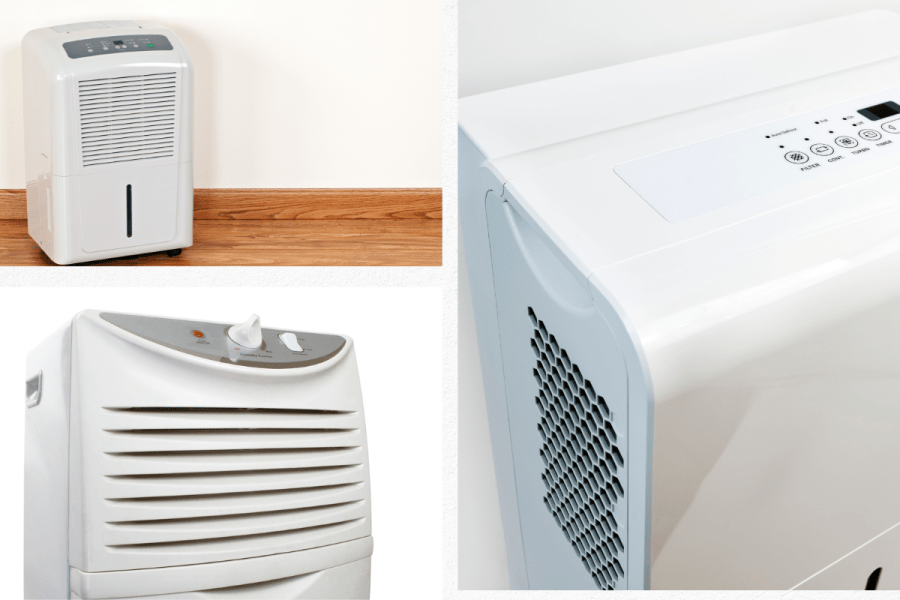
Dehumidifiers are vital for providing a pleasant home or business atmosphere. Unchecked, high humidity may result in mold development, musty smells, and even structural damage. By eliminating extra moisture from the air, a dehumidifier may enhance the quality of your indoor air and safeguard your items.
In this article, we will discuss the advantages of using a dehumidifier, how they function, and the factors to consider when selecting the best one for your requirements. Read on to learn why a dehumidifier should be a part of your indoor air quality arsenal, whether you live in a humid environment or only need to combat a wet basement.
Dehumidifiers may prevent the formation of mold by removing moisture from the air.
Dehumidifiers are a wonderful investment if you want to keep a mold-free and healthy home environment. As previously mentioned, dehumidifiers function by eliminating moisture from the air, which may inhibit mold formation. By managing the humidity levels in your house, you can avoid the development of moisture, which is a mold and mildew breeding ground.
Dehumidifiers play an important role in improving indoor air quality by filtering out pollutants and lowering allergens like dust mites and mold spores. Moreover, they may reduce musty and wet scents produced by excessive humidity. There are several kinds and sizes of dehumidifiers on the market, so you are certain to find one that meets your requirements. Some versions have ionizers and humidity sensors to improve their effectiveness, while others feature variable airflow rates to accommodate various room sizes. Depending matter the model you pick, a dehumidifier may assist maintain a healthy and pleasant home atmosphere.
Moreover, a dehumidifier helps enhance interior air quality and eliminate musty or wet aromas
In addition to avoiding mold development, dehumidifiers enhance indoor air quality in numerous other ways. One of the greatest benefits is the reduction of musty or damp scents, which may make a place seem stuffy and uncomfortable.
By removing excess moisture from the air, a dehumidifier helps reduce the conditions in which these disagreeable scents grow. This may help to a more comfortable and pleasant interior atmosphere. Also, minimizing mold and mildew development with the use of a dehumidifier may improve health and minimize allergy and asthma symptoms.
There is certain to be a dehumidifier on the market that fits your demands and budget, given the wide variety of dehumidifier kinds and sizes available. Consider purchasing a model with an integrated ionizer and automatic humidity sensor to improve its performance.
By managing humidity levels, a dehumidifier may aid in the prevention of health problems and structural damage in the house.
By managing humidity levels, a dehumidifier may give several health and structural advantages to your house. Mold development may be caused by an excess of moisture in the air, which can cause respiratory difficulties and allergy symptoms. A dehumidifier may prevent the formation of mold and enhance interior air quality, decreasing musty and damp aromas.
In addition, excessive humidity levels may compromise the structural integrity of your house by encouraging the spread of termites and other pests and by causing wood rot and warping. By maintaining proper humidity levels, a dehumidifier may alleviate these concerns. Consider investing in a dependable dehumidifier that meets your demands if you want to live in a healthier and more pleasant environment while extending the life of your house.
There are a variety of dehumidifier kinds and sizes available on the market.
When it comes to purchasing a dehumidifier, there are several alternatives available. Many kinds and sizes of dehumidifiers are available on the market to accommodate diverse tastes and demands. Each kind of dehumidifier, from refrigerant to desiccant, acts differently but successfully eliminates excess moisture from the air. In addition, the size of a dehumidifier must be proportional to the size of the interior area and the degree of humidity present.
For maximum performance, it is vital to purchase the correct size dehumidifier. Dehumidifiers with built-in ionizers and automatic humidity sensors may also improve air quality and avoid health problems and structural damage. Dehumidifiers may provide a more pleasant and healthier living environment by managing humidity levels.
A dehumidifier’s performance may be improved with a built-in ionizer and automatic humidity sensor.
In addition to eliminating extra moisture from the air and enhancing indoor air quality, dehumidifiers with integrated ionizers and auto humidity sensors may perform even better. The ionizer generates millions of negative ions per cubic centimeter to further purify the air by eliminating allergies, pollen, and dust mites.
Continuously measuring and adjusting the humidity levels in the space, the auto humidity sensor ensures that the dehumidifier removes the optimal quantity of moisture from the air. Using these sophisticated features may aid in preventing health problems and structural damage caused by excessive humidity in the house. There are several kinds and sizes of dehumidifiers on the market, so it’s crucial to choose one that meets your requirements and tastes.
Depending on the model, extraction rates might vary from 25.5L/day to greater levels.
The extraction rate of dehumidifiers may vary significantly depending on the type. Some dehumidifiers can remove as little as 25.5 liters of moisture per day, while others may remove far more. While selecting a dehumidifier, it is crucial to evaluate your individual demands so that you don’t wind up with one that is either overloaded or underpowered for your environment.
Moreover, extraction rate is determined by humidity levels, temperature, and room size, so pick a dehumidifier that is suitable for your specific circumstance. By managing moisture levels, a dehumidifier may prevent mold development and enhance indoor air quality, making it an essential household appliance.
Depending on the settings, airflow rates may vary, with low and high options commonly available.
As previously stated, airflow rates are one of the most important parameters influencing the performance of a dehumidifier. These speeds may vary substantially based on the user’s chosen settings, with low and high levels commonly available. The airflow rate regulates the pace at which warm air is brought into the unit and passes through chilled coils, and therefore, the rate at which moisture is extracted from the air.
In order to maximize the efficiency and efficacy of your dehumidifier, it is essential to choose the optimum airflow rate for your purposes. With the proper settings, a dehumidifier may not only prevent mold development and improve air quality, but it can also avoid health problems and structural damage to your house. Take the time to experiment with various settings and determine the optimal airflow rate for your particular requirements.
Dehumidifiers function by pulling warm air currents via chilled coils.
Dehumidifiers are often used to remove excess moisture from the air by pulling in warm air currents and passing them through chilled coils. This process condenses the air’s moisture, which subsequently drops into a collecting tray or is drained through a drain pipe. Dehumidifiers prevent mold development and eliminate musty or wet aromas by eliminating moisture from the air. In addition, they manage humidity levels, which helps avoid structural damage and health problems.
There are several kinds and sizes of dehumidifiers on the market, allowing you to choose the most suitable one for your requirements. Several versions have built-in ionizers and automatic humidity sensors, which boost their performance. Certain variants are capable of extracting up to or more than 25.5 L per day. Variable airflow rates with low and high settings are also offered. Dehumidifiers are a simple and efficient solution to enhance indoor air quality and foster a healthier home environment.
 Hey Singapore