
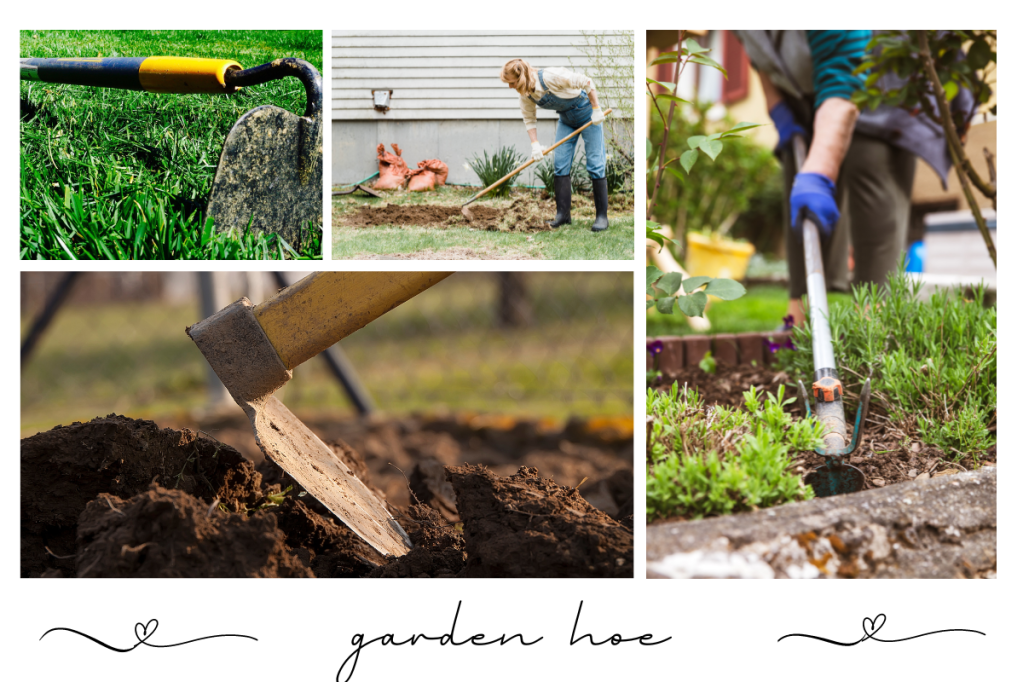
A garden hoe, a versatile and indispensable tool for any horticulturist, aids in soil tillage, weed removal, and plant cultivation. These implements exist in various sizes and shapes, with each design aimed at accomplishing specific tasks. A wise selection of the appropriate hoe for a particular gardening need could significantly impact the garden’s overall success.
Types of Garden Hoes
- Dutch Hoe: A versatile hoe, with a lengthy handle and a flat blade honed on both sides, used to break up soil, eliminate weeds and cultivate plants. The Dutch hoe is perfect for the cultivation of large areas and the loosening of compacted soil.
- Draw Hoe: The draw hoe, with a curved blade, is a durable hoe designed to draw soil towards the user. It is ideal for loosening compacted soil and eradicating deeply-rooted weeds.
- Warren Hoe: The Warren hoe, with a pointed blade end, is ideal for trenching and furrow digging. Additionally, it serves as an excellent debris clearer and ground leveller.
- Scuffle Hoe: The scuffle hoe, also called the stirrup hoe or the hula hoe, has a loop-shaped blade that slices weeds at the root level. It is an excellent hoe for keeping a garden free from weeds.
- Onion Hoe: The onion hoe, equipped with a sharp, small blade, is perfect for weeding in tight spaces and planting small bulbs and seedlings.
How to Choose the Right Garden Hoe for Your Needs The soil type, garden size, and plant type are critical factors to consider when selecting the appropriate garden hoe for a given gardening need. Here are some key considerations for choosing the right garden hoe:
- Soil Type: For heavy, compacted soil, a sturdy, curved-blade hoe like the draw hoe is essential. For loose soil, a lightweight hoe with a flat blade, such as the Dutch hoe, is ideal.
- Garden Size: Lightweight hoes like the onion hoe or scuffle hoe are perfect for small gardens or raised beds, while heavier hoes like the draw hoe or Warren hoe are more suitable for larger gardens or fields.
- Plant Type: A draw hoe is the best option for eradicating a lot of large plants or deeply-rooted weeds. In contrast, an onion hoe is ideal for delicate plants requiring precision hoeing.
Common Uses of Garden Hoes
- Weeding: Garden hoes are commonly used for weeding. They can be used to remove weeds at the root level, preventing them from regrowing. Hoes like the scuffle hoe and Dutch hoe are particularly useful for weeding.
- Soil Preparation: Garden hoes are used for breaking up soil, removing rocks and debris, and leveling the ground. Hoes like the Warren hoe and draw hoe are ideal for soil preparation.
- Cultivation: Garden hoes are used for cultivating plants, making planting holes, and creating furrows. Hoes like the Warren hoe and Dutch hoe are excellent for cultivation.
Prudent Upkeep of Agricultural Mattocks Maintaining your agricultural mattock in optimal condition is essential for ensuring its longevity and effectiveness. Here are some sagacious tips for proper maintenance:
- Keep it Clean: After use, remove any dirt, debris, or rust from the blade and handle with a stiff brush or sandpaper.
- Sharpen the Blade: Use a sharpening stone or file to hone the edge of the blade to a keen edge.
- Oil the Blade: Apply a thin layer of oil to the blade to prevent rust and corrosion.
- Store Properly: Store the mattock in a dry place away from moisture and direct sunlight to prevent rust and decay.
Categorization of Agricultural Mattocks There are diverse agricultural mattocks accessible in the market, each specifically designed for a particular task. Here are some of the most ubiquitous types: a. Draw Hoe: This type of mattock features a rectangular blade that is joined to the handle at a perpendicular angle. It is used for cutting and pulling the soil towards the user. b. Dutch Hoe: This hoe boasts a triangular blade that is sharpened on both sides. It is used for severing weeds just below the soil surface. c. Warren Hoe: The Warren hoe, also known as the oscillating hoe or action hoe, has a flat, rectangular blade attached to the handle with a pivot. It is ideal for weeding and cutting off weeds just below the soil surface. d. Scuffle Hoe: This hoe has a flat, rectangular blade that is attached to the handle at a perpendicular angle. It is used for weeding and severing weeds just below the soil surface. e. Hula Hoe: This hoe features a circular blade that is attached to the handle at a perpendicular angle. It is used for weeding and cutting off weeds just below the soil surface.
Selecting the Appropriate Agricultural Mattock Selecting the proper agricultural mattock can be daunting, especially for a beginner. Here are some essential factors to consider when making your selection: a. Intended Use: Consider the intended use of the mattock. If you need to sever weeds just below the soil surface, the Dutch hoe or Warren hoe may be the best option. If you need to pull the soil towards you, the draw hoe may be the optimal choice. b. Blade Size: Blade size is also a crucial consideration. A larger blade can cover more ground but may be heavier and more cumbersome to handle. A smaller blade may be easier to handle, but it may take longer to cover the same area. c. Handle Length: Handle length is another important factor. A longer handle will provide greater leverage, but may be more difficult to handle. A shorter handle may be easier to handle, but it may not provide enough leverage. d. Weight: The weight of the mattock is another factor to consider. A lighter mattock may be easier to handle, but may not be as durable as a heavier one. A heavier mattock may be more durable, but may also be more challenging to handle.
Agronomical Mattock Maneuvers To wield an agricultural mattock effectively, proper technique is essential. Here are some sagacious tips for proper use:
- Stand with your feet shoulder-width apart and grip the handle with both hands.
- Swing the mattock using your arms and shoulders, keeping your back straight and your eyes focused on the area you are working on.
- Use the sharp end of the blade to sever weeds just below the soil surface, or the flat end to pull soil towards you.
- Work in a rhythmic motion, alternating between swings to maximize efficiency and reduce fatigue.
Utilizing a garden hoe can be a straightforward undertaking, yet it does necessitate some practice. Below are some guidelines for effectively utilizing a garden hoe:
a. Appropriate Grasp: Holding a garden hoe in a manner that guarantees proficient usage and avoids self-injury is fundamental. Commence by assuming a shoulder-width stance with your back erect. Grasp the hoe with both hands, with one hand firmly grasping the handle and the other hand positioned at the end of the hoe. This grip enables greater leverage, and it will allow you to utilize the hoe more effectively.
b. Correct Technique: While using a garden hoe, it is paramount to employ the correct technique. The most efficacious approach to using the hoe involves using a swinging motion. To utilize the hoe, oscillate it back and forth in an arc, severing weeds or drawing soil towards you. Ensure that your back remains straight and that you use your legs to provide power for the swinging motion. This technique ensures that you utilize your entire body to generate momentum for the hoe, thereby avoiding exhaustion and injury.
c. Interval Rests: Frequent breaks are critical when using a garden hoe. These prevent overexertion and the likelihood of injury. It is recommended that you take a break every 15 to 20 minutes, and that you take additional breaks if you experience any discomfort while using the hoe. During intervals, stretch your muscles to maintain their flexibility and prevent cramps.
d. Hoe Maintenance: Maintaining your garden hoe’s cleanliness and sharpness is critical to ensure its effectiveness. A blunt or grimy hoe will not be as efficient at removing weeds or drawing soil towards you. To preserve the hoe, regularly utilize a file to sharpen its blade. After each use, cleanse the blade to remove any dirt or debris, and oil it to prevent corrosion. Appropriate maintenance will ensure the longevity of your garden hoe.
In addition to these pointers, there are some other factors to consider when utilizing a garden hoe. First, contemplate the size and weight of the hoe when purchasing one. Choose a hoe that is comfortable for you to use and is the appropriate size for the specific task. Second, be mindful of your surroundings when employing the hoe. Ensure that no individuals, animals, or impediments are in proximity that could be harmed by the hoe’s swinging motion. Finally, factor in the weather conditions when using a garden hoe. Avoid utilizing the hoe during periods of extreme heat or cold as it could lead to fatigue and injury.
Conclusion
In conclusion, the garden hoe is an indispensable tool for gardeners and homeowners alike who desire to maintain a tidy and attractive garden. Whether planting new crops or uprooting weeds, using a garden hoe can facilitate these tasks with ease. By adhering to the guidelines outlined above regarding grasping the hoe correctly, utilizing the proper technique, taking breaks, and maintaining the hoe, you can guarantee that your garden is thriving and healthy. Remember to always prioritize safety and comfort when using the garden hoe, and select the appropriate type of hoe for your specific gardening needs. With these factors in mind, the garden hoe can be a valuable asset in your gardening arsenal.
 Hey Singapore