
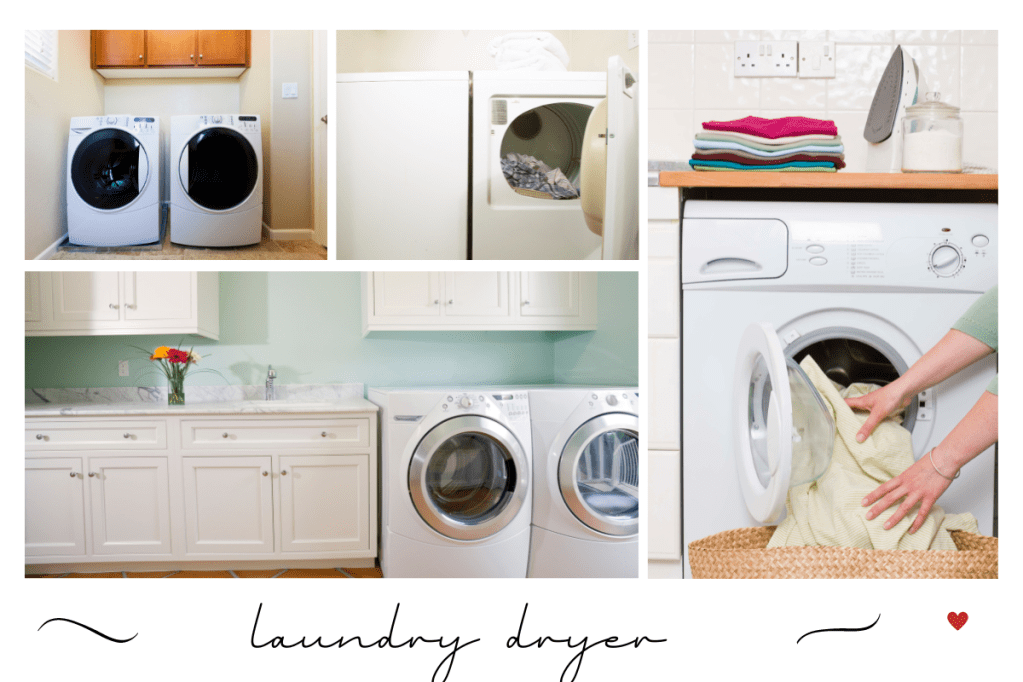
Doing the laundry can present an intimidating challenge, and one of the foremost hurdles is determining how to desiccate your garments. Although air-drying clothes is a time-honored and environmentally friendly option, it may not always be expedient or feasible. In such instances, a laundry dryer can be a propitious and time-saving solution. Nevertheless, there exist certain apprehensions concerning the environmental impact, energy consumption, and clothing durability issues associated with dryers. In this discourse, we shall scrutinize the merits and demerits of using a laundry dryer and apprise you on whether it is a judicious investment.
Types of Laundry Dryer
When it comes to drying one’s laundry, there exists a diverse range of options in the market. From traditional clotheslines to cutting-edge laundry dryers, the alternatives can be overwhelming. In this exposé, we shall delve into the various types of laundry dryers available to you, facilitating a well-informed decision.
Vented Dryers:
The most prevalent type of laundry dryer, these work by drawing in chilly, arid air and warming it before channeling it through the agitating clothes, where it absorbs moisture. The resulting humid air is subsequently vented outside through a duct or vent, rendering it a fitting choice for domiciles with external accessibility.
Condenser Dryers:
Unlike vented dryers, condenser dryers are not dependent on an outdoor vent to function. They function by amassing moisture from the rotating garments into a detachable water tank, which can be emptied. This choice is particularly ideal for denizens dwelling in apartments or homes lacking external access.
Heat Pump Dryers:
Heat pump dryers are a more novel and eco-friendly alternative. They use a heat pump to recycle hot air within the dryer, reducing energy consumption. Moreover, they operate at a lower temperature than conventional dryers, making them gentler on clothing. Nevertheless, they tend to be pricier than other dryer types.
Spin Dryers:
Spin dryers are a compact and portable option, ideal for those living in confined quarters or individuals seeking to conserve energy. These devices work by spinning garments at high speeds, expelling excess moisture. However, they do not comprehensively dry clothing, and garments may necessitate additional air-drying.
To sum up, there is an array of laundry dryer types available, each offering distinct advantages and disadvantages. When making a decision, contemplate factors such as the size of your abode, energy consumption, and desired level of convenience.
How to choose the right Laundry Dryer
When it comes to choosing a laundry dryer, the copious assortment of options can make the task seem intimidating. However, with judicious reflection on several pivotal factors, the process of selecting a dryer that precisely matches your requirements becomes a less formidable pursuit.
Type of Dryer:
As we have previously expounded, a myriad of laundry dryer types are available, each with distinct virtues and shortcomings. It is crucial to ponder over variables such as your domicile’s dimensions, energy consumption, and desired level of convenience when electing a dryer.
Capacity:
The dryer’s magnitude is another crucial criterion. If you have a large household or a profusion of laundry, you necessitate a laundry dryer with a higher capacity that can manage more substantial loads. Conversely, if you reside solo or have restricted living quarters, a dryer with a smaller capacity may suffice.
Features:
Laundry dryers are replete with a broad range of features, including moisture sensors, timed dry options, and anti-wrinkle settings. Deliberate on which features align with your lifestyle and are indispensable to you.
Energy Efficiency:
Laundry dryers can consume substantial amounts of energy, leading to high utility bills. Seek out dryers that have an Energy Star rating, indicating that they comply with energy efficiency standards.
Brand and Warranty:
When selecting a laundry dryer, it is vital to choose from a reputable brand that offers extensive warranty coverage. A robust warranty can offer peace of mind and save you money on repairs over the long haul.
Budget:
Finally, one must take into account their budget when procuring a laundry dryer. As dryers are available at a range of price points, it is imperative to contemplate what you can afford and which features are worth investing in.
In conclusion, selecting a laundry dryer involves a multifarious array of factors, including type, capacity, features, energy efficiency, brand, warranty, and budget. By meticulously pondering over these elements, you can procure a dryer that is effective, convenient, and customized to your specific needs.
Materials of Laundry Dryer
A laundry dryer is an indispensable home appliance that expeditiously dries wet clothes. These devices are available in diverse sizes, types, and models, each constructed with unique materials that significantly impact their durability, efficiency, and effectiveness in drying clothes.
Here are some of the materials utilized in the construction of laundry dryers:
Stainless Steel:
The use of stainless steel is ubiquitous in the fabrication of laundry dryers due to its outstanding durability, corrosion-resistant properties, and sleek aesthetic. This material is renowned for its ability to withstand high temperatures, making it ideal for the dryer drum and internal components.
Coated Steel:
Another material frequently employed in constructing laundry dryers is coated steel. This material is created by covering ordinary steel with enamel or porcelain, resulting in a smooth, easy-to-clean surface that is highly resistant to corrosion and abrasion.
Plastic:
Plastic is also used in the construction of laundry dryers, primarily for the control panel and outer cabinet. It is lightweight, cost-effective, and highly moldable into various shapes and sizes. However, it is less durable than stainless or coated steel and is more susceptible to dings and scratches.
Glass:
Some high-end laundry dryers incorporate a glass door, which is crafted from tempered glass capable of withstanding high temperatures without fracturing. This material provides an unobstructed view of the clothes inside the drum and contributes an air of sophistication to the machine’s design.
Aluminum:
Aluminum is a lightweight and budget-friendly material used for specific components in laundry dryers, such as the lint filter and vent pipe. However, aluminum is less resilient than stainless steel and may dent or deform with time.
When selecting a laundry dryer, it is crucial to consider the materials used in its manufacture. Stainless and coated steel are the most robust and long-lasting materials, while plastic and aluminum are more economical but less durable. Comprehending the materials employed in constructing a dryer can help you make an informed decision and choose a machine that caters to your needs and budget.
Advantages of Laundry Dryer
The laundry dryer is an essential home appliance that offers numerous benefits beyond its primary function of drying clothes. Apart from being a significant time-saver, here are some of the advantages of using a laundry dryer:
Convenience:
The laundry dryer provides unrivaled convenience, enabling you to dry your clothes irrespective of the weather or time of day. Compared to air-drying, which is subject to weather conditions and can take an extended duration, the laundry dryer can dry a complete load of clothes in less than an hour.
Space Optimization:
For individuals residing in compact spaces or apartments, the laundry dryer proves to be a game-changer. Designed to be compact, they can be conveniently stacked on top of or beneath a washing machine, freeing up precious floor space.
Wrinkle Reduction:
Laundry dryers are equipped with an array of advanced features that help minimize wrinkles and reduce the need for ironing. Some models come with anti-wrinkle settings that continue to tumble clothes after the cycle, while others have steam options that release wrinkles and refresh clothes.
Clothes Protection:
Exposure to environmental elements such as pollen, dust, and humidity can cause discoloration and musty odors to clothes, an issue that air-drying clothes exposes them to. In contrast, laundry dryers have been designed to dry clothes without exposing them to the elements, thus providing protection and preserving the quality of clothes.
Energy Efficiency:
Laundry dryers have significantly advanced in terms of energy efficiency, with several models receiving Energy Star certification. Such models use less energy, resulting in reduced energy consumption, and ultimately, lower utility bills.
Faster Drying Time:
The laundry dryer can dry clothes much faster than air-drying, saving precious time, and enabling you to focus on other activities. This is particularly useful when you need to dry clothes quickly, such as when preparing for an event or when you need clean clothes urgently.
In conclusion, the laundry dryer offers several advantages, such as convenience, space optimization, wrinkle reduction, clothes protection, energy efficiency, and faster drying time. These benefits make it an invaluable addition to any household, particularly for individuals with busy schedules or limited living space.
Disadvantages of Laundry Dryer
Whilst the laundry dryer is widely known for its practicality and efficiency, it is important to acknowledge that it also has some disadvantages that warrant consideration. Here are some of the drawbacks of utilizing a laundry dryer:
High Energy Consumption:
Laundry dryers consume a significant amount of energy, which can result in exorbitant utility bills. Although energy-efficient models are available, their higher cost may not be feasible for all individuals.
Garment Shrinkage and Damage:
Laundry dryers utilize intense heat to evaporate moisture, which can result in shrinkage and damage to delicate fabrics. Over time, the high heat can cause clothes to fade, become brittle, or even tear.
Fire Hazard:
Improper use of a laundry dryer can lead to potential fire hazards. The accumulation of lint in the dryer’s exhaust duct can raise the risk of fire, and leaving a dryer unattended whilst in operation can also pose a significant danger.
Noise Pollution:
Some laundry dryer models can be noisy during use, which can create a disturbance, particularly for those residing in close proximity to others.
Maintenance Requirements:
Regular maintenance is necessary to ensure that laundry dryers operate efficiently and safely. Neglecting routine upkeep, such as cleaning the lint filter, exhaust duct, and drum, can result in reduced efficiency and eventual breakdowns.
Environmental Impact:
Laundry dryers contribute to the carbon footprint and environmental impact due to their high energy consumption. While energy-efficient models are available, they still consume energy and generate carbon emissions.
To summarize, while the laundry dryer offers several advantages, it is imperative to consider its potential drawbacks before making a purchase. Factors such as high energy consumption, garment shrinkage and damage, fire hazards, noise pollution, maintenance requirements, and environmental impact should all be taken into account when deciding whether a laundry dryer is the appropriate choice for your needs.
 Hey Singapore