
Discover the fascinating history, evolution, and cultural significance of cutlery through the ages. Explore the origins of spoons, forks, and knives.
The Evolution of Cutlery: From Primitive Tools to Modern Utensils
The dining utensil set known as “cutlery” has developed greatly over time. Cutlery has come a long way from its caveman roots as simple implements for preparing and consuming food. Today’s cutlery is not only functional but also aesthetically pleasing. Ancient humans used stones, shells, and animal bones as cutlery. Tools and methods for making cutlery have evolved alongside civilization. Cutlery was formerly made from copper, bronze, or iron; but, with the advent of stainless steel in the twentieth century, these brittle metals were replaced by long-lasting, rust-proof stainless steel tools.
Cultural, technological, and economic forces have all played a role in the evolution of cutlery. Cutlery was formerly out of reach for the majority of the population, but the advent of mass production and industrialization in the 19th century made it readily available to consumers of all socioeconomic backgrounds. Because of developments in metallurgy and engineering, cutlery such as carving knives and fish forks can serve specific purposes. As customs and norms around meals altered, so too did the way cutlery was used. Forks, introduced to medieval Europe as an eating implement, were initially met with hostility because of its link with the devil.
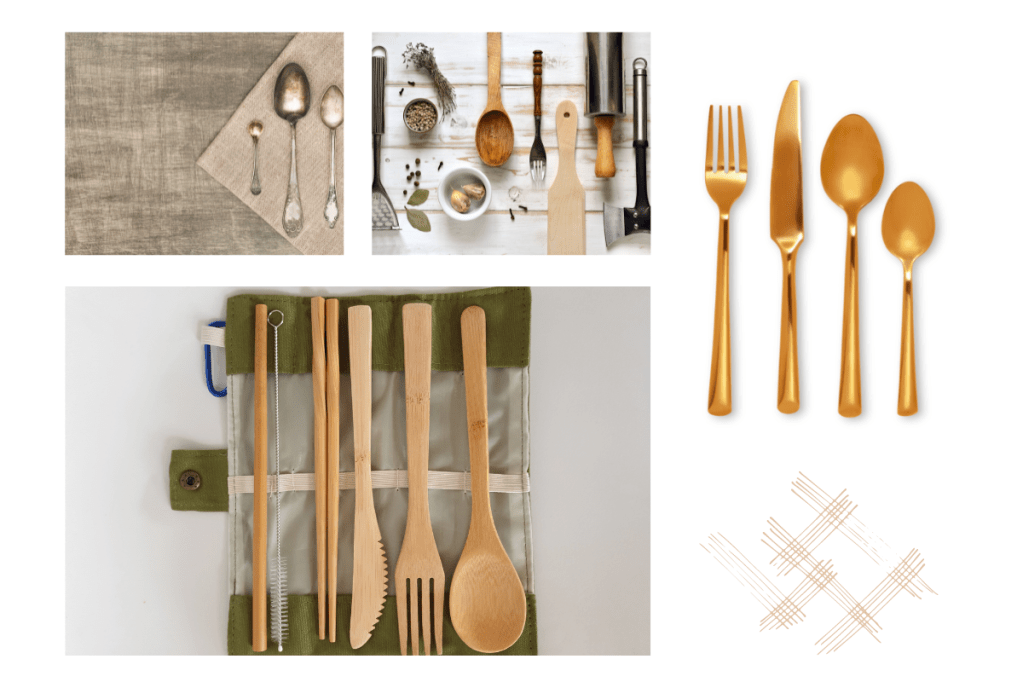
The development of cutlery has continued, and now lightweight and long-lasting utensils can be made from cutting-edge materials like carbon fiber and titanium. In an effort to reduce waste and help the environment, companies have started producing cutlery made from bamboo and cornstarch that is biodegradable and compostable. It’s amazing to think about where we might be heading with this civilization-defining instrument as cutlery continues to develop.
The Cultural Significance of Cutlery: How Different Cultures Use and View Tableware
The cultural relevance of cutlery extends far beyond its utilitarian role in the dining experience. The way that people of various cultural backgrounds regard and interact with their tableware varies greatly. For more than five thousand years, Chinese people have used chopsticks as a means of eating, and these tools have come to represent important Confucian principles like deference to authority and personal discipline. In Japan, eating with chopsticks is an art form; there are even numerous chopstick styles for different kinds of food. While in the United Kingdom it is customary for the royal family and guests at formal dinners to use silver silverware, in India it is usual practice, influenced by Hindu beliefs, to use their hands instead.
Cutlery serves more than just a functional purpose in many civilizations. Ornate and exquisite silverware is a sign of social position and wealth in many cultures. The affluent of Renaissance Italy, for instance, commissioned elaborate gold or silver flatware sets as a status symbol. The Ottoman Empire was known for its beautiful cutlery sets, which were typically given as gifts to visiting dignitaries.
The rules for properly using silverware hold cultural significance as well. In more refined social settings, knowing how to use cutlery correctly can be a display of sophistication and education. It’s common, for instance, for the sort of food being given to affect where cutlery is set out and the order in which each piece is used. For example, a traditional French dinner may need for as many as seventeen different types of silverware, each of which has its own designated position and use. As such, cutlery has a much broader cultural importance than just its utilitarian one, exemplifying the way in which even the most mundane objects may carry important messages about the values and norms of a society.
Cutlery as Art: The Intricacies and Beauty of Silverware
Cutlery is more than just a utilitarian item; it’s also a work of beauty. Among cutlery, silverware is the best example of the precise detail and aesthetic appeal that may be accomplished. Skilled silversmiths traditionally craft silver cutlery, and they utilize techniques like chasing, engraving, and embossing to add elaborate motifs and patterns to the flatware. The final product is a wonderful piece of art that also fulfills its intended purpose beautifully: a knife.
Silverware’s elegance comes from its shiny metallic sheen as well as the intricate engravings and patterns that decorate it. A one-of-a-kind visual effect is produced by silver’s reflective surface, which reflects light in a variety of ways, depending on the angle and strength of the light source. Silver’s inherent beauty is enhanced by the patina it acquires through time, making each object a one-of-a-kind relic of its past. Silverware is the type of cutlery most commonly used on special occasions or during formal dinners, where its aesthetic value and ability to impress guests are highly valued.
There has been a recent resurgence of interest in cutlery as an artistic medium, and it’s not just limited to silverware. These days, it’s not uncommon to see silverware with unusual or even bizarre shapes, materials, or textures. Knives and forks are works of art because they are a perfect example of how form and function can be harmoniously combined to produce things with aesthetic value and practical utility.
The Art of Balancing Flavors: Using Cutlery to Enhance Your Culinary Creations
Our perception of flavor is greatly influenced by the cutlery we use to eat. Using your fork, knife, and spoon skillfully, you may create a balanced and pleasant meal by highlighting and enhancing the flavors of individual elements. You can create a more nuanced and complex flavor profile by using cutlery to change the texture, warmth, and taste of your food.
We may experience a different level of flavor depending on how we use our cutlery. You can get the whole range of a dish’s flavors by using different utensils; for example, a little spoon is ideal for appreciating the dish’s more subtle nuances, while a large fork is better for highlighting its more robust and bolder components. A smaller spoon produces a more refined mouthfeel, while a larger fork might produce a more substantial and fulfilling sensation, all due to the difference in size and form of the utensil.
Using cutlery to make a meal look more appetizing is as important as using it to improve the taste. The aesthetic value of a meal can be affected by factors such as the way it is presented on the plate and the silverware used to consume it. Plating is the practice of arranging food artistically using cutlery to enhance the aesthetic appeal and overall presentation of a meal.
The Role of Cutlery in Fine Dining: Elevating the Dining Experience
When it comes to good dining, cutlery is essential since it adds a touch of class and sophistication to the meal. Even more so than the actual meal itself, the cutlery at a fine dining establishment can set the tone and atmosphere. Investment in high-end cutlery produced from rich materials like silver, gold, or platinum, and showcasing elaborate designs and patterns, is common practice among fine dining establishments.
How the cutlery is used is just as important as the cutlery itself when it comes to creating a memorable fine dining experience. The wait staff of a fine dining establishment is educated in the art of exact and exquisite cutlery use, and they apply this skill when serving and clearing the tables. Some restaurants go for unusual and artistic placements of silverware on the table, which adds to the beauty of the setting as a whole, and this is something to keep in mind when choosing a restaurant.
To sum up, cutlery’s purpose in fine dining is to provide a touch of class and sophistication to the meal. The cutlery used and the way it is set the table may make or break a meal.
The Etiquette of Cutlery: Understanding Proper Usage and Placement
For a formal dinner, it’s important to know how to use your cutlery properly. An appropriate use and placement of cutlery not only demonstrates appreciation for the meal being served, but also makes for a more pleasant and stress-free dining experience for everyone. Cutting using the appropriate utensil for each dish, setting the table with the silverware in its proper place, and using cutlery with respect and grace are all part of good table manners.
Forks should go on the left side of the plate and knives and spoons to the right, as per the golden rule of cutlery etiquette. The utensils for the first course should be placed on the outer edge of the serving tray, and the utensils for the final course, dessert, should be placed in the innermost part of the tray. Cutlery should be used with a relaxed grip and a smooth, even motion for both cutting and eating.
These universal norms are supplemented by more nuanced guidelines that shift slightly depending on where you are. To give just one example, in certain societies it is impolite to rest the knife’s blade on the plate, whereas in others it is the norm to return the cutlery to a specific position on the plate after each dish has been consumed. Following these guidelines will assist to make everyone’s dining experience more pleasant and respectful.
 Hey Singapore