
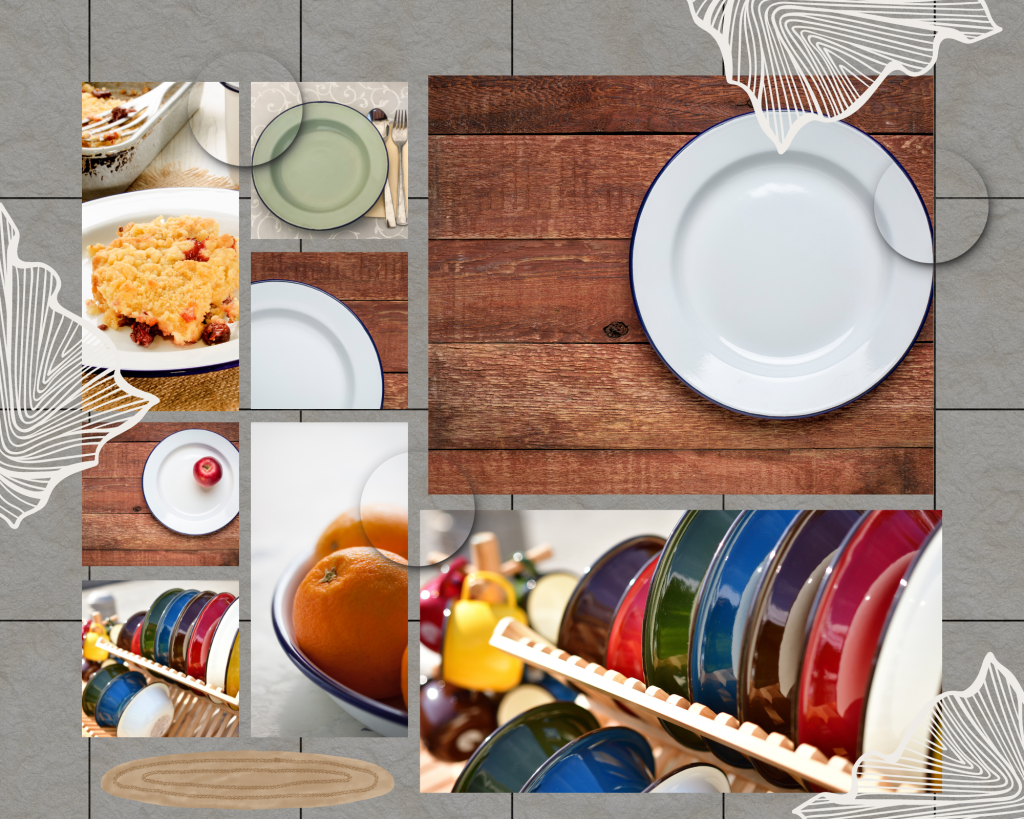
Enamel plates are dishes made of a metal base, usually steel or iron, that is coated with a layer of enamel, which is a type of glass that is fused onto the metal surface through a high-temperature firing process. This results in a durable and non-porous surface that is resistant to stains, scratches, and corrosion.
Enamel plates are known for their unique properties such as being lightweight, easy to clean, and heat-resistant. They can be used for both indoor and outdoor dining, as they are safe to use on stovetops, ovens, and grills. Enamel plates are also available in a variety of colors and designs, making them a popular choice for those who want to add a touch of style to their table setting.
In addition to their durability and versatility, enamel plates are also an environmentally friendly choice as they are reusable and can last for many years. They are also free from harmful chemicals such as BPA, phthalates, and lead, making them a safe choice for food and beverage consumption.
Overall, enamel plates are a popular choice for those who want a durable, stylish, and eco-friendly option for their dining needs.
Enamel plates have a long history, dating back to ancient times when enamel was used to decorate jewelry and other decorative objects. However, the modern enamel plate as we know it today first appeared in the 19th century in Europe.
In the mid-1800s, French inventors discovered a way to fuse enamel onto iron and steel, creating a durable and long-lasting surface that could be used for a variety of purposes. The first enamel plates were produced in France and quickly gained popularity in Europe, where they were used for everything from camping and picnics to everyday dining.
Over time, enamel plates evolved to meet the changing needs and tastes of consumers. In the early 1900s, enamelware became popular in America and was often used for camping and outdoor activities. During World War II, enamelware became a popular choice for military mess kits due to its durability and portability.
In the 1950s and 1960s, enamelware experienced a resurgence in popularity, with designers incorporating bright colors and bold patterns into their designs. Enamel plates became a staple of mid-century modern design and were often used in retro-themed kitchens and dining rooms.
Today, enamel plates are still produced and used around the world. They continue to evolve, with designers experimenting with new colors, patterns, and shapes to create unique and functional pieces for modern kitchens and dining rooms.
Enamel plates are made of a metal base that is coated with a layer of enamel, which is a type of glass. The metal base is usually made of steel or iron, and the enamel coating is made of a mixture of glass, ceramic, and metal oxides.
The production of enamel plates involves several steps. First, the metal base is cut and formed into the desired shape. Then, the enamel coating is applied to the surface of the metal using a process called vitrification.
Vitrification involves applying a powdered enamel coating to the surface of the metal and heating it to a high temperature in a kiln. During the heating process, the enamel melts and fuses onto the metal, forming a durable and non-porous surface.
Once the enamel has been fused onto the metal, the plates are cooled and any excess enamel is removed. The plates may also be decorated with additional enamel colors or designs using a process called overglazing.
After the decoration is complete, the plates are fired again to bond the overglaze to the enamel surface. Finally, the plates are inspected for quality and any defects are repaired before they are packaged and shipped for distribution.
Overall, the production of enamel plates involves a combination of traditional metalworking and glassmaking techniques, resulting in a unique and durable product that is ideal for a variety of dining and outdoor activities.
Enamel plates are known for their durability because the enamel coating creates a tough and non-porous surface that is resistant to scratches, chipping, and corrosion.
Enamel is made of a mixture of glass, ceramic, and metal oxides that is fused onto the metal base through a high-temperature firing process. This results in a hard and smooth surface that is more resistant to damage than the metal base alone.
Enamel plates are also resistant to scratches because the surface of the enamel is harder than most materials that would typically scratch it, such as metal utensils or abrasive cleaning materials. While enamel can be chipped if dropped or hit with a hard object, it is less likely to chip than other materials like ceramics or glass.
To further protect the enamel surface, enamel plates are often coated with a rim of stainless steel or other metal that provides an additional layer of protection against chipping and wear.
Overall, the combination of the tough enamel coating and metal rim make enamel plates a durable and long-lasting option for dining and outdoor activities. They can withstand daily use and are less likely to require replacement or repair than other types of dishes.
Enamel plates are known for their heat resistance, and can be safely used on stovetops, ovens, and grills. This is because the enamel coating on the metal base is able to withstand high temperatures without melting or cracking.
The enamel coating is made of a mixture of glass, ceramic, and metal oxides that are fused onto the metal base through a high-temperature firing process. This creates a hard and smooth surface that is able to withstand temperatures up to 450-500 degrees Fahrenheit without melting or cracking.
Enamel plates are also able to distribute heat evenly, making them ideal for cooking and serving food. The metal base of the plate heats up quickly, while the enamel coating retains and distributes the heat evenly across the surface of the plate. This allows food to be cooked or heated evenly, without hot spots or uneven cooking.
In addition to their heat resistance, enamel plates are also able to retain heat for a longer period of time than other materials, such as plastic or ceramic. This makes them ideal for serving hot dishes or keeping food warm for longer periods of time.
Overall, the heat resistance of enamel plates is due to the unique properties of the enamel coating, which is able to withstand high temperatures without melting or cracking, while also distributing heat evenly across the surface of the plate. This makes enamel plates a versatile and durable option for cooking, serving, and outdoor activities.
Enamel plates have a non-stick surface due to the smooth and non-porous nature of the enamel coating. The enamel coating creates a hard and smooth surface that does not have any microscopic pores or cracks that can trap food particles, oils, or bacteria, making it non-stick.
The non-stick surface of enamel plates makes them easy to clean, as food and liquids do not adhere to the surface of the plate. This means that stains and spills can be easily wiped away with a damp cloth or sponge. Enamel plates are also dishwasher safe, and can be cleaned in the dishwasher with no risk of damage to the enamel coating.
Enamel plates are resistant to staining, rusting, and corrosion, which also makes them easy to clean. The non-porous nature of the enamel coating prevents liquids and stains from penetrating the surface of the plate, making it easy to clean up spills and stains.
In addition to being easy to clean, the non-stick surface of enamel plates also makes them hygienic, as bacteria and germs are less likely to grow on the smooth and non-porous surface. This makes enamel plates a safe and healthy choice for food and beverage consumption.
Overall, the non-stick surface of enamel plates is due to the smooth and non-porous nature of the enamel coating. This makes them easy to clean, hygienic, and resistant to stains, making them a popular choice for cooking, serving, and outdoor activities.
 Hey Singapore