
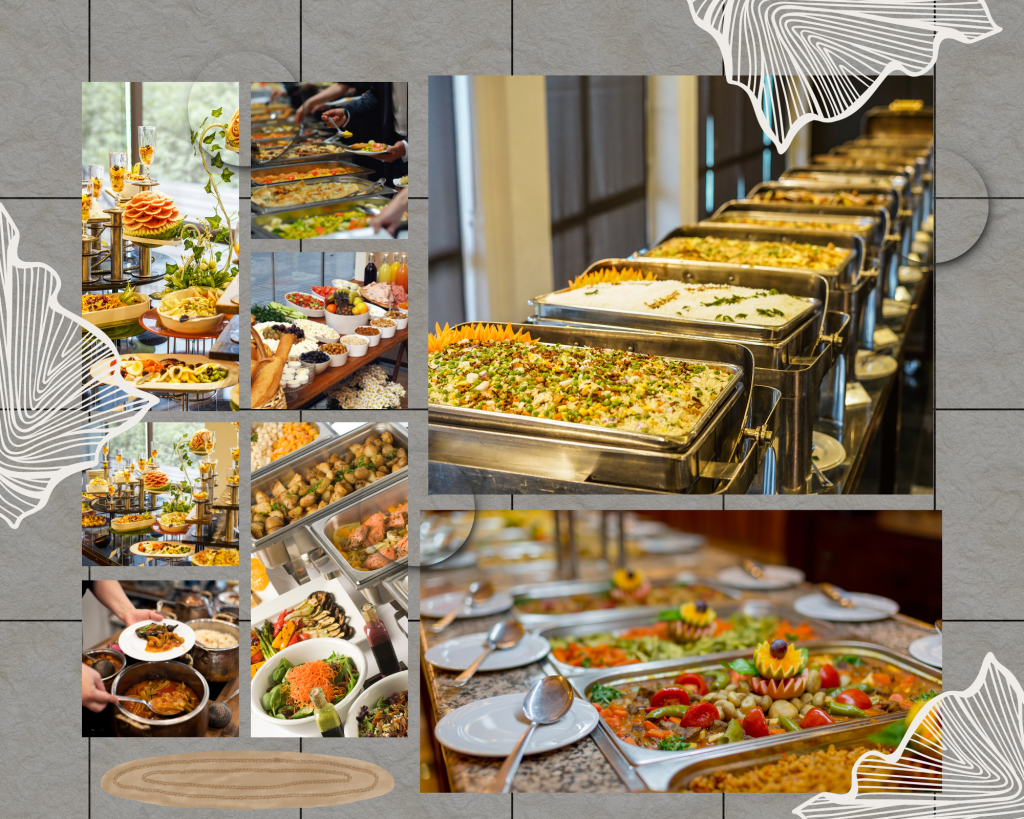
A plate buffet is a type of food service in which guests serve themselves from a variety of dishes that are arranged on a table or counter. The dishes may include a range of different types of food, such as meats, vegetables, grains, and desserts.
At a plate buffet, guests typically start by grabbing a plate and then moving down the line of dishes, selecting the items they want to eat. The dishes are often labeled to help guests identify what they are and to indicate any dietary restrictions or allergens.
Plate buffets are popular for several reasons. First, they allow guests to choose exactly what they want to eat and how much of each item they want. This is particularly appealing for people with dietary restrictions or allergies, as they can select items that meet their specific needs.
Plate buffets are also convenient for hosts, as they require minimal preparation and can accommodate a large number of guests. Finally, plate buffets are often seen as a more casual and relaxed dining option, which can be ideal for events like family gatherings, business meetings, or informal social gatherings.
The art of selecting a plate goes beyond choosing something that is visually appealing. There are a few key factors to consider, such as size, shape, and material.
When selecting a plate size, it’s important to choose one that is appropriate for the amount of food you plan to serve. A plate that is too large may make it difficult to balance flavors and textures, while a plate that is too small may not be able to accommodate all of the different components of your meal. As a general rule, a plate with a diameter of around 10-12 inches is a good choice for most meals.
In terms of shape, round plates are the most common and versatile, but square or rectangular plates can add an interesting visual element to your presentation. When it comes to material, ceramic and porcelain plates are classic choices, but glass, wood, and even metal plates can add an unexpected touch to your table setting.
When it comes to balancing flavors and textures on your plate, it’s important to think about the different elements of your meal and how they will work together. A good rule of thumb is to include a protein, a starch, and a vegetable or fruit on your plate. Think about contrasting flavors and textures – for example, a spicy dish might be balanced with a sweet or creamy side dish.
Portion control is another important consideration when selecting a plate. One strategy is to use a smaller plate to help limit the amount of food you serve yourself. Another approach is to fill half of your plate with vegetables or fruits, a quarter with protein, and a quarter with starch.
Ultimately, selecting the right plate comes down to personal preference and the specific needs of your meal. By considering size, shape, material, and portion control, you can create a balanced and visually appealing presentation that highlights the flavors and textures of your food.
Appetizers and starters are an important part of plate buffets, as they help to set the tone for the meal and whet guests’ appetites. There are many different types of appetizers and starters that are commonly found in plate buffets, including:
Crudité platters – These platters typically feature a variety of raw vegetables, such as carrots, celery, and bell peppers, served with a dipping sauce.
Cheese and charcuterie boards – These boards feature a variety of cheeses and cured meats, along with crackers or bread.
Dips and spreads – Popular dips and spreads include hummus, guacamole, and spinach and artichoke dip.
Miniature quiches or tarts – These bite-sized savory pastries are often filled with cheese, vegetables, or meats.
Soups or salads – Lighter options like soups and salads can also be served as appetizers or starters in a plate buffet.
When choosing the right appetizer for your meal, it’s important to consider the flavors and textures of the rest of your menu. For example, if you are serving a spicy main dish, you may want to choose a lighter appetizer that will help to balance the flavors. Alternatively, if you are serving a rich and heavy main dish, you may want to choose an appetizer that is lighter and more refreshing.
It’s also important to consider any dietary restrictions or allergies that your guests may have. Offering a variety of appetizer options, including vegetarian and gluten-free options, can help ensure that all of your guests are able to enjoy the meal.
Ultimately, the key to choosing the right appetizer for your meal is to consider the overall balance of flavors and textures and to offer a variety of options that will appeal to a range of different tastes and preferences.
Popular main dishes found in plate buffets:
Grilled or roasted meats (chicken, beef, pork, lamb, fish)
Pasta dishes (spaghetti, lasagna, fettuccine alfredo)
Rice and noodle dishes (fried rice, pad Thai, chow mein)
Vegetarian or vegan options (stir-fried vegetables, tofu dishes, lentil curries)
Casseroles and stews (shepherd’s pie, beef stew, chicken pot pie)
Sandwiches and wraps (BLT sandwiches, turkey wraps, falafel wraps)
Soups and salads (chicken noodle soup, Caesar salad, Greek salad)
How to choose the right main dish for your plate:
Consider your dietary restrictions or preferences. If you are vegetarian or have any allergies or sensitivities, make sure to choose a dish that meets your needs.
Think about the other foods on your plate. If you already have a lot of carbs or starches, consider choosing a protein-based dish. If you already have a lot of heavy, rich foods, opt for a lighter dish.
Consider the occasion. If you are at a formal event or a fancy restaurant, you may want to choose a more sophisticated dish. If you are at a casual buffet or a family gathering, you may want to choose a more comforting, familiar dish.
Don’t be afraid to try something new! Plate buffets can be a great opportunity to sample different cuisines and dishes that you might not normally try.
Tips for navigating different cuisines:
Do some research beforehand. Look up the typical ingredients and flavors of the cuisine you’ll be trying so you have an idea of what to expect.
Ask for recommendations. If you’re at a restaurant or buffet, ask the server or chef for their recommendations on what dishes are most popular or what they would recommend for a first-time eater.
Start with familiar flavors. If you’re trying a new cuisine for the first time, look for dishes that have familiar ingredients or flavors. For example, if you’re trying Thai food for the first time, you might start with a dish that has a peanut sauce, since that’s a flavor you’re probably familiar with.
Be open-minded. Remember that different cultures have different culinary traditions and flavor profiles, and what might be unusual or unfamiliar to you could be a beloved staple in another culture.
Don’t be afraid to ask questions. If you’re not sure what something is or how to eat it, don’t hesitate to ask someone who knows. People are usually happy to share their knowledge and enthusiasm for their food culture.
 Hey Singapore