
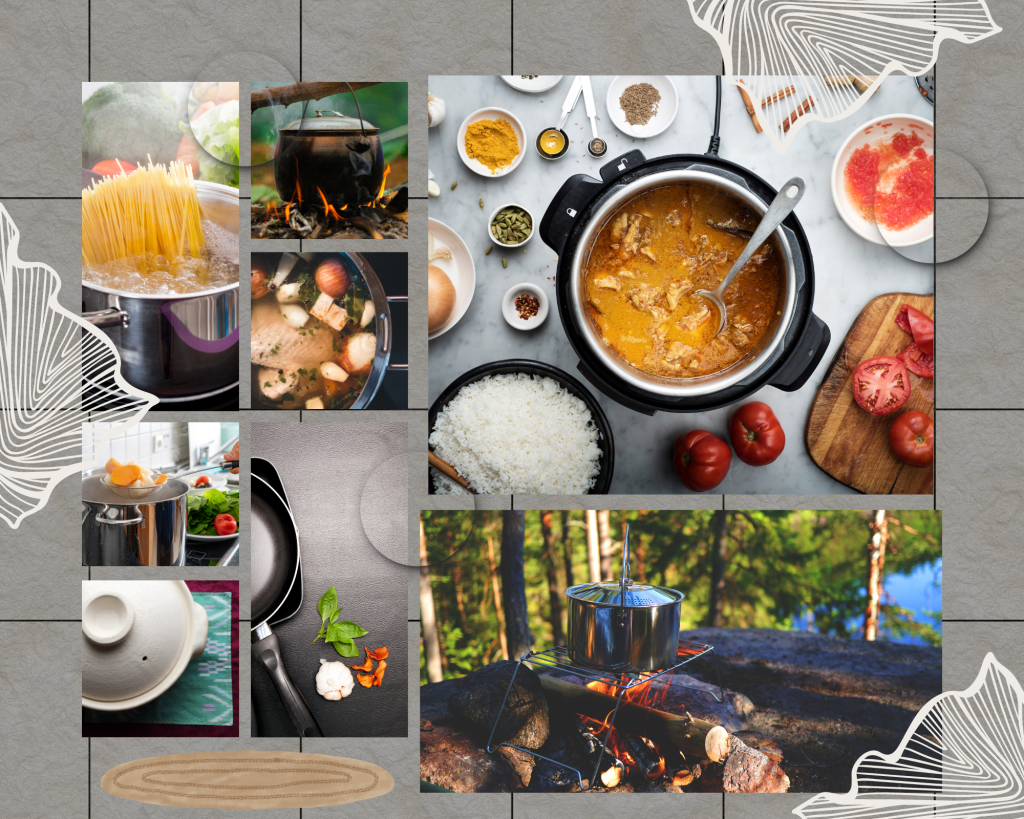
The choice of cooking pot is an important factor in achieving successful cooking results. Different types of pots are designed for different cooking methods and different types of food. Choosing the right pot can help ensure that food is cooked evenly, that it retains its nutrients, and that it is easy to clean. In this article, we will explore the importance of choosing the right cooking pot and the factors to consider when selecting a pot for a particular cooking task.
There are several types of small cooking pots that are designed for specific purposes. Here are some of the most common types and their unique features:
Saucepan – A saucepan is a small, shallow pot with a long handle and a lid. It is typically made of stainless steel or aluminum and is designed for cooking liquids and sauces. The shallow shape of the pan allows for easy stirring, and the lid helps to keep the liquid from evaporating too quickly. Some saucepans also have a pouring spout, which makes it easy to transfer liquids to another container.
Stockpot – A stockpot is a large, deep pot with a tight-fitting lid. It is usually made of stainless steel or aluminum and is designed for making soups, stews, and stocks. The deep shape of the pot allows for a large volume of liquid and ingredients, while the tight-fitting lid helps to trap heat and moisture for even cooking.
Dutch oven – A Dutch oven is a heavy, deep pot with a tight-fitting lid. It is typically made of cast iron and is designed for slow-cooking dishes like roasts, casseroles, and stews. The heavy construction of the pot helps to distribute heat evenly, while the tight-fitting lid helps to retain moisture for tender and flavorful results.
Each type of pot has its unique features and uses. A saucepan is ideal for cooking liquids and sauces, while a stockpot is best for making soups, stews, and stocks. A Dutch oven is perfect for slow-cooking dishes that require long cooking times and a moist cooking environment. When choosing a small cooking pot, consider the type of dish you will be making, the amount of liquid and ingredients you will be using, and the type of heat source you will be using (gas, electric, or induction). This will help you choose the right pot for the task at hand and ensure that your dish comes out perfectly cooked every time.
Small cooking pots come in a variety of materials, each with their own unique properties. Here are the most common materials used for small cooking pots and their pros and cons:
Stainless Steel – Stainless steel is a popular material for small cooking pots because it is durable, easy to clean, and does not react with acidic ingredients. It is also relatively lightweight and conducts heat evenly. However, stainless steel is not a good conductor of heat, which means that it may take longer to heat up and may not distribute heat as evenly as other materials.
Cast Iron – Cast iron is a heavy-duty material that is known for its excellent heat retention and distribution properties. It is ideal for slow-cooking dishes and can be used on all types of heat sources, including induction. Cast iron is also very durable and can last for generations. However, it is heavy and can be difficult to clean, and it can also react with acidic ingredients, leading to a metallic taste.
Copper – Copper is a highly conductive material that heats up quickly and distributes heat evenly. It is also a very attractive material and adds a touch of elegance to any kitchen. However, copper is expensive and requires regular maintenance to keep it looking its best. It also reacts with acidic ingredients, which can lead to a metallic taste.
Aluminum – Aluminum is a lightweight material that is an excellent conductor of heat. It heats up quickly and distributes heat evenly, making it ideal for cooking delicate dishes. However, it is not as durable as other materials and can warp over time. It also reacts with acidic ingredients, which can cause discoloration and a metallic taste.
Ceramic – Ceramic pots are non-reactive and are great for cooking acidic foods like tomatoes and citrus. They are also dishwasher safe and easy to clean. However, ceramic pots can be brittle and are not as durable as other materials. They can also be heavy and take longer to heat up.
When choosing a small cooking pot, consider the type of cooking you will be doing and the heat source you will be using. Stainless steel and cast iron are great for stovetop cooking, while copper and aluminum are better for use in the oven. Ceramic pots are versatile and can be used on both stovetops and in the oven.
Choosing the right capacity for your small cooking pot is important for achieving the best cooking results. Here are some tips for selecting the right size pot based on your cooking needs and family size:
Consider your family size – If you’re cooking for one or two people, a small pot with a capacity of 1-2 quarts should be sufficient. If you have a larger family or plan to entertain guests, a pot with a capacity of 3-6 quarts may be more suitable.
Think about the type of food you’ll be cooking – If you plan to cook soups, stews, or other dishes with a lot of liquid, you’ll need a pot with a larger capacity to accommodate the ingredients. If you’ll be cooking more solid foods, like rice or vegetables, a smaller pot may be sufficient.
Consider the size of your stove – Make sure that the pot you choose fits comfortably on your stove. A pot that is too large may not heat evenly or may take longer to come to temperature.
Think about storage space – Consider where you will store the pot when it’s not in use. A larger pot may take up more space in your kitchen cabinets.
Pot capacity is typically measured in quarts or liters. A quart is a unit of measurement for volume that is equivalent to 0.946 liters. To determine the capacity of a pot, fill it with water and measure the amount of water it holds in quarts or liters.
In summary, when choosing the right capacity for your small cooking pot, consider your family size, the type of food you’ll be cooking, the size of your stove, and your storage space. With these factors in mind, you can select a pot that is perfectly suited to your needs and cooking style.
Handles and lids are important features to consider when choosing a small cooking pot. Here’s an overview of why they are important and the different types available:
Handles:
Handles are essential for safely lifting and moving your pot. They can also impact the balance and stability of the pot when it’s on the stove. Here are the most common types of handles:
Riveted handles – These handles are attached to the pot with rivets and are very secure. However, food can get trapped in the rivets, making them difficult to clean.
Stay-cool handles – These handles are made of materials that don’t conduct heat, such as silicone or Bakelite. They remain cool to the touch, even when the pot is hot.
Loop handles – These handles are usually found on Dutch ovens and are designed for easy lifting with both hands. They can be made of the same material as the pot or can be covered in a heat-resistant material.
Lids:
Lids are important for trapping heat and moisture in the pot, which can help to cook food more evenly and preserve its flavor. Here are the most common types of lids:
Glass lids – These lids allow you to see what’s cooking without having to lift the lid. They’re also easy to clean and can withstand high temperatures.
Stainless steel lids – These lids are durable and can withstand high temperatures. They’re also easy to clean.
Tight-fitting lids – These lids create a tight seal on the pot, which helps to trap in heat and moisture. They’re ideal for slow-cooking dishes.
Vented lids – These lids have small holes that allow steam to escape. They’re ideal for dishes that need to simmer or steam.
In summary, handles and lids are important features to consider when choosing a small cooking pot. Handles impact the balance and stability of the pot, while lids trap in heat and moisture. There are different types of handles and lids available, so choose the ones that work best for your needs and cooking style.
 Hey Singapore