
During the hot summer months, maintaining a cool and pleasant environment might be challenging, but it is very necessary for leading a healthy and productive life. One of the most important steps in accomplishing this purpose is choosing a suitable fan. There is a little-known strategy that can be used to choose a fan that will maintain your comfort without adding to the amount of money you spend on power. The size of the space, the amount of airflow, the design of the blades, the noise level, and the energy efficiency of the fan are all important factors to take into account. You are able to make your living area more comfortable and conducive to meeting your needs if you have the right fan. In this article, we will analyze these significant factors and provide you with the information you need to make an informed decision when selecting the best fan for your house or place of business, whether it be at home or at work.
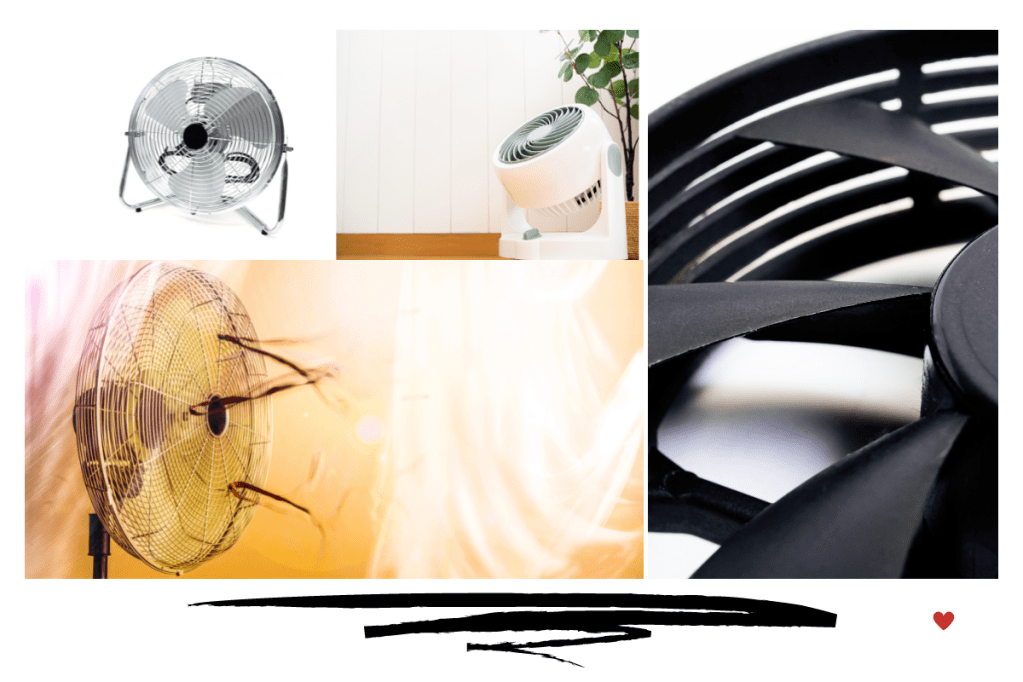
The Importance of Dimensions When Selecting the Appropriate Fan for Your Area
It is essential that you choose the appropriate fan size for your area in order to guarantee adequate air circulation.
Airflow: Why it’s Important and How to Measure It
A fan with a CFM that is insufficient for the area will not be able to offer sufficient cooling.
A fan that has an inappropriately high CFM for the room might result in increased levels of both noise and wasted energy.
What makes airflow so important, as well as how to accurately measure it
The quantity of air that can be moved by a fan in a certain length of time is referred to as its airflow. While shopping for a fan, this is one of the most important aspects to take into account. The following is a guide that will help you measure and comprehend airflow:
CFM is the unit of measurement for airflow (cubic feet per minute).
When the CFM number is higher, it indicates that the fan can move a bigger volume of air and has a higher level of power.
The cubic feet of air per minute (CFM) that is suggested for a room may be determined by multiplying the room’s square footage by the number of air exchanges that are required every hour.
Choose a fan that has a CFM that corresponds to the CFM that has been advised for your area.
Blade Design: Figuring Out How Much Power Can Be Handled Without Causing Too Much Noise
The design of the fan’s blades is an important factor in the fan’s overall performance. While selecting the proper blade design for your requirements, here are some factors to take into consideration:
Both the volume of airflow and the amount of noise that the fan produces may be affected by the angle of the blades. Blades that are tilted at a sharper angle move more air, but they also tend to make more noise.
Look for blades with an angle that ranges from 10 to 15 degrees for the best possible airflow and the lowest possible noise level.
The performance of the fan may be affected not only by its speed but also by the shape of the blades. As compared to straight blades, curved blades may provide a smoother and more consistent airflow than their straight counterparts.
How to Choose a Fan Based on Its Noise Level so that It Won’t Keep You Awake at Night
When shopping for a fan, you should give careful consideration to the amount of noise it produces, particularly if you want to use the appliance in a bedroom or another relatively quiet place. You may pick a fan that has a low noise level by keeping the following things in mind:
Try to find a fan with a decibel (dB) rating of sixty or less or less than that.
Consider purchasing a fan that has a noise level that is lower than 50 decibels if you are sensitive to noise.
Fans with bigger blades or more blades tend to be quieter since they don’t have to spin as quickly to move the same quantity of air as fans with smaller blades.
Save Money While Retaining Your Cool With Energy Efficiency
Selecting a fan that uses less energy is not only beneficial to the health of the planet, but it also has the potential to reduce the cost of your monthly energy bill. You may pick a fan that is efficient in its use of energy by keeping these things in mind:
Look for fans that have the ENERGY STAR certification, which certifies that they have satisfied the criteria for energy efficiency established by the United States Environmental Protection Agency (EPA).
Fans that are equipped with a programmable thermostat may assist in lowering overall energy usage by altering the speed of the fan in response to the set temperature of the thermostat.
Choose a fan that utilizes DC motor technology rather of the more conventional AC motors since DC motors use up to 70% less energy.
Using Technology to Improve Comfort
Smart fans are growing in popularity as technology advances. They include voice control, remote control, and even smartphone apps that allow the fan to be operated from anywhere. Some smart fans also have sensors that adjust the fan’s speed and direction based on the room’s temperature and humidity.
Tower Fans Provide a Space-Saving Design and Robust Performance
Tower fans are an excellent choice for small rooms or spaces with limited floor space. They have a tall, slim design that consumes less space than traditional fans while providing the same performance. Some tower fans have oscillation and air ionizers, which aid in air purification.
Ceiling Fans: A Timeless Choice for Comfort and Charm
For decades, ceiling fans have been a popular choice for good reason. They provide exceptional airflow while also serving as a stylish focus point in any area. Certain ceiling fans are also equipped with dimmable lights and remote controls.
Bladeless Fans: Innovative Design for Maximum Comfort
Bladeless fans are a recent innovation in the fan industry. They use air multiplier technology to provide a constant, smooth airflow without the need for blades. This innovative design not only provides superior cooling, but also makes cleaning the fan a breeze.
Individual Fans: Portable Cooling for Mobility
Personal fans are small, portable, and ideal for use on the go. They are ideal for outdoor activities such as camping and hiking, as well as heated offices and workstations. Some personal fans are rechargeable, while others are battery-operated, offering them an easy and versatile way to stay cool and comfortable.
Where to position your fan for optimal comfort
Where you position your fan may have a significant influence on how well it cools your area. Following are some location guidelines for effective fans:
Put the fan in the area where you spend the majority of your time.
Place your fan in a location where it can circulate air freely around the room.
Avoid placing your fan in front of windows or doors, as it might bring in hot air from the outside.
 Hey Singapore