
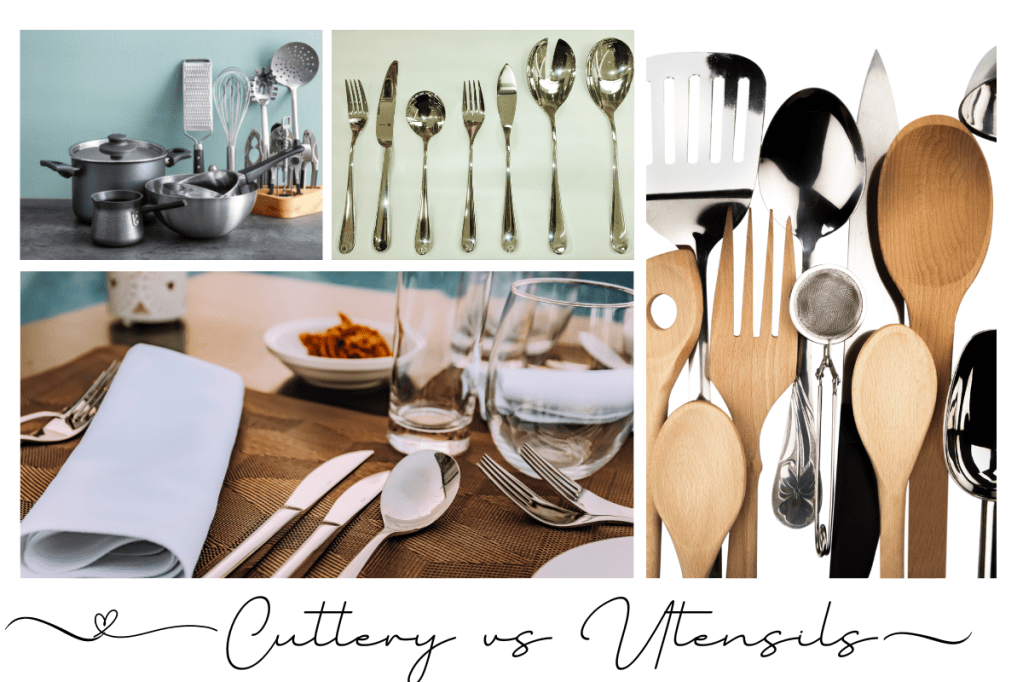
The Evolution of Cutlery vs Utensils
Have you ever pondered how the silverware and utensils we utilize on a daily basis came to be? Today, we explore the development of cutlery and utensils from simple tools to the beautifully designed, useful objects we know and like today.
Prehistoric Cutlery
The earliest cutlery was likely made from bones, shells, and sharp stones. Archaeologists have found tools of this type that are tens of thousands of years old, and there is proof that early humans used them for purposes like hunting and gathering.
Ancient Civilizations
As civilizations developed, so did their cutlery. Greeks and Romans utilized spoons made of brass and silver, whereas the ancient Egyptians used forks made of wood and bone. The Byzantine Empire used forks as early as the 4th century, but they didn’t become widely used until the Middle Ages.
The Renaissance and Beyond
During the Renaissance, cutlery became more refined, with knives and spoons made of silver and other precious metals. Forks also became more popular, with their use spreading throughout Europe and eventually to the New World.
Cutlery included complex designs and beautiful handles made of ivory, bone, and other materials by the 18th century, when it had become a status symbol. It became more widely available and more affordable thanks to the Industrial Revolution’s mass manufacture, which opened it up to people from all social strata.
Modern Cutlery
These days, cutlery and utensils are available in a huge variety of designs and materials. Although silver, gold, and even titanium are alternative options, stainless steel is the most frequent material used to produce knives, forks, and spoons.
.
There has been a shift in recent years toward more environmentally friendly and long-lasting silverware solutions. Utensils that are both useful and environmentally friendly are being made from bamboo, wood, and other renewable materials.
Cutlery vs utensils have come a long way since their humble beginnings as basic tools. From bones and shells to silver and titanium, the evolution of cutlery has been a long and fascinating journey. We still use and value these necessities in our daily lives now.
Choosing the appropriate tools or cutlery can have a significant impact on the dining experience. Some people prefer the style and elegance of cutlery, while others prioritize convenience and ease of use with utensils. In this article, we’ll take a closer look at the differences between cutlery and utensils and help you decide which one is right for you.
Cutlery: Style and Elegance
Cutlery is typically made of metal and is designed to be both functional and stylish. Knives, forks, and spoons are the most common types of cutlery, with each serving a specific purpose. Knives are used for cutting, forks for spearing and lifting, and spoons for scooping and stirring.
While cutlery can be more elegant and refined than utensils, it requires a bit more maintenance. Cutlery must be washed and dried carefully to prevent tarnishing or rust, and it is not always dishwasher safe. Additionally, because cutlery is made of metal, it can be heavy and difficult to handle for some people.
Utensils: Convenience and Ease of Use
In contrast, utensils are often composed of plastic or other lightweight materials and are meant to be practical and simple to use. They are often used for informal settings, such as picnics or outdoor barbecues.
While utensils may not be as stylish as cutlery, they have some significant advantages. They are easy to clean, often dishwasher safe, and are lightweight and easy to handle. Additionally, they are typically much more affordable than cutlery, making them a great option for everyday use.
It basically comes down to personal opinion when deciding between cutlery vs utensils. It can be the best option for you if you value style and elegance and are prepared to make an extra effort to maintain your cutlery. On the other hand, if you prioritize convenience and ease of use, then utensils may be a better option.
Ultimately, it is important to choose the option that makes you feel comfortable and confident during your meal. Whether you prefer the classic elegance of cutlery or the convenience of utensils, both options have their own unique benefits.
In the battle of cutlery vs utensils, there is no clear winner. Both solutions have benefits and drawbacks, and ultimately, the decision boils down to personal preference. Whether you choose cutlery or utensils, what matters most is that you enjoy your meal and feel comfortable while dining.
Have you ever taken much consideration to the silverware and cutlery you use? In the event that they don’t, you might be shocked to realize how much they can affect your eating experience. In this section of the post, we’ll go over the value of cutlery and utensils as well as how to choose the ideal ones for your needs.
First, let’s talk about convenience. The right cutlery and utensils can make your meal much easier to enjoy. Have you ever tried eating soup with a fork? It’s not the most convenient way to do so. Similar to this, using a butter knife to carve a steak can be time-consuming and frustrating. You can ensure that your eating experience is as convenient as possible by making an investment in high-quality silverware and utensils.
But it’s not just about convenience. Cutlery and utensils can also impact the overall style and ambiance of your meal. Imagine setting a formal table for a dinner party, complete with fancy silverware and crystal glasses. The right cutlery and utensils can elevate your dining experience and make it feel more special and sophisticated.
On the other hand, if you’re having a casual outdoor barbecue, you might opt for more durable plastic utensils that can withstand the elements. Choosing the right cutlery and utensils for the occasion can help set the tone for the meal and enhance the overall experience.
So, how do you choose the right cutlery and utensils for your needs? Here are a few tips:
Consider the occasion: As mentioned above, the occasion can play a big role in determining the type of cutlery and utensils you should use. Formal occasions may call for more ornate and intricate designs, while casual occasions may require more durable and practical options.
Think about the type of food you’ll be serving: Certain types of food may require specific utensils. For example, seafood often requires a special seafood fork and knife to properly extract the meat from the shell. If you’ll be serving steak, make sure you have a sharp steak knife on hand.
Choose high-quality materials: The long term benefits of purchasing high-quality flatware and serving utensils are evident. Look for materials like stainless steel, which is durable and easy to clean. Avoid cheap plastic options that can break or warp easily.
In summary of this section, while utensils and cutlery may not be the first things that come to mind when you consider your eating experience, they do have a significant impact. By choosing the right ones for your needs, you can ensure that your meals are convenient, stylish, and enjoyable.
Are you tired of the same old boring cutlery and utensils? It’s time to mix things up and try some unconventional options. From chopsticks to sporks, there are plenty of unique utensils that can add some excitement to your dining experience. In this article, we’ll explore some of the best unconventional cutlery and utensils you need to try.
Chopsticks: While chopsticks are commonly used in Asian countries, they are gaining popularity worldwide as a unique and elegant option for dining. There are different types of chopsticks available, from wooden to metal and even plastic, and they come in various designs and lengths. It can take some getting used to, but using chopsticks can provide for a pleasant and delightful dining experience once you do.
Sporks: As the name suggests, sporks are a combination of spoons and forks. They are a popular option for camping and outdoor dining but can also be a fun addition to any table setting. Sporks are available in various materials, including plastic, metal, and even titanium, and they are versatile enough to be used for everything from soup to pasta.
Salad hands: Salad hands are large utensils designed to help toss and serve salad. It typically comes in a variety of sizes and forms and is made of bamboo or wood. Salad hands can be a great option for those who love to make and serve salads at home.
Knork: A knork is a combination of a knife and a fork. It has the shape of a fork but with an edge that can be used to cut through food. Knorks come in various materials, including stainless steel, plastic, and titanium, and can be a unique addition to any table setting.
Tongs: While tongs are commonly used for cooking, they can also be a great option for serving food. Tongs come in various sizes and designs and can be used for everything from serving salad to grabbing a piece of meat.
Cheese knife: A cheese knife is an essential kitchen item if you enjoy cheese. Cheese knives are designed to cut through different types of cheese, and they come in various shapes and sizes. From soft brie to hard cheddar, there is a cheese knife for every type of cheese.
Grapefruit spoon: If you enjoy eating grapefruit, then a grapefruit spoon is a game-changer. The serrated edge of these spoons makes it simpler to cut into fruit and scrape off the flesh. Grapefruit spoons are usually made from stainless steel and come in various sizes.
In conclusion, there are plenty of unconventional cutlery and utensils that can add some excitement to your dining experience. From chopsticks to sporks, salad hands to knorks, there is something for everyone. So why not try something new and see how it can enhance your next meal?
 Hey Singapore