
The usage of Chinese chopsticks as a dining tool dates back centuries in China and other regions of Asia. Commonplace in many Asian households, these implements are also an emblem of classic Chinese culture.
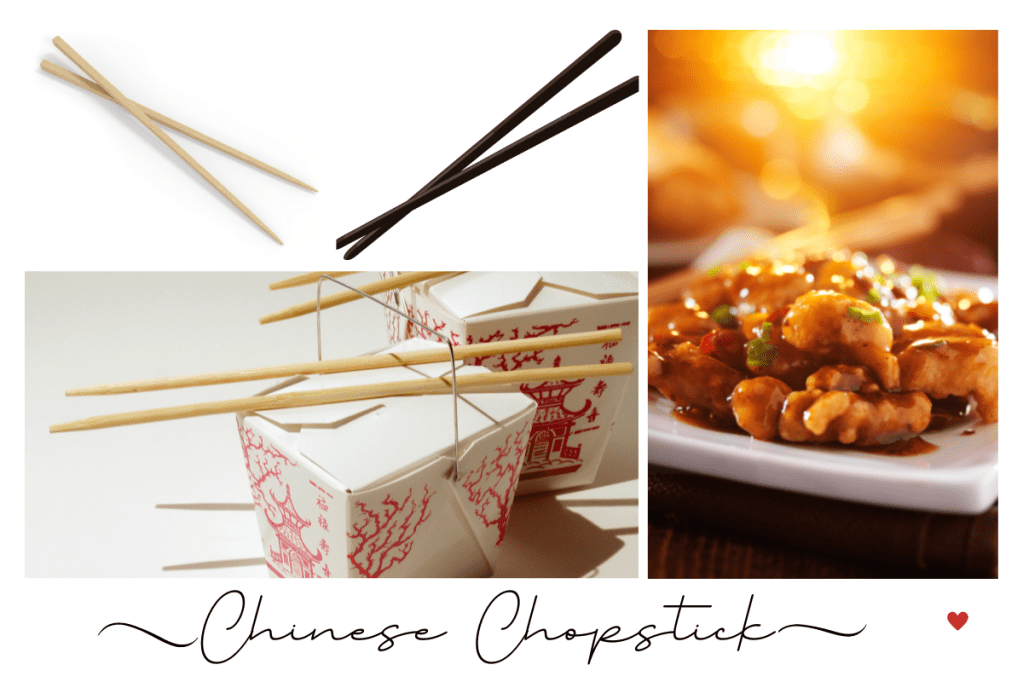
Traditionally used in China, chopsticks are known for their stylish and functional form. Chopsticks are perfect for picking up little morsels of food thanks to their length and taper, which allow for accurate and delicate manipulation of food. It’s no surprise that these slim models are so widely preferred; they’re convenient both to use and to store.
In addition, using Chinese chopsticks properly is considered a sign of social grace because it takes effort and talent. Chinese chopsticks are not only used for dining, but also as a popular choice for decorative objects and gifts due to its traditional style and cultural value.
Chopsticks are traditionally fashioned in China from a variety of materials, including bamboo, wood, and others. For example, bamboo chopsticks are favored by those who care about the environment since they are durable, inexpensive, and easy to transport.
To sum up, Chinese chopsticks are more than just a useful tool for eating; they are also a representation of classic Chinese culture. Because of their cultural significance, usefulness, and beautiful design, they are widely used in all three of these contexts. Chinese chopsticks are popular because they are made from renewable resources like bamboo and wood.
Chopsticks, both Japanese and Chinese, are commonplace in their respective countries and throughout Asia. Despite their superficial similarities, there are actually quite a few key distinctions between the two.
One major distinction is in their length and structure. Generally speaking, Japanese chopsticks are shorter and have a more rounded, tapered tip than their Chinese counterparts. This style is perfect for sushi and sashimi because of the solid grip and control it provides. Chopsticks from China, on the other hand, are longer and have a more squared-off tip, making it easier to manipulate food without making a mess.
The materials used to construct them also contribute to their unique characteristics. Chopsticks in Japan are typically made of lacquered wood, metal, or even plastic, as opposed to the more traditional bamboo or wood used to make Chinese chopsticks. Chopsticks made from lacquered wood, for example, are both stylish and long-lasting, but each of these materials has its own set of benefits and qualities.
Moreover, the two sets of chopsticks have different cultural connotations. For the Japanese, using chopsticks is an art form that calls for a particular set of skills and manners. In Japan, collecting chopsticks is a common hobby, and some old pairs can fetch a high price at auction. While chopsticks are likewise an integral component of Chinese culture, they are not held to the same aesthetic standards as their Western counterparts.
To sum up, there are certain similarities between Japanese and Chinese chopsticks, but there are also significant variances in terms of length, design, materials, and cultural significance. These variations are attractive because they reveal the distinct cultural and historical settings in which they were developed and are used now.
As far as I can tell, chopsticks in Singapore and China are essentially identical. Length, thickness, and material utilized might change slightly though. The chopsticks you find in Singapore could be shorter and thinner than those you find in China. In addition, unlike in China, where wooden chopsticks are still the majority, metal, plastic, or even bone chopsticks may be more common in Singapore.
As a result, the significance of chopsticks in Singaporean culture may vary slightly from that in China. In a cosmopolitan society like Singapore’s, the way chopsticks are used and viewed at the table may vary. It’s possible that chopsticks aren’t as ubiquitous or revered as they are in China because of the prevalence of other eating utensils, such as the spoons and forks used in Malay and Indian cuisines, which are also popular in Singapore.
In conclusion, it’s possible that Chinese and Singaporean chopsticks are essentially the same, with just a few minor distinctions in terms of size, material, and cultural importance. Chopsticks, despite this, are still frequently used and enjoyed throughout Asia. Chopsticks in China are typically crafted from bamboo or wood and are either left plain or decorated with understated patterns. Chopsticks are often designed with the user and the meal being eaten in mind, so factors like length and width are taken into account. There are, however, examples of beautiful chopsticks with elaborate carvings or extravagant designs that are reserved for special occasions or given as gifts.
Often fashioned of wood, lacquered wood, or plastic, Japanese chopsticks are renowned for their spare design. To better grasp and transport delicate morsels of food, Japanese chopsticks are often shorter and pointier than their Chinese counterparts. Simple, understated motifs or patterns taken from nature, like cherry blossoms or bamboo, are commonplace on these types of items.
Typically, chopsticks in Korea are crafted from metal or brass, and the emphasis is placed on practicality and minimalism in their design. Unlike their Chinese counterparts, Korean chopsticks are usually longer and thinner, with flat rectangular ends that are well-suited for picking up food from large serving dishes.
The beauty of chopsticks lies not just in their form but in their function as well. It’s not just the literal meaning that they carry, but also the symbolic and cultural ones. Chopsticks are a symbol of good fortune, longevity, and proper table manners in many Asian cultures. In addition to the food itself, the manner in which chopsticks are used and handled also bears significance, with different cultures having different taboos and conventions about their use.
In conclusion, the design of chopsticks is an integral part of its cultural meaning, and these designs may be found in a wide variety of Asian contexts. Chopsticks are more than just a utilitarian item; they may represent a culture’s ideals and customs through their design, whether they are basic or complicated. Chopsticks were first employed as cooking implements in ancient Asian cultures, where they were first discovered. Today’s ubiquitous chopsticks emerged from centuries of development, each style bearing the stamp of a different Asian culture.
Chopsticks are stunning in more ways than one. The value lies not only in their utility, but also in the skill with which they were made and the meanings behind any symbols or cultural references they may have. Chopsticks are an integral element of the eating experience in many cultures, each with its own preferred style and technique.
Chopsticks have been used for more than three thousand years in China, and their earliest versions were crafted from bone, bronze, or jade. Bamboo, wood, and ivory were among the many materials employed as demand increased. Chopsticks in Chinese culture are often designed with functionality in mind rather than elaborate adornment.
Chopsticks first appeared in Japan some 1,400 years ago, and since then, their design has simplified to reflect Japan’s refined and minimalistic way of life. Japanese chopsticks are often constructed of wood, lacquered wood, or plastic and are shorter than their Chinese counterparts. They are typically decorated with understated patterns that allude to the outdoors and the passage of time.
Chopsticks in Korea are often made of metal or brass and are designed with simplicity of usage in mind. Korean chopsticks are ideally suited for scooping up food from large communal plates due to their length and thinness relative to Chinese chopsticks.
Despite wide stylistic variation across Asia, chopsticks are universally regarded as symbols of reverence for one’s food, one’s eating companions, and one’s culture. One of the most distinctive and defining features of Asian culture is the customary use of chopsticks when dining out.
Finally, from their first discovery in ancient Asia as cooking implements, chopsticks have undergone a number of transformations. As time has passed, they’ve become an integral part of the eating experience, and now they come in a wide variety of styles and designs that honor the beliefs and traditions of many Asian communities. Chopsticks, whether simple or elaborate, are a representation of the skill and creativity of Asian artisans.
 Hey Singapore