
Set the table with these creative and classy arrangements, perfect for when you want to impress your guests. A well-executed table setting can create a visually appealing and friendly ambiance for your guests, whether you’re hosting a formal dinner or a casual brunch.
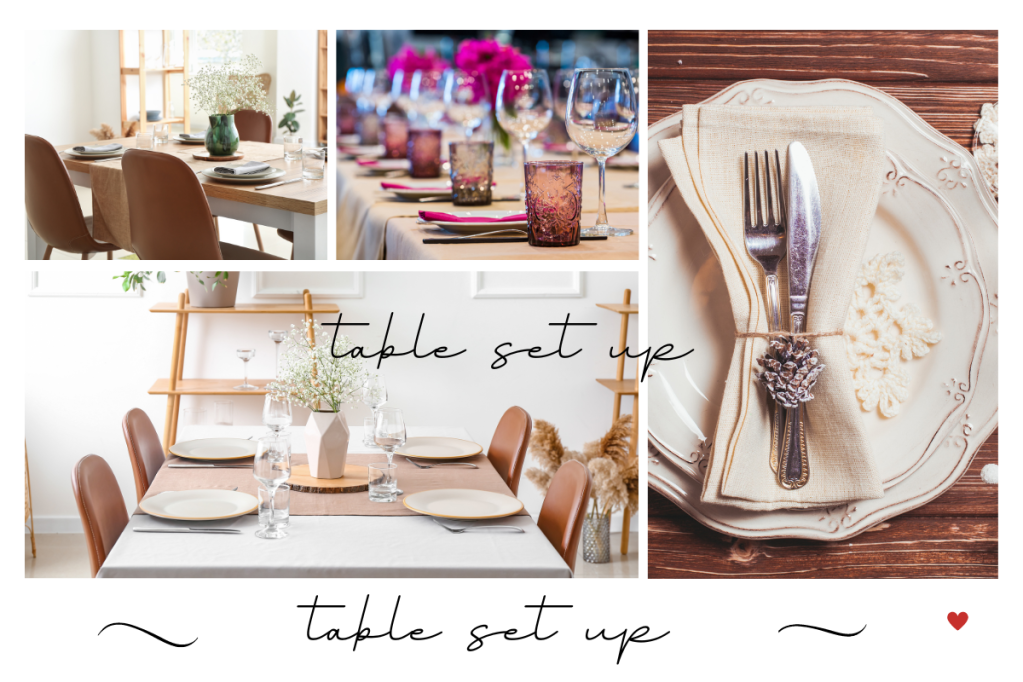
The first step is to select a tablecloth and/or runner that fits in with the overall aesthetic of the party. A white or ivory tablecloth will give your table an air of sophistication, while a runner in a bright color will give it some flair.
Put the glasses, plates, and silverware on the table next. If you want to create a more interesting and visually appealing display, try stacking your dishes and bowls. Stemware should be chosen to accent the drinks being served, therefore choose stylish and sleek flatware to complement the plates.
Napkins, placemats, and centerpieces may add depth and texture to a tablescape. If you want to add a sense of class to your dinner table, try folding your napkins into interesting shapes and setting them on top of your plate. Centerpieces should be attractive arrangements that complement the event’s theme and color design.
At last, incorporate soft illumination, such as candles or string lights, into your table setting. Your guests will appreciate the cozy environment you’ve created for them.
You can amaze your visitors with a magnificent and elegant table setup by following these guidelines.
It’s not uncommon for the task of setting a table and the customs that surround it to feel confusing and cumbersome. This is due to the fact that, in many cultures, the act of setting a table expresses more than just the desire to provide guests with a pleasant dining experience.
The first order of business while setting a table is to inspect the table itself to make sure it is free of debris and is large enough to accommodate all of the guests. When this is finished, you can set the table with the plates, glasses, and silverware. Depending on the meal being served, the culture, and the formality of the occasion, the proper positioning and arrangement of these things is vital.
In addition, good table manners are crucial to making everyone’s mealtime more pleasurable. This includes not only being courteous at the dinner table, but also considering the tastes and needs of other visitors. In addition, it’s polite to express appreciation to the host or hostess and the other guests for their hospitality.
In conclusion, learning the ins and outs of table setup and the etiquette that goes along with it is a crucial part of dining, as it contributes to making everyone feel welcome and at ease. Arranging dinnerware and other ornamental components at elaborate feasts and banquets dates back to prehistoric times. Cultures and societies all over the world have added their own special touches to the art of setting the table over the centuries. Modern table settings can be traced back to the Medieval Ages in Europe, when fine dining was popularized by the nobility. The practice of laying a beautiful table has evolved alongside the rise of more refined dining customs. The 18th and 19th century’s magnificent table settings are still praised for their beauty and attention to detail today. Even in the 21st century, setting a beautiful table for guests is a must when hosting a formal or casual dinner party. The atmosphere of any meal, be it an intimate family meal or a grand gala, can be greatly enhanced by a properly arranged table. Civilized societies have a long-standing tradition of setting the table for a meal, which originated from the need to create a more relaxed and enjoyable atmosphere for eating. The primary goals of the table setting are to improve the aesthetics and practicality of the dining table and to create an inviting space for the ritual of eating together.
It doesn’t take long for a dining space to get out of hand if the table isn’t properly set up, with cutlery and dishes strewn about in a way that’s both disorganized and uncomfortable for the guests. An artfully arranged table can do more than just improve the room’s appearance; it can also infuse the meal with a feeling of structure and order.
Mastery of the art of table arrangement is a sign of refined social grace and etiquette since it reflects an individual’s ability to present themselves in an appropriate manner in social situations. Thus, it is frequently used in serious events and occasions, where the stakes are high and the smallest of details must be observed.
In addition, proper table setting etiquette is a way to show visitors that they are appreciated and cared for by the host. It’s a friendly way to put people at ease and a great way to ensure a fun and memorable meal.
The meal table setting is an important part of the ritual since it is both decorative and practical. It’s a way to show your dinner guests that you appreciate their company and appreciate the effort they’ve taken to make their meal special. The atmosphere of any party, whether it’s a black-tie gala or a casual get-together with friends, can be improved with some careful planning and execution of the table setting. Certainly, the careful arrangement of silverware, dinnerware, and glassware can elevate a meal from the ordinary to a magnificent sensory experience.
Table setting is a vital part of the dining experience that has evolved from its aristocratic roots. Arranging cutlery, tablecloths, and decorative items with care not only facilitates their use but also reveals something about the host’s taste and style.
A well-thought-out table arrangement can establish the mood for a whole event, whether it’s a casual brunch, a lavish wedding feast, or a formal business gala. The use of color, texture, and material can set the tone for the event, while strategic arrangement of serving pieces guarantees maximum efficiency.
There are endless types of table arrangement that appeal to varied tastes and preferences, from the conventional formal table setting to the minimalist and modern approach. The way a table is laid can take an ordinary lunch and make it an experience that visitors will talk about for years to come. One of the most important things you can do to make your guests feel welcome is set the table. One of the most critical parts of any tablescape is the color scheme used. Choosing the best color scheme from among so many possibilities might be difficult.
While there is no clear guideline for what colors must be used, traditionally speaking, some color combinations are more commonly used while setting the table. Color schemes can be categorized as monochromatic, complimentary, or comparable. By contrast, complimentary color schemes match colors that are on opposite sides of the color wheel, whereas monochromatic color schemes use varying tones of a single color. In contrast, analogous color schemes make use of hues that are geographically close to one another on the color wheel.
It’s important to think about the event and the mood you’re trying to create when deciding on a color scheme. For a black-tie affair, for instance, the simplicity and sophistication of a monochromatic color scheme would be ideal. Yet, complementary color schemes may be quite fun and colorful, making them perfect for more relaxed events. For occasions like weddings and anniversary dinners, where guests should feel relaxed and at ease, an analogous color palette is ideal.
The color of the dinnerware, linens, and other decorations should be taken into account as well, not just the overall color scheme. In order to achieve a professional and unified effect, the colors of these accessories should match those of the table setting. Be mindful of how the colors interact with one another and try to avoid making the arrangement look chaotic.
Overall, picking the right color scheme for a table setting is essential to making guests feel welcome at any event. Use a monochromatic, complementary, or similar color palette depending on the event’s theme and intended atmosphere. To make a cohesive and aesthetically pleasing table setting, the colors of the dinnerware, linens, and decorations should all compliment the color scheme of the table.
 Hey Singapore