
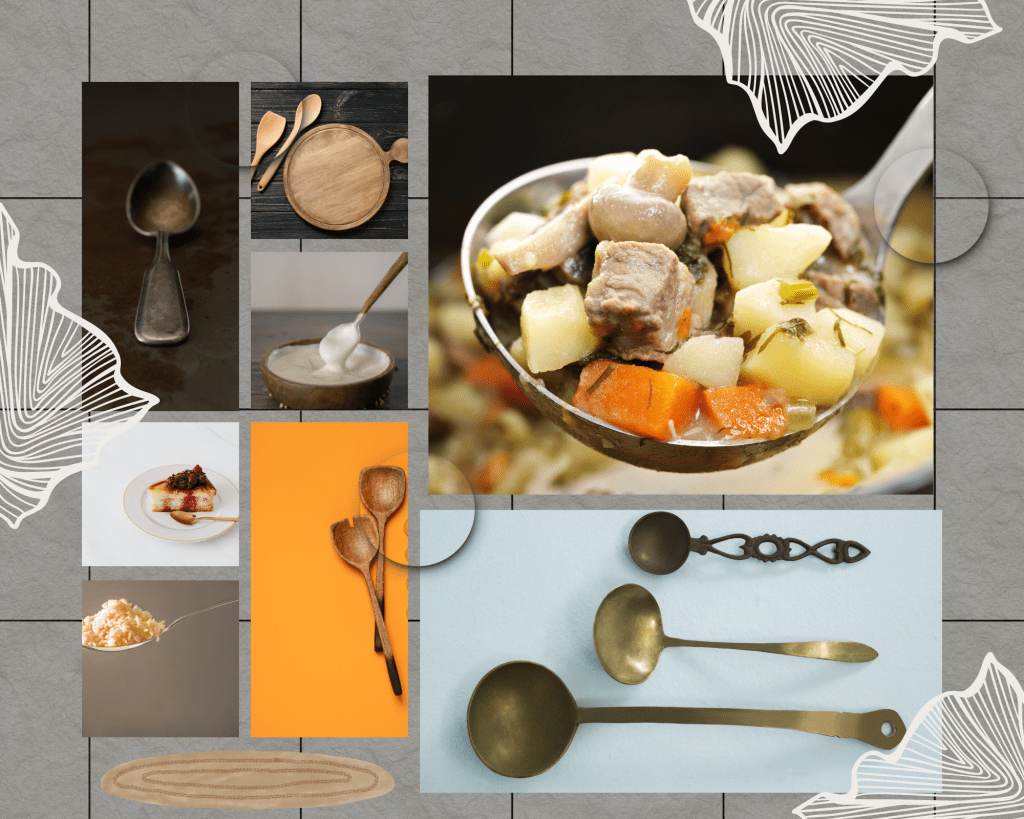
Serving spoons are utensils used to serve food at the dining table. They are typically larger than regular spoons and have a wider, deeper bowl. Serving spoons are designed to scoop and serve food in larger quantities, making them an essential tool for serving family-style meals.
The importance of serving spoons in meal presentation cannot be overstated. These utensils not only make it easier to serve food, but they also contribute to the overall aesthetic appeal of the meal. Using serving spoons allows each guest to serve themselves without having to handle the food directly, promoting a more hygienic dining experience. Additionally, serving spoons help to control portion sizes, ensuring that each guest receives an equal amount of food.
In formal dining settings, serving spoons are often made of more luxurious materials, such as silver or gold, and may be ornately designed to complement the overall table setting. In more casual settings, serving spoons can be made of a variety of materials, such as stainless steel, plastic, or wood, and can be chosen to match the overall style of the meal.
Overall, serving spoons are an essential tool for any meal presentation, allowing for easy and hygienic serving while also contributing to the overall aesthetic appeal of the meal.
There are several types of serving spoons, each with their own unique features and uses:
Basic serving spoons – These are the most common type of serving spoons, featuring a deep, wide bowl that is perfect for serving large portions of food.
Slotted serving spoons – Slotted serving spoons have small slots or holes in the bowl, which allow excess liquid or sauce to drain away from the food. This makes them ideal for serving foods such as vegetables or poached eggs that may be sitting in liquid.
Perforated serving spoons – Similar to slotted serving spoons, perforated serving spoons have small holes in the bowl. However, these spoons have a larger number of holes and are typically used for serving smaller, more delicate foods like berries or boiled eggs.
Serving ladles – Serving ladles have a long handle and a deep bowl that is perfect for serving soups, stews, and sauces. They often have a curved spout or lip that makes it easy to pour liquids without spilling.
Serving tongs – Serving tongs are a versatile tool that can be used to serve a wide range of foods, from salads and vegetables to meats and pastries. They have two arms that are hinged at one end, allowing them to be opened and closed to pick up and serve food.
By using the appropriate type of serving spoon for each dish, you can ensure that your guests receive the correct portions and that your meal is presented in a visually appealing manner.
When selecting serving spoons, the material of the spoons can have an impact on their appearance, durability, and functionality. Here are some common materials used for serving spoons:
Stainless steel – Stainless steel is a durable and long-lasting material that is easy to clean and maintain. It is often used for serving spoons in both casual and formal settings.
Silver – Silver serving spoons are often used in more formal dining settings. They are often ornately designed and can add a touch of elegance to a table setting. However, they require regular polishing to maintain their appearance.
Plastic – Plastic serving spoons are a more affordable option and are often used for casual events or outdoor dining. They are lightweight and easy to clean, but may not have the same level of durability as other materials.
Wooden – Wooden serving spoons can add a rustic or natural element to a table setting. They are often used for serving salads or other delicate foods, as they are less likely to damage the food than metal spoons.
Ceramic – Ceramic serving spoons are often used for serving dishes that are cooked and presented in ceramic dishes. They can add a decorative element to the table setting, but may be more fragile than other materials.
Ultimately, the material of the serving spoons you choose will depend on the occasion, the style of the meal, and your personal preferences. By selecting the appropriate material, you can ensure that your serving spoons complement your meal presentation and enhance the dining experience for your guests.
Choosing the right size of serving spoon is important for both the functionality and the presentation of the dish being served. Here are some tips for selecting the appropriate size of serving spoon:
Consider the size of the dish – The size of the serving spoon should be proportional to the size of the dish being served. For larger dishes, such as casseroles or roasts, a larger serving spoon will be necessary to serve portions effectively.
Match the shape of the spoon to the dish – Different types of dishes may require different types of serving spoons. For example, a slotted spoon may be appropriate for serving vegetables or a perforated spoon may be better for serving eggs or small fruits.
Choose a spoon that is comfortable to hold – The handle of the serving spoon should be long enough to comfortably reach the bottom of the serving dish, but not so long that it becomes unwieldy or difficult to control.
Keep the overall presentation in mind – The size and style of the serving spoon can also contribute to the overall visual appeal of the dish being served. A large, ornate serving spoon may be appropriate for a formal dinner party, while a simpler spoon may be more appropriate for a casual gathering.
Matching the size of the serving spoon with the type of dish being served can also help to enhance the dining experience for your guests. For example:
For soups or stews – A ladle with a deep bowl will be necessary to serve adequate portions of liquid-based dishes.
For side dishes – A medium-sized spoon will be appropriate for serving side dishes such as vegetables or grains.
For main dishes – Larger serving spoons will be necessary for serving main dishes such as roasts or casseroles.
By selecting the appropriate size and style of serving spoon for each dish, you can ensure that your guests are able to serve themselves easily and that your meal is presented in an attractive and functional manner.
Functional design features can greatly enhance the performance of a serving spoon. Here are some common design features that can make serving spoons more functional:
Comfortable grip handle – Serving spoons should have a handle that is comfortable to hold, with a texture or shape that provides a secure grip. This helps to prevent the spoon from slipping out of the user’s hand, which can be both inconvenient and messy.
Curved spoon head for easy scooping – The spoon head of a serving spoon should be slightly curved, which makes it easier to scoop food from the serving dish. This design feature also helps to prevent spills or drips when serving.
Deep spoon head for holding more food – A deep spoon head allows for a greater amount of food to be held, which can be especially helpful when serving large portions or when feeding a crowd.
Spout or pouring edge for liquids – A serving spoon with a spout or pouring edge can make it easier to pour liquids or sauces from the serving dish onto the plate. This design feature can also help to prevent spills and drips.
Holes for draining liquids – A serving spoon with small holes in the spoon head can be helpful for draining excess liquid or sauce from foods like vegetables or poached eggs. This design feature prevents the food from becoming waterlogged or soggy.
By incorporating these functional design features into your serving spoons, you can make meal presentation and serving more efficient and enjoyable for both you and your guests.
In addition to functional design features, serving spoons can also feature decorative design elements that add visual appeal to the overall presentation of the meal. Here are some common decorative design features of serving spoons:
Ornate handles – Serving spoons with ornate handles can add a touch of elegance and sophistication to the table. Handles can be made from materials like silver, gold, or brass, and may feature intricate designs or patterns.
Decorative patterns – Serving spoons can be decorated with patterns or motifs that match the overall theme or style of the meal. For example, a spoon with a floral pattern may be appropriate for a springtime brunch, while a spoon with a geometric pattern may be more suitable for a modern or minimalist dining room.
Engraved designs – Serving spoons can be engraved with names, initials, or other personal details to make them more special and meaningful. This can be a thoughtful touch for special occasions like weddings, anniversaries, or milestone birthdays.
By incorporating decorative design features into your serving spoons, you can elevate the overall presentation of your meal and create a more memorable dining experience for your guests. However, it is important to balance aesthetics with functionality to ensure that the spoons remain easy to use and effective for serving food.
 Hey Singapore