
Indulge in a sensory journey of exquisite Japanese tableware in Singapore. Discover authenticity and quality through our guide. Immerse yourself in culture.
Understanding the Art of Japanese Tableware
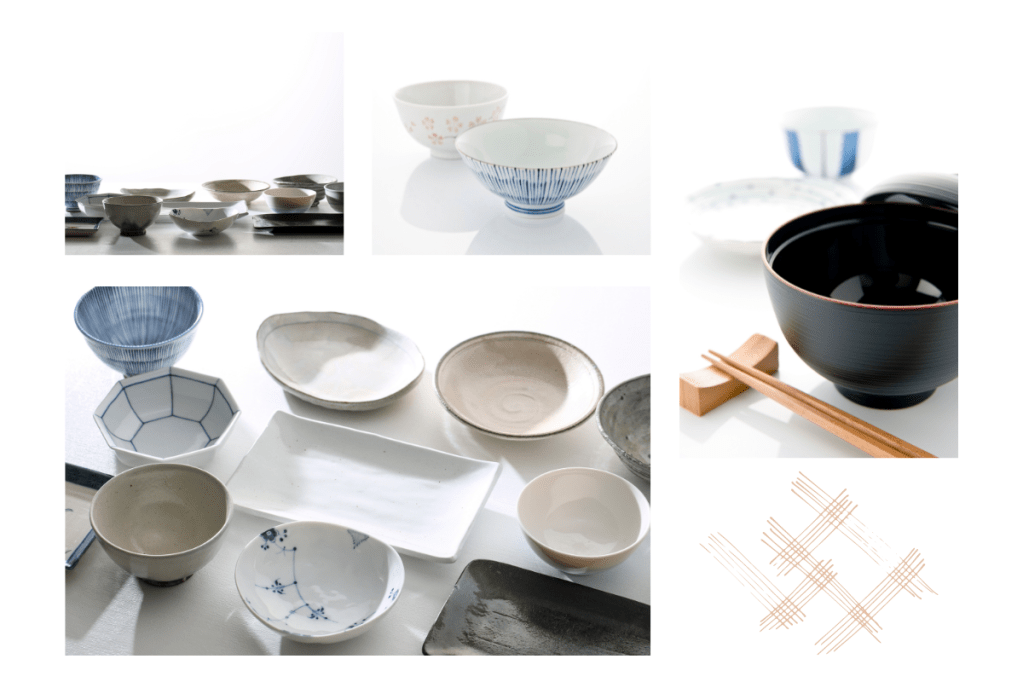
Japanese dinnerware is an art form that has been practiced for generations and has matured into a masterpiece of exquisite craftsmanship. Japanese dinnerware ranges from the simple elegance of antique ceramics to the intricate details of contemporary pieces. A profound awareness of the aesthetics of simplicity, harmony, and balance is essential for grasping the core of Japanese dinnerware.
To really appreciate Japanese crockery, one must grasp the aesthetic principles upon which they were created. The aesthetics of Japanese dinnerware are equally as important as its practicality. It’s meant to please the eye and improve the quality of your meal. There is an emphasis on the quality of the craftsmanship and the inherent elegance of the materials employed. The final product is a stunning harmony of minimalism and refinement.
One must respect the cultural setting in which Japanese dinnerware was crafted in order to fully comprehend its artistic value. The strong bond the Japanese have with their natural surroundings is reflected in their dinnerware. The natural world’s splendor and the Japanese respect for history and customs serve as its primary sources of inspiration. Japanese dinnerware is a beautiful example of this link to the past; designers and craftspeople pay close attention to retaining the elegance of time-honored methods while also embracing cutting-edge ideas.
Discovering the Best Japanese Tableware Stores in Singapore
It should come as no surprise that some of the finest Japanese dinnerware outlets in the world can be found in the city-state of Singapore, which is a cultural epicenter for the country. These shops carry a comprehensive selection of exquisite Japanese dinnerware, from classic ceramics to cutting-edge contemporary designs. Singapore has something for everyone, whether you are a collector, a chef, or just someone who loves the beauty of Japanese dinnerware.
If you’re looking for Japanese dinnerware in Singapore, one of the finest places to start is at Takashimaya. There is a whole section of the store devoted to Japanese dinnerware, and it offers all the greatest brands from Japan. The shop’s personnel is well-versed in the wares they sell and can assist you in selecting the most useful items.
Ippin, a website selling just Japanese goods, is another excellent choice. Whether you’re looking for classic pottery or something more contemporary, Ippin has you covered. In addition, customers who spend more than a particular amount can take advantage of the store’s free delivery offer, making online shopping from home a viable choice.
Kurasu Singapore is the best place to go if you want a more customized shopping experience. This shop features an artisanally chosen collection of Japanese dinnerware, such as pottery and other items manufactured by hand and designed by emerging Japanese designers. You may relax with a cup of coffee in the store’s café while perusing the newest arrivals.
Evaluating the Quality and Craftsmanship of Japanese Tableware
The precision and artistry of Japanese dinnerware is well-known across the world. Some important details deserve close consideration while determining the quality of Japanese dinnerware. The first and most important factor in establishing the quality of dinnerware is the type of material employed. Tableware in Japan is often crafted from ceramics including porcelain, earthenware, and stoneware. Each of these materials brings its own set of advantages and disadvantages to the tableware’s overall design, longevity, and practicality.
The form and style of the dishes also need to be taken into account. The simplicity, balance, and harmony that are hallmarks of traditional Japanese aesthetics inform many aspects of Japanese tableware’s design and shape. The layout should be easy on the eyes and go well with the fare on offer. In addition to the presentation of the food, the shape of the tableware may have an impact on the whole eating experience.
Last consideration is given to the quality of the tableware’s construction. The majority of traditional Japanese dinnerware is made by hand by craftspeople who have spent years perfecting their techniques. Details of the dinnerware, such as the glaze’s smoothness, the regularity of the shape, and the consistency of the ornamentation, are indicators of the craftsmanship’s excellence. All of these features should be uniform across the set, showing that the craftspeople took great care.
Choosing the Right Japanese Tableware for Your Needs
With so many possibilities, it might be difficult to select the proper Japanese dinnerware. In order to make a good decision, it’s important to weigh a number of variables. Tableware selection begins with thinking about how it will be used. Consider the item’s longevity and usability if it will be used frequently. The visual appeal and refinement of the dinnerware should be prioritized if it is for important events.
The tableware’s aesthetics should also not be overlooked. Japanese dinnerware features both classic and cutting-edge styles. As well as reflecting the user’s own sense of style, the design should go well with the cuisine being served.
The size and shape of the dishes should be thought about as well. Different sized and shaped pieces of Japanese crockery have diverse functions. Noodles, for instance, are best served in a deep bowl, whereas appetizers are best served in a compact plate. Tableware should be selected with consideration for the sort of cuisine being served and individual taste.
Many criteria, including material, style, craftsmanship, and size, should be taken into account while deciding on the best Japanese dinnerware for your needs. By considering these criteria, one may choose out dinnerware that not only serves their functional demands but also expresses their aesthetic tastes and sense of style.
Caring for Your Japanese Tableware: Tips and Techniques
The quality and longevity of your Japanese dinnerware will depend on how well you care for it. To maintain the tableware’s aesthetic and practical value, care must be taken to prevent breakage of any kind. There are certain rules and procedures for maintaining Japanese dinnerware.
First and foremost, please be very careful when using the dinnerware. Damage is easily caused by careless handling of delicate Japanese crockery. Tableware should be held with both hands, especially while serving hot food or beverages. Metal utensils are also not recommended since they might damage the surface of your dishes. Use just wooden or plastic cutlery instead.
The appropriate cleaning of the dinnerware is another essential hint. For cleaning Japanese dishes, use warm water and a gentle detergent. Avoid using harsh detergents or abrasive cleaning agents on the dinnerware, as they may scratch the surface. To prevent watermarks after washing, just pat the dinnerware dry with a soft towel.
Ultimately, the best way to preserve your Japanese dinnerware is to store it properly. Store the dinnerware in a cool, dry place out of the reach of direct sunlight and away from any heat sources. Separately storing the dinnerware can prevent scratches and other damage.
The Influence of Japanese Culture on Singaporean Tableware
The aesthetics of Singaporean dinnerware have been greatly inspired by Japan. The clean lines, understated beauty, and practicality of Japanese dinnerware have impacted the look and feel of its Singaporean counterpart. Singaporean chefs have adopted several Japanese culinary methods and ingredients, and Japanese dinnerware is commonly used in Japanese dining. This has led to a rise in demand for Japanese dinnerware in Singapore’s dining establishments and residences.
A lot of the design and style of Singaporean dinnerware shows the cultural influence of Japan. Japanese dinnerware is known for its minimalist elegance and emphasis on natural materials like wood and bamboo. Natural materials and simple designs are common in Singaporean dinnerware, reflecting this trend.
The eating experience in Singapore has been impacted by the introduction of Japanese dinnerware. Singaporean restaurants have taken cues from the Japanese culinary tradition of placing a premium on both the meal’s presentation and the whole eating experience. Japanese dinnerware is commonly used in Singaporean restaurants, lending an air of refined refinement to the meal.
The aesthetics and functionality of Singaporean dinnerware reveal a strong Japanese cultural influence. The popularity of Japanese dinnerware in Singapore may be attributed to the country’s admiration for Japanese food and the country’s impact on the design and style of Singaporean tableware. This has resulted in a unique fusion of Japanese and Singaporean cultures in Singaporean dinnerware that perfectly captures the eclectic and exciting spirit of Singaporean food.
Contemporary Innovations in Japanese Tableware Design
Elegance, simplicity, and practicality are hallmarks of traditional Japanese dinnerware. Yet, modern Japanese tableware designers are offering daring and novel designs that push the boundaries of the country’s traditional aesthetic. The way we think about and utilize tableware has been fundamentally altered as a result of these cutting-edge developments in Japanese tableware design.
Use of nontraditional materials is a prime example of modern innovation in Japanese dinnerware design. Glass, metal, and plastic are just some of the materials being explored by designers as they strive to make practical and aesthetically pleasing dinnerware. Technology is also being incorporated into their designs to provide for a one-of-a-kind dining experience, such as with plates that change color in response to heat or cold.
Japan’s modern dinnerware is notable for its use of novel forms and silhouettes. Designers are now producing dinnerware that doubles as a work of art. They are experimenting with unbalanced compositions, uneven surfaces, and jarring color palettes to make eye-catching and functional dinnerware.
At long last, innovative approaches to plate design are being tested by modern studios in Japan. They are making dinnerware that will make eating out more fun by showcasing delicious cuisine in interesting and novel ways. A beautiful and functional dining experience may be achieved with the use of plates with special designs, such as those that are formed to contain sauces and garnishes.
Japanese designers have revolutionized the way we think about and utilize dinnerware with their cutting-edge developments in the field in recent decades. Designers are experimenting with new materials, shapes, and forms to make dinnerware that is both practical and eye-catching. Hence, Japanese dinnerware has evolved into a one-of-a-kind combination of history and innovation, representing the rich variety of Japan’s cultural heritage.
 Hey Singapore