
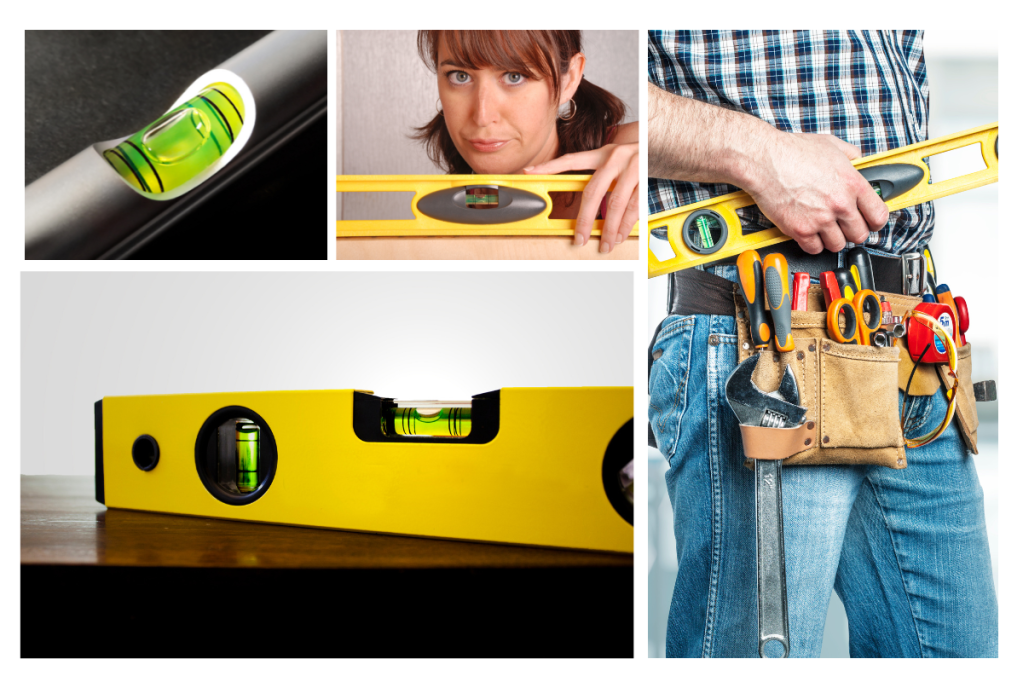
In the worlds of construction and do-it-yourself, the leveler, a tool used to make uneven surfaces perfectly even, is a commonplace item. Its versatility makes it useful in many contexts apart from the building industry. This article describes the many levelers that can be used for various purposes.
The bubble level is the prototypical leveler, however it is a very basic tool. A vial of liquid and an air bubble are used to determine whether or not a surface is flat. Users can check whether or not a surface is level by placing a vial attached to a straight edge on it and adjusting it until a bubble forms in the center of the vial. Hanging shelves and laying flooring are only two examples of the many uses for this versatile tool. Because of its low price and easy usability, it is a great option for do-it-yourself tasks.
Advanced Technology in a Laser Leveler
A laser leveler is a more high-tech option that uses a laser beam to outline a straight line on any surface. When evaluating the flatness of a surface, the user might use this line as a guide. Large-scale construction projects like house construction or foundation laying benefit greatly from the usage of laser levelers. The price is more than that of a bubble leveler, but the increased accuracy and ease of use make up for it.
The Digital Leveler Is a Game-Changing Device
Digital levelers use sensors to determine the angle of a surface, providing a more precise reading than traditional bubble levelers. Accurate tasks, such as building countertops or cabinetry, frequently call for the usage of digital levelers. Workers have been able to improve the quality and longevity of their output to new heights because to this breakthrough tool’s increased precision and accuracy.
Levelers: An Essential Tool in the Building Industry
Using levelers in the construction business is without a doubt the most important use for them. This is because it is there that they are used to guarantee the structural integrity of buildings and other structures. While constructing a new structure, levelers are used to ensure the foundation is flat and secure, reducing the likelihood of structural failure.
While building roads, level surfaces are crucial for the safe and efficient movement of vehicles, and this is where levelers come in handy. Here, levelers are employed to maintain a flat and level road surface, which reduces the potential for accidents and wear and tear on vehicles.
Quality Control in the Manufacturing Sector
Levelers play a crucial role in the assembly of machinery and other industrial equipment in the manufacturing sector. In order for the machinery to assemble correctly and perform at its best, the pieces must be flat and accurate. Any lack of precision or flatness could lead to subpar performance or even total failure. Hence, levelers are critical machinery that helps factories produce flawless goods.
When it comes to measuring land elevation and slope, levelers are crucial.
In addition to its importance in construction, levelers are also vital in surveying because of the slope and elevation data they provide. This data is crucial for a wide range of applications, including mapping and building. By using levelers, surveyors can take more precise measurements than ever before, completely changing the field.
Decorative Elements: Balance and Symmetry Adjusters
Levelers are useful in many ways, both aesthetically and practically. To create a more pleasing and relaxing environment in a room, levelers are used to guarantee that bookcases, paintings, and other decorative pieces are perfectly even and symmetrical. The fact that levelers are also used in interior design is a tribute to their adaptability and usefulness.
Methods for Identifying the Appropriate Leveler
To get the best results, it’s important to pick the correct leveler for the job. The accuracy needed, the scope of the project, and the user’s level of expertise all play a role in determining which leveler is best. It’s possible that a bubble leveler is all you need for a simple DIY project, but a laser or digital leveler would be better suited for a more complex construction job or an application that requires pinpoint accuracy.
The leveler’s dependability and longevity should be taken into account before purchase. While it’s tempting to save money by purchasing the cheapest option, in the long run, you’ll likely spend more on mistakes and redos because the cheaper leveler wasn’t reliable.
One further thing to think about is how simple it is to utilize the leveler. There are levelers that are more user-friendly and intuitive than others, and others that require specialized training and knowledge. When choosing a leveler, it’s important to take into account the user’s level of expertise and experience to maximize the likelihood of getting reliable results.
Conclusion
In conclusion, levelers are crucial instruments in numerous fields, including building, manufacturing, surveying, and decorating. Precision and accuracy never before possible in these fields have been made possible by the introduction of laser and digital levelers. Factors such as the amount of accuracy required, the size of the project, and the user’s experience and skill level should be considered when choosing a leveler to ensure accurate and consistent results.
The importance of levelers cannot be emphasized, despite their widespread use in many different fields. These seemingly inconspicuous implements serve an essential role in guaranteeing the safety, stability, and durability of buildings and machines, resulting in a more secure, productive, and pleasant setting in which to live and work. A leveler is an indispensable instrument that has served builders, surveyors, manufacturers, and do-it-yourselfers for decades and will continue to do so for decades to come.
 Hey Singapore