
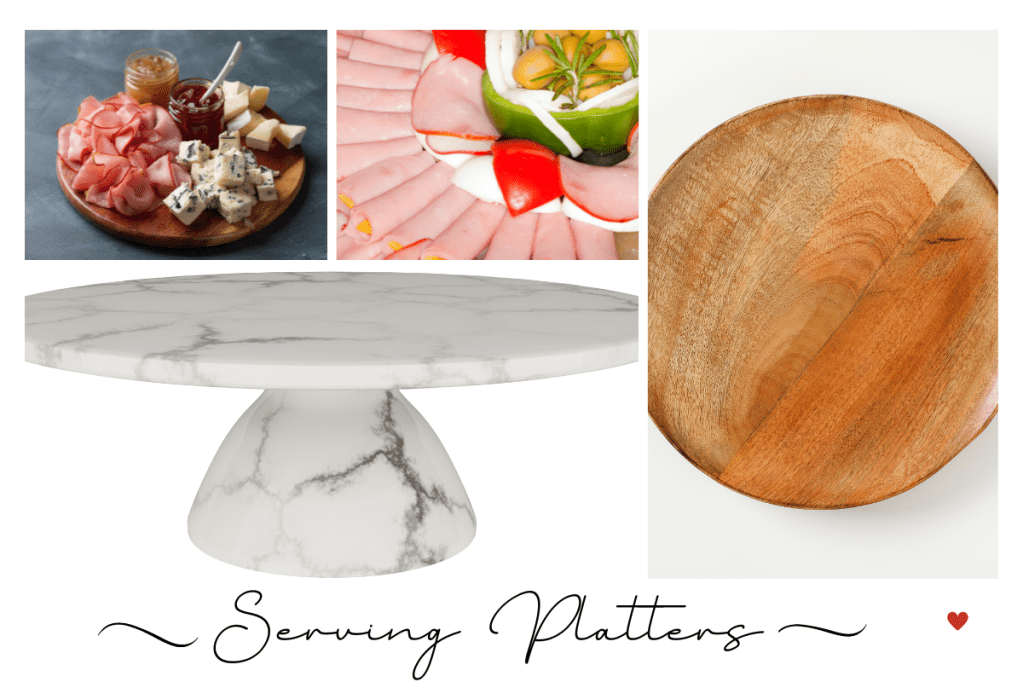
The elegant vessels used for presenting culinary creations to guests, are an essential element in any sophisticated dining experience. These magnificent vessels, often crafted from fine materials such as porcelain, glass, or metal, exude an air of opulence and refinement.
Serving platters are not just ornamental pieces; they serve a practical purpose in the presentation and service of food. They are designed to accommodate a variety of culinary creations, ranging from appetizers and salads to entrees and desserts. The platters’ expansive surfaces provide ample space for artistic arrangements of food, making them ideal for showcasing culinary creations.
Serving platters are best utilized for formal dining occasions or events, such as weddings, banquets, or dinner parties. They are particularly useful when serving a large number of guests, as they allow for the easy transport of food from the kitchen to the dining table. Serving platters also enable guests to serve themselves or pass the platters around the table, fostering a sense of conviviality and communal dining.
In addition to their functional purpose, serving platters also serve an aesthetic function. They add to the overall presentation of the meal and contribute to the ambiance of the dining experience. The use of elegant and beautifully designed serving platters can elevate even the simplest of dishes to a level of sophistication and elegance.
In conclusion, serving platters are an indispensable element of sophisticated dining experiences. Their practical and aesthetic functions make them essential vessels for presenting culinary creations to guests. When used appropriately, serving platters can enhance the ambiance of any formal dining occasion and add to the overall enjoyment of the dining experience.
Selecting the appropriate size serving platter is a crucial aspect of presenting food elegantly and practically. The platter should be proportional to the amount of food being served and should complement the presentation’s aesthetics.
When choosing a serving platter, it is essential to consider the quantity of food that will be presented. A platter that is too small will overcrowd the food, making it appear unappetizing and cluttered. Conversely, a platter that is too large will create the impression of sparse and ungenerous portions.
Another important factor to consider is the shape and design of the platter. A platter with raised edges or a rim is ideal for serving dishes with sauces or gravies, as it prevents the liquid from spilling over the edges. Flat platters, on the other hand, are suitable for serving foods that require more space, such as hors d’oeuvres, appetizers, or desserts.
The material of the platter should also be taken into account. Glass and porcelain platters are elegant and can be used for formal dining occasions, while wooden and metal platters are more rustic and casual.
When serving a meal that includes multiple dishes, it is best to use several smaller platters rather than one large platter. This approach allows for greater flexibility in terms of presentation and service, as well as providing guests with a wider range of options.
In conclusion, selecting the appropriate size serving platter is crucial for presenting food elegantly and practically. The platter’s size should be proportional to the amount of food being served, and its shape and design should complement the presentation’s aesthetics. By taking into account these factors, one can ensure a memorable and enjoyable dining experience for guests.
Serving platters, the quintessential vessels for presenting culinary creations in a sophisticated manner, come in a variety of shapes, sizes, and materials. Some platters have gained popularity due to their practicality, versatility, and aesthetic appeal.
One of the most popular types of serving platters is the rectangular platter. This platter’s elongated shape makes it ideal for serving entrees, such as roasted meats or vegetables. It also provides ample space for decorative arrangements of food.
Another popular type of serving platter is the round platter. This platter’s symmetrical shape is perfect for serving foods that require a central focal point, such as cakes, pies, or tarts. It also lends itself well to a more communal dining experience, as guests can easily pass it around the table.
Oval platters are another popular choice. Their curved shape provides an interesting contrast to the straight lines of rectangular platters, making them suitable for serving a variety of dishes. They are particularly well-suited for serving meats or fish.
In addition to these shapes, decorative platters are also popular. These platters feature intricate designs and patterns, often inspired by nature or traditional art forms. They are ideal for presenting fruits, cheese, or other hors d’oeuvres.
When it comes to materials, porcelain, glass, and metal are among the most popular choices. Porcelain platters are elegant and delicate, while glass platters provide a more modern look. Metal platters, on the other hand, are durable and ideal for outdoor dining.
In conclusion, serving platters come in a variety of shapes, sizes, and materials, each with its unique advantages and aesthetic appeal. Choosing the right type of platter depends on the dish being served, the occasion, and personal preferences. Regardless of the type of platter used, it is sure to enhance the dining experience and contribute to the overall ambiance of the meal.
Selecting the perfect serving platter is a crucial component of presenting delectable dishes in a sophisticated manner. It is imperative to consider various factors before making a decision, such as the type of food being served, the occasion, and personal preferences.
One of the most important factors to consider is the size of the platter. It is crucial to select a platter that is proportionate to the dish being served. A platter that is too small may appear cramped and overcrowded, while a platter that is too large may cause the food to appear sparse and unappetizing.
Another factor to consider is the shape of the platter. The shape should complement the dish being served and enhance its presentation. Rectangular platters are ideal for serving entrees and appetizers, while round platters are perfect for serving desserts and cakes.
The material of the platter is also an essential consideration. Glass platters provide a modern and elegant look, while porcelain platters offer a classic and delicate appearance. Wooden platters add a rustic touch, while metal platters are durable and ideal for outdoor events.
The occasion and setting are also important factors to consider. Formal occasions call for more elegant and sophisticated platters, while casual events allow for more versatile and eclectic options. It is also crucial to consider the table setting and color scheme to ensure that the platter complements the overall ambiance.
In conclusion, choosing the perfect serving platter requires careful consideration of various factors, including size, shape, material, occasion, and setting. By selecting the appropriate platter, one can enhance the presentation of the dish and contribute to the overall dining experience.
When it comes to serving dishes, choosing the right platter can make all the difference. A serving platter is specifically designed to present food in an elegant and visually appealing manner, whereas a non-serving platter lacks the features and attributes needed for such a task.
A serving platter typically has a flat surface and raised edges to contain the food and prevent it from spilling over. In contrast, non-serving platters may lack the necessary features to keep food securely in place, causing a potential mess.
Serving platters are also available in a variety of materials such as glass, porcelain, wood, and metal, whereas non-serving platters may be limited in their range of materials and designs.
Moreover, the shape and size of serving platters are carefully considered to ensure that they enhance the presentation of the dish. Non-serving platters, on the other hand, may not be designed with these considerations in mind and may not be as suitable for presenting food.
In addition to their functional attributes, serving platters can also add a touch of sophistication and elegance to any dining experience. Their design and material can complement the overall ambiance of the event and contribute to the aesthetic appeal of the meal.
In conclusion, while non-serving platters may suffice for certain occasions, they lack the specialized features and design of serving platters, which can greatly enhance the presentation and overall dining experience. Therefore, it is advisable to invest in a range of serving platters to elevate the presentation of your dishes and create a memorable dining experience for your guests.
Serving platters are not merely functional vessels for food presentation; they also play an important role in the aesthetics of dining experiences. The design, material, shape, and size of a serving platter can greatly influence the overall look and feel of a meal.
The material of a serving platter can evoke a specific mood or theme. For example, porcelain or ceramic platters can imbue a sense of formality and elegance, while wooden platters can lend a rustic and earthy feel. Glass or crystal platters can add a touch of glamour and refinement to the presentation of food.
The shape and size of a serving platter should be considered in relation to the dish being served. A large platter can be used for showcasing a whole roasted turkey or a sizeable cut of meat, while smaller platters can be used for hors d’oeuvres or desserts. Additionally, the shape of the platter can complement or contrast with the shape of the food being presented, creating a visually striking display.
 Hey Singapore