
Discover the fascinating history and cultural significance behind Peranakan design in this exploration of its origins. Join us on a journey of cultural fusion.
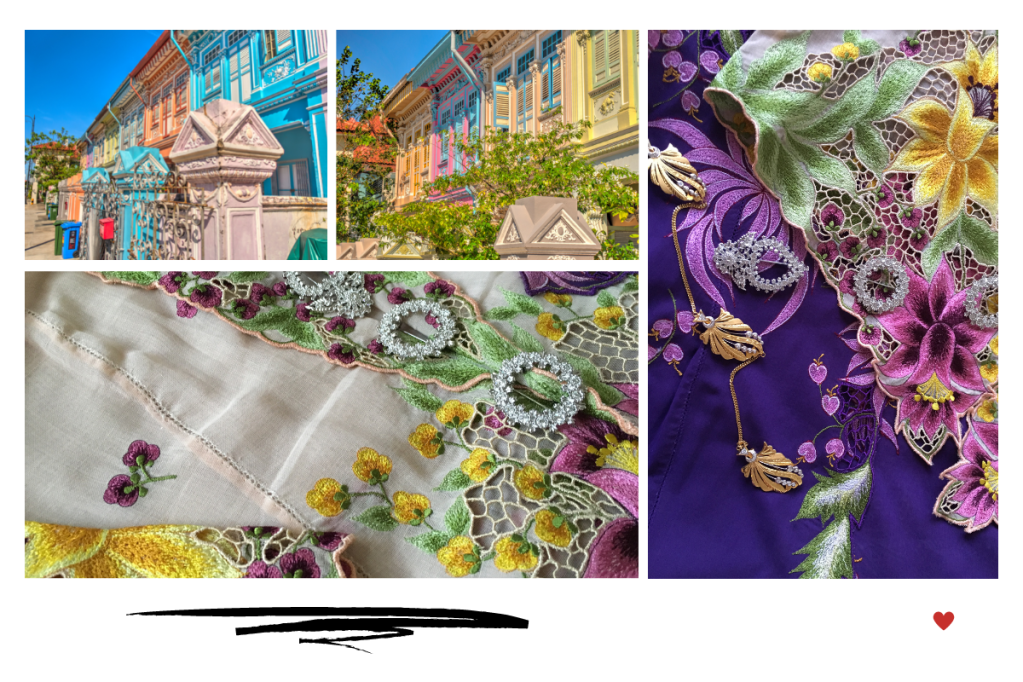
The Melting Pot of Peranakan Culture: Tracing its Roots
The Peranakan culture developed in Southeast Asia about the 15th century as a result of the fusion of Chinese and Malay traditions. This mingling of cultures produced a new aesthetic that has since served as an inspiration for generations of creatives. This article investigates the background and relevance of Peranakan design by looking at its historical beginnings, its current renaissance, its function in modern Southeast Asian culture, and its presence on the international market.
The Art of Peranakan Design: Uncovering its Symbolism and Meaning
The Malacca Sultanate was the birthplace of Peranakan culture, which developed through marriages between Chinese merchants and Malay women. Because of this intercultural union, Malay and Chinese traditions have fused in fascinating ways in the arts, food, and language. The Peranakans, also known as the Baba-Nyonya, are a cultural group that developed out of the blending of Chinese and Malay traditions while maintaining its own distinctive characteristics.
European influence throughout the colonial period added depth to the already rich Peranakan culture. Its impact may be seen in the ornate patterns and themes used in Peranakan furniture, textiles, and ornamental arts. As a consequence of combining influences from China, Malaysia, and Europe, Peranakan style is both unique and exciting.
The Resurgence of Peranakan Design: A Contemporary Take on Tradition
Ornate and elaborate designs, vivid colors, and high-quality materials are trademarks of Peranakan style. The designs often include culturally or religiously significant symbols and themes. The phoenix and the dragon, symbols of feminine and masculine energy, respectively, are common in Peranakan design. Peonies and lotuses, two of the most often used flower themes, stand for wealth and virtue.
Feng shui, the art of arranging one’s physical space so that its energies flow in a balanced and pleasant way, has a long history of influence on Peranakan aesthetics. This may be seen in how the furniture is arranged, the colors used, and the placement of accent pieces. Others think that good fortune and wealth may be attracted via the use of auspicious hues like red and gold.
Beyond the Ornate: The Role of Peranakan Design in Contemporary Southeast Asian Society
In recent years, there has been a renaissance in the use of classic Peranakan motifs by modern artists and designers. Because of this modern spin on age-old customs, there has been a resurgence of interest in Peranakan art and architecture in many parts of the world. Many industries, from fashion and interior design to food and drink, now include elements of Peranakan design.
Keeping with heritage, modern Peranakan designers are experimenting with cutting-edge fabrication methods while also incorporating new materials. This method is seen as a means of connecting the past with the present, resulting in a fresh and original aesthetic that is always developing.
Defining Peranakan Design Beyond Its Decorative Roots in Modern Southeast Asian Culture
Detailed patterns are not the only hallmark of Peranakan art and architecture. The Peranakan identity and position in Southeast Asian culture are mirrored in this traditional practice. With elements of Peranakan style, you may show off your background and support local artisans at the same time. As an added bonus, it may help you meet people from all walks of life and form meaningful friendships across cultural boundaries.
Nowadays in modern Southeast Asian culture, the aesthetics of the Peranakan community are being used to boost the region’s economy and attract tourists interested in the region’s rich cultural heritage. As such, it is seen as a means of promoting the region’s cultural identity abroad. Nonetheless, others worry that cultural relevance and authenticity may be watered down as a result of commercialization.
Peranakan Design and the Global Market: Balancing Authenticity and Commercialization
Popularity of items with Peranakan influences has resulted in their adoption by designers and merchants outside of Southeast Asia. There is, however, a fine line between overt commercialism and losing sight of the genuine article. Commercialization must be done in a manner that respects and protects the cultural and religious traditions upon which Peranakan design is founded.
Several modern-day Peranakan designers are teaming up with major global labels to develop groundbreaking new goods that pay homage to the culture’s rich heritage of handicrafts and symbolic imagery. That way, the cultural relevance of Peranakan design may be preserved as it reaches a larger audience.
Nonetheless, some people are worried that if Peranakan style becomes popularized, it would be appropriated and exploited. Designers and merchants would do well to take into account the historical and social importance of Peranakan design and collaborate with local communities to achieve an authentic and respectful interpretation of this aesthetic.
The Influence of European and Chinese Aesthetics on Peranakan Design
In Southeast Asia, the colonial era saw the emergence of a distinct style known as Peranakan design, which is a fusion of European and Chinese influences. The elaborate and refined aesthetic that resulted from the collision of these two civilizations has come to be identified with the Peranakan people. When Chinese people first began to settle in the Malay Archipelago in the 15th century, they brought with them a distinct style of art and architecture known as Peranakan. The local culture has adopted the traditional arts and crafts that these immigrants brought with them. The entrance of European powers such as the Portuguese, Dutch, and British in Southeast Asia also explains the European impact on Peranakan style. New fashions and ways of doing things were introduced by the colonists and immediately embraced by the indigenous people.
The origins of Peranakan style may be traced back to the blending of two very different cultures. Complex patterns, bold hues, and elaborate flourishes all define this design aesthetic. Typical aspects of Peranakan design include rococo-style scrollwork and floral patterns, as well as Asian themes like dragons, phoenixes, and peonies. These themes are used because they exemplify the cultural blending that characterizes Peranakan art and architecture.
Peranakan Design in Post-Colonial Times: Navigating Identity in a Changing World
In the wake of colonial rule, many Peranakan groups battled to retain their unique customs and traditions in the face of rapid social and political change. The emergence of Southeast Asian nationalism sparked a newfound appreciation for the region’s rich cultural heritage, particularly the distinctive aesthetic of the Peranakan people. As a result of this need, numerous Peranakan artists and designers started experimenting with novel approaches of fusing traditional and modern aesthetics.
Around this time, there was a shift in Peranakan style toward a focus on minimalism and practicality. Because of the ever-evolving demands of modern civilization, many designers set out to produce functional works of art. Traditional themes were often reworked into fresh, modern compositions in Peranakan art and architecture.
The Revival of Peranakan Design in the 21st Century: A Look at Contemporary Artists and Designers
A newfound appreciation for Peranakan aesthetics has emerged in recent years. Traditional components of Peranakan design have been further investigated and reinterpreted by contemporary artists and designers, who have used these new perspectives to produce fresh and exciting works that speak to the times in which we live. Traditional and contemporary components are commonly combined in these kinds of designs, yielding a fresh take on an old theme.
The proliferation of digital tools has also had an impact on modern Peranakan design, with many designers now favoring their use when coming up with fresh and original concepts. More freedom in terms of color and composition has been granted to designers thanks to technological advancements, enabling them to produce works that are both more complex and more visually striking than ever before.
Peranakan Design in the Age of Globalization: Challenges and Opportunities for Future Development
Despite its rising popularity, Peranakan style confronts several obstacles in today’s age of globalization. How to satisfy both the global market and the consumer’s need for genuine products is a major obstacle. Creating designs that are genuine and economically feasible without compromising the traditional characteristics of Peranakan design is a challenge addressed by many designers.
There are advantages and disadvantages to Peranakan design‘s increasing international exposure. One positive trend is the increasing demand for products with a Peranakan aesthetic. This is a great chance for designers and stores to showcase Peranakan culture and history to a larger audience.
The necessity to accommodate shifting consumer preferences is another obstacle for Peranakan-style design. As the globe grows more interdependent, designers need to develop products that can find an audience all over the world without losing their individuality. The success of future generations of Peranakan architects and designers will depend on their ability to strike a balance between tradition and innovation.
But, there is also the possibility of cultural exploitation and appropriation. Commercialization must be done in a manner that respects and protects the cultural and religious traditions upon which Peranakan design is founded. Designers and merchants need to respect the cultural value of Peranakan design by consulting with local communities.
 Hey Singapore