
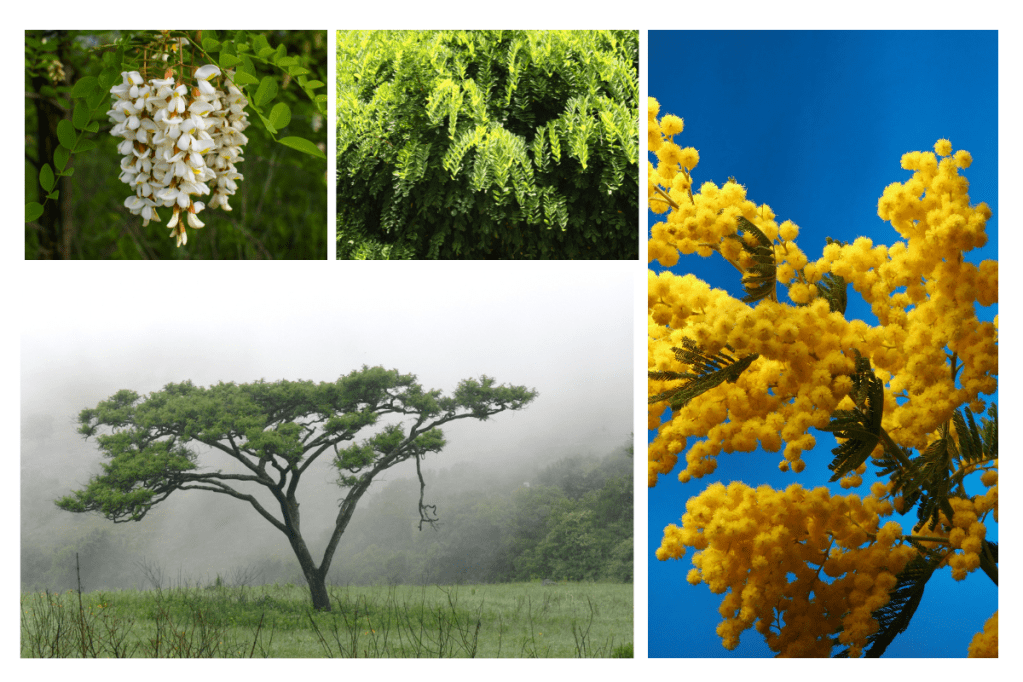
The sprawling genus of an Acacia, consisting of a wide array of trees and shrubs, pertains to the Fabaceae family – also referred to as the legume, pea, or bean family. The extensive and diverse group of Acacia encompasses over a thousand distinct species, which are extensively dispersed globally, predominantly in the arid and semi-arid regions. Acacia is primarily characterised by leaf-like flattened phyllodes and aromatic and ornamental flowers that bloom in clusters.
Acacias have a long history of use by humans dating back to ancient times, with the Egyptians, for instance, crafting furniture from Acacia wood and utilising the gum that oozes out of the tree as a binding agent for mummies. Furthermore, traditional African medicine utilized Acacia’s bark, leaves, and pods to cure various ailments, ranging from fever and wounds to diarrhoea. Acacias also serve as a crucial source of sustenance for a broad spectrum of fauna, encompassing birds, insects, and mammals.
Aside from its attractive appearance are numerous health benefits, such as:
Rich in Fiber
Acacia is known to be an excellent source of dietary fibre, which is essential for maintaining a healthy digestive system. This fibre helps regulate bowel movements, prevent constipation, and reduce the risk of developing colon cancer. Acacia fibre is also an excellent prebiotic, which helps promote the growth of healthy bacteria in the gut, leading to better overall digestive health.
May Improve Heart Health
Research has shown that Acacia may have a positive impact on heart health. Acacia contains high levels of flavonoids and antioxidants that help reduce inflammation and lower cholesterol levels. Acacia may help reduce the risk of developing heart disease and other cardiovascular conditions.
Natural Anti-Inflammatory
Acacia has been used for centuries in traditional medicine as a natural anti-inflammatory. It contains compounds that help to reduce inflammation in the body, which can help to alleviate a wide range of conditions, from joint pain to skin inflammation. Acacia is also an effective treatment for sore throats, as it can help reduce inflammation and soothe the throat.
Supports Immune Function
Acacia is known to support immune function thanks to its high levels of antioxidants and prebiotics. These compounds help to promote the growth of healthy bacteria in the gut, which can help to strengthen the immune system. Acacia also contains compounds that help stimulate the production of white blood cells, which play a critical role in fighting off infections and diseases.
Promotes Skin Health
Acacia is a popular ingredient in many skincare products thanks to its ability to promote healthy skin. Acacia contains compounds that help to moisturise the skin and reduce inflammation, which can help to alleviate conditions such as eczema and psoriasis. Additionally, Acacia is known to have a natural astringent effect, which can help to tighten and firm the skin, reducing the appearance of fine lines and wrinkles.
Natural Antimicrobial
Acacia contains natural antimicrobial properties, which make it an effective treatment for a wide range of infections. These antimicrobial compounds help to fight off bacteria, viruses, and fungi, making it a popular treatment for conditions such as colds and flu, as well as more severe infections.
May Help to Manage Blood Sugar
Research has shown that Acacia may help manage blood sugar levels. Acacia contains compounds that help slow down glucose absorption into the bloodstream, which can help prevent spikes in blood sugar levels. This makes Acacia a beneficial ingredient for those with diabetes or those at risk of developing the condition.
Within the vast realm of Acacias, Acacia Senegal holds a preeminent status, recognised as the principal source of gum arabic, a naturally occurring and soluble gum with various industrial applications. The food industry uses gum arabic as a stabiliser, thickener, and emulsifier, while the pharmaceutical industry utilises it as a coating and binding agent for tablets and capsules. Acacia Senegal is a small, thorny tree that takes root in the semi-arid domains of Africa and the Middle East and is widely esteemed for its gum production. Beyond gum arabic, Acacias are also sought-after for their timber. Acacia wood is known for its strength, which means it can withstand the wear and tear of daily use. This makes it ideal for frequently used furniture, such as tables, chairs, and cabinets. In addition, acacia wood has natural moisture resistance, making it a good choice for outdoor furniture exposed to the elements.
Another benefit of acacia as a furniture material is its natural beauty. Acacia wood has a warm, rich colour that ranges from golden brown to dark brown. Its grain patterns are unique and varied, which means that every piece of furniture made from acacia is one-of-a-kind. Acacia wood can also be finished with various stains and finishes to enhance its natural beauty and protect it from damage.
Acacia furniture is also environmentally friendly. The trees that produce acacia wood are biodegradable, meaning they will not contribute to landfill waste at the end of their useful life. While it is a high-quality hardwood, acacia is often less expensive than other hardwoods such as teak or mahogany. This makes it an attractive option for people who want the beauty and durability of hardwood furniture without breaking the bank.
Acacia is an excellent choice for furniture due to its durability, natural beauty, eco-friendliness, affordability, and natural resistance to decay and insect damage. If you are looking for high-quality furniture that will last for years, consider investing in pieces made from acacia wood.
Acacias, having an affinity for dry, arid environments, have developed exclusive adaptations to thrive under such adversities. Some Acacias have grown extensive and deep taproots that penetrate the underground water reservoirs. Others have evolved the phyllodes, essentially modified leaf structures that help curtail water loss by limiting the surface area for transpiration. Additionally, numerous Acacias have developed the capacity to fix nitrogen from the atmosphere – an essential nutrient for plant growth, thus facilitating their survival in nutrient-deficient soil.
Acacias are highly sought after in landscaping and horticulture, owing to their picturesque foliage and eye-catching flowers. Notably, Acacia dealbata commonly referred to as the silver wattle, and Acacia baileyana, known as the Cootamundra wattle, have gained popularity among enthusiasts for their ornamental attributes, finding a place in gardens and parks.

Apart from their economic and aesthetic significance, acacias also hold ecological importance, serving as a vital component of their respective ecosystems. They provide sustenance and refuge for a diverse ecosystem, including insects, birds, and mammals. Some acacia species, such as the Acacia tortilis, are even deemed tone species. This exclusive status recognises their pivotal role in maintaining the structure and function of their respective ecosystems.
However, despite their ecological and economic importance, many acacia species are under threat due to habitat destruction and degradation, overexploitation, and climate change. For example, the Acacia catechu, a tree native to the Indian subcontinent, is listed as endangered by the International Union for Conservation of Nature (IUCN) due to habitat loss and overexploitation of its wood and bark. Similarly, the Acacia koa, an endemic tree in Hawaii, is endangered due to habitat loss and degradation.
Several conservation programs have been initiated to safeguard and maintain the diverse acacia species, including habitat restoration, reforestation, and sustainable harvesting methods. To further the cause of these efforts, numerous campaigns have been launched to increase public awareness of acacias’ ecological and economic importance and promote their conservation and sustainable utilisation. One of the most prominent and influential campaigns is the Acacia Conservation Initiative, a brainchild of the International Union for Conservation of Nature (IUCN) established in 2016. The Initiative is dedicated to facilitating the conservation and sustainable use of acacias, primarily by advancing research, advocacy, and community engagement. Additionally, the Initiative seeks to promote acacias’ environmental and economic benefits while fostering alliances with local communities, NGOs, and governments to reinforce conservation endeavours.
The Global Trees Campaign is another noteworthy initiative launched in 1999 by Fauna & Flora International. The campaign is dedicated to conserving threatened tree species worldwide, including several acacia species. Working with local partners, they protect and restore habitats and promote sustainable harvesting practices.
Apart from these conservation efforts, numerous researchers are studying the biology and ecology of acacias to understand their adaptability to arid environments and the interactions between acacias and the animals that rely on them. Understanding these mechanisms will aid in developing new crops that can tolerate environmental stress and conserve the biodiversity that acacias support.
In conclusion, a diverse and noteworthy group of trees and shrubs is crucial in many ecosystems worldwide. Their economic, aesthetic, and ecological significance has been recognised for centuries. Despite their importance, many acacia species face several threats, such as habitat loss and degradation, over-exploitation, and the impacts of climate change. Fortunately, numerous conservation efforts are underway to protect and conserve these species, and ongoing research aims to understand their biology and ecology. Through collaborative efforts, we can ensure the continuation of acacias’ essential functions in the world’s ecosystems and the provision of valuable resources for future generations to come.
 Hey Singapore