
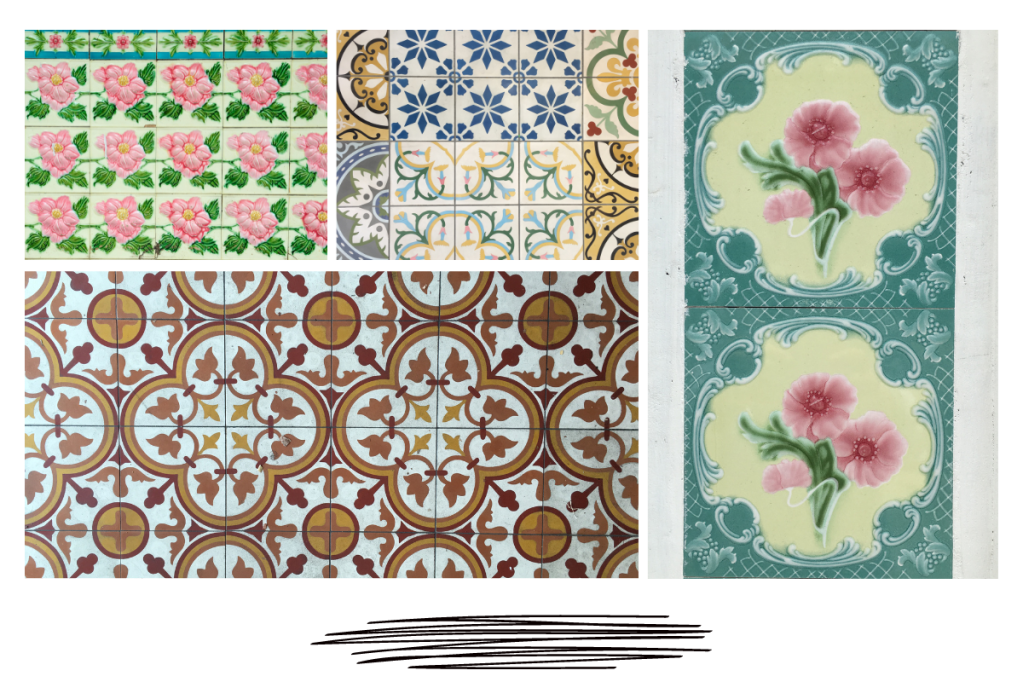
Peranakan Tiles, also referred to as Nyonya Tiles, stand as a distinctive form of decorative artistry that emerged in the 19th century in Southeast Asia. They serve as a remarkable portrayal of Peranakan culture – a union of Chinese and Malay heritage that developed in the Malay archipelago, notably in Singapore, Malaysia, and Indonesia.
Peranakan homes were often adorned with these tiles, displaying the splendid and colorful floral and geometric patterns that were hand-painted and handcrafted, rendering each piece an unparalleled and exceptional masterpiece. The intricate designs and vivid colors of Peranakan tiles brilliantly showcase the creativity and artistry of the Peranakan people, making them an indispensable cultural treasure.
Peranakan tiles heavily draw inspiration from Chinese, Malay, and European styles. Chinese influences are manifested in the employment of symmetrical patterns and the blue and white color palette. Malay influences can be observed in the use of floral and geometric patterns, while European influences are evident in the use of bright colors and intricate designs.
Peranakan tiles are not only visually appealing but also hold significant cultural value, attesting to the amalgamation and integration of diverse ethnic groups, exhibiting how distinct cultures can coalesce to create something exceptional and captivating. The use of Peranakan tiles in homes and public spaces has become an emblem of cultural pride and identity, signifying the Peranakan people’s rich heritage.
To this day, Peranakan tiles are highly coveted for their beauty and cultural significance. They are extensively used in the restoration and preservation of Peranakan heritage buildings, such as shophouses, temples, and museums. Many artisans continue to practice the traditional techniques of crafting Peranakan tiles, ensuring that this cultural gem is kept alive for generations to come.
In conclusion, Peranakan tiles are an integral part of Southeast Asian culture and heritage. They epitomize the amalgamation of various cultures and artistic styles, exhibiting the Peranakan people’s ingenuity and artistic prowess. Their intricate designs and vivid colors make them an exclusive and remarkable form of decorative art that continues to captivate people’s hearts to this day.
Types of Peranakan Tiles
Peranakan tiles, or Nyonya tiles, constitute a sui generis form of decorative art that germinated in Southeast Asia in the 19th century. They are a manifestation of the Peranakan culture, an amalgamation of Chinese and Malay lineage that took root in the Malay archipelago, particularly in Singapore, Malaysia, and Indonesia.
These tiles are commonly employed to embellish the walls and floors of Peranakan domiciles, flaunting multifarious floral and geometric patterns. Each tile is imbued with the craftsmanship and finesse of hand-painted and handcrafted work, rendering each piece unparalleled and distinctive. The intricate designs and dynamic hues of Peranakan tiles spotlight the ingenuity and artistry of the Peranakan people, rendering them a valuable cultural heirloom.
There are sundry types of Peranakan tiles, each with its unique characteristics and motifs. Here are some of the most prevalent types of Peranakan tiles:
Blue and white porcelain tiles: These tiles are some of the oldest and most conventional varieties of Peranakan tiles. They are heavily influenced by Chinese blue and white porcelain, featuring elaborate floral and landscape designs.
Geometric tiles: These tiles are typified by intricate geometric patterns, frequently composed of shapes such as diamonds, stars, and triangles. They are primarily used to garnish floors and can also be employed to construct borders or frames around other tiles.
Floral tiles: These tiles feature exquisite and intricate floral patterns. As the name suggests, they are commonly used to decorate walls and are often coupled with geometric tiles to forge stunning designs.
Straits Chinese tiles: These tiles are exclusive to Peranakan culture and blend Chinese, Malay, and European influences. They feature intricate motifs and designs, including dragons, phoenixes, and other mythological creatures.
Peranakan beadwork tiles: These tiles are handcrafted with minuscule glass beads and are renowned for their intricate designs and vibrant hues. They are frequently employed as ornamental pieces in homes and can also be utilized to construct borders or frames around other tiles.
To conclude, Peranakan tiles are an exceptional embodiment of Southeast Asian culture and heritage. Their varied designs and motifs accentuate the creativity and artistry of the Peranakan people, rendering them an extraordinary form of decorative art that continues to enthral individuals to this day.
Advantages of Peranakan Tiles
Peranakan tiles, also known as Nyonya tiles, are a splendid decorative art originating from Southeast Asia in the 19th century. These tiles represent the Peranakan culture, a blend of Chinese and Malay heritage that flourished in the Malay archipelago, particularly in Singapore, Malaysia, and Indonesia.
Beyond their aesthetic value, Peranakan tiles offer a plethora of advantages, rendering them a superior choice for both residential and commercial properties. Here are some of the benefits of these tiles.
Sturdiness: Peranakan tiles boast robustness and longevity. They are crafted from superior materials and can withstand heavy foot traffic, making them ideal for flooring in high-traffic zones.
Easy maintenance: The tiles are a breeze to clean and maintain. They do not require any specialized cleaning products or treatments, and regular sweeping and mopping will keep them looking exquisite for many years to come.
Design flexibility: Peranakan tiles provide a wide range of design possibilities. With various shapes, sizes, and colors available, homeowners and designers can craft unique and personalized designs that reflect their style and preference.
Cultural significance: These tiles hold significant cultural value and can highlight and celebrate the Peranakan heritage. They serve as a testament to the cultural assimilation and exchange between different ethnic groups, making them a superior choice for properties with a cultural theme.
Versatility: Peranakan tiles are versatile and can be used in various areas of the home, including bathrooms, kitchens, living rooms, and outdoor spaces. They are suitable for both indoor and outdoor use, making them an excellent choice for properties that require robust and versatile flooring options.
In conclusion, Peranakan tiles are a splendid choice for both residential and commercial properties, providing several advantages. Their sturdiness, easy maintenance, design flexibility, cultural significance, and versatility make them a unique and exceptional form of decorative art that continues to captivate people’s hearts today. Whether you’re renovating your home or designing a new commercial space, Peranakan tiles offer limitless possibilities to elevate and enhance your property.
Disadvantages of Peranakan Tiles
Peranakan tiles, a stunning decorative art that reflects the Southeast Asian culture, have garnered widespread admiration for their remarkable beauty and versatile applications. Nonetheless, as with any design element, peranakan tiles come with certain drawbacks that necessitate thorough deliberation before proceeding with their installation.
Enumerated below are some of the disadvantages of peranakan tiles:
Exorbitant cost: The intricate craftsmanship, hand-painted detailing, and cultural significance associated with peranakan tiles contribute to their steep price, particularly when selecting custom-made designs or rarer patterns.
Installation intricacy: The installation of peranakan tiles necessitates skilled professionals with experience handling these intricate and delicate tiles. Improper installation can result in breakage, cracks, or unevenness, which can lead to costly repairs.
Susceptibility to stains and scratches: Despite their durability and longevity, peranakan tiles are not entirely resistant to stains and scratches. Prolonged spills or stains can leave indelible marks on the tiles, while heavy furniture or sharp objects can cause scratches or chips on their surface.
Limited availability: The scarcity of peranakan tiles in certain regions can pose a challenge in finding reputable suppliers or manufacturers. This limitation can result in difficulty sourcing specific designs or patterns, particularly when seeking a personalized look.
Maintenance requirements: Peranakan tiles are simple to clean; however, they require regular upkeep to maintain their pristine appearance. Dirt and grime can accumulate in the grout lines over time, making it arduous to maintain the tiles’ cleanliness. Moreover, peranakan tiles may require periodic resealing to prevent moisture from penetrating the surface.
To sum up, while peranakan tiles are an exquisite design element, they do come with certain disadvantages. As such, it is essential to weigh the pros and cons before opting to integrate them into your property. Despite their undeniable beauty, factors such as high cost, challenging installation, vulnerability to stains and scratches, limited availability, and maintenance requirements should all be considered in making an informed decision.
What is the best use of Peranakan Tiles?
Peranakan tiles are a treasure trove of versatility, durability, and design flexibility, making them an astute choice for residential and commercial properties alike. Yet, amidst their manifold advantages, one may wonder: what is the pinnacle use of peranakan tiles?
One of the most discerning applications of peranakan tiles is in high-traffic areas, owing to their exceptional resilience and hardwearing nature. Withstanding the test of time and heavy foot traffic, they are the perfect choice for flooring in bustling areas such as entryways, hallways, and foyers, while also holding their own in commercial spaces such as hotels, restaurants, and offices, where foot traffic is high.
Furthermore, peranakan tiles are a go-to choice for areas prone to water and moisture, such as bathrooms and kitchens, due to their water-resistant and easy-to-maintain properties. The effervescent designs and vivacious hues of peranakan tiles also make them a compelling option for these utilitarian spaces, infusing them with an element of exuberance and sophistication.
In addition, peranakan tiles offer an idyllic solution for exterior spaces, such as balconies, patios, and courtyards, as they are perfectly suited for outdoor use, serving as a decorative and utilitarian element that elevates the space’s aesthetic appeal. The intricate and colorful designs of peranakan tiles lend an air of refinement and style, transforming these spaces into intimate oases of tranquility and relaxation.
What’s more, peranakan tiles can be utilized to create a cultural theme in your home or commercial property, serving as a testament to the rich heritage of the Peranakan culture. By incorporating peranakan tiles into your interior or exterior space, you can create a personalized and distinctive ambiance that mirrors your individual style and taste.
In conclusion, peranakan tiles are an amalgamation of versatility, durability, and design flexibility, ideal for high-traffic areas, bathrooms, kitchens, outdoor spaces, and cultural themes. Their enduring strength, easy maintenance, vibrant designs, and cultural significance make them a remarkable choice for properties, whether it’s a residential or commercial setting. Regardless of your vision or objectives, peranakan tiles present an abundance of possibilities to heighten and enrich your property’s decor.
 Hey Singapore